Swiss send dozens injured in bar fire abroad for treatment / Photo: Robin MILLARD - AFP
Swiss authorities on Friday said dozens of people badly burned in a fire in a bar in a ski resort during New Year's Eve celebrations -- in which 40 people died -- were being taken to nearby countries for specialised treatment.
Investigators were also closing in on the circumstances of the blaze, which occurred early Thursday in the Alpine town of Crans-Montana.
"Everything suggests that the fire started from sparklers or Bengal candles" placed in Champagne bottles and waved high, near the low ceiling of the bar, the chief prosecutor of the Wallis region, Beatrice Pilloud, told a press conference.
The French managers of the bar, Le Constellation, have been questioned, along with multiple survivors, she said.
The details emerged as Switzerland reeled from the tragedy, and as families of the hundreds of people -- most of them young -- who had been packed into the bar braced for news of their loved ones.
The exact number of people who were at the bar when it went up in flames remains unclear. The Crans-Montana website said the venue had a capacity of 300 people plus 40 on its terrace.
The fire's destruction was so intense that Swiss authorities were not able, in the immediate aftermath, to give a precise number of dead, nor identify the badly burned survivors.
But in Friday's press conference, Wallis canton regional police commander Frederic Gisler said "at this stage" the death toll was 40, with most of the bodies found inside the bar.
- Many foreign nationals -
Swiss authorities warned it could take days to identify everyone who perished, leaving an agonising wait for family and friends. Online, desperate appeals to find the missing proliferated.
Of the 119 people injured -- most in a critical condition -- 113 were now identified, Gisler said, with officials working "relentlessly" to complete the task.
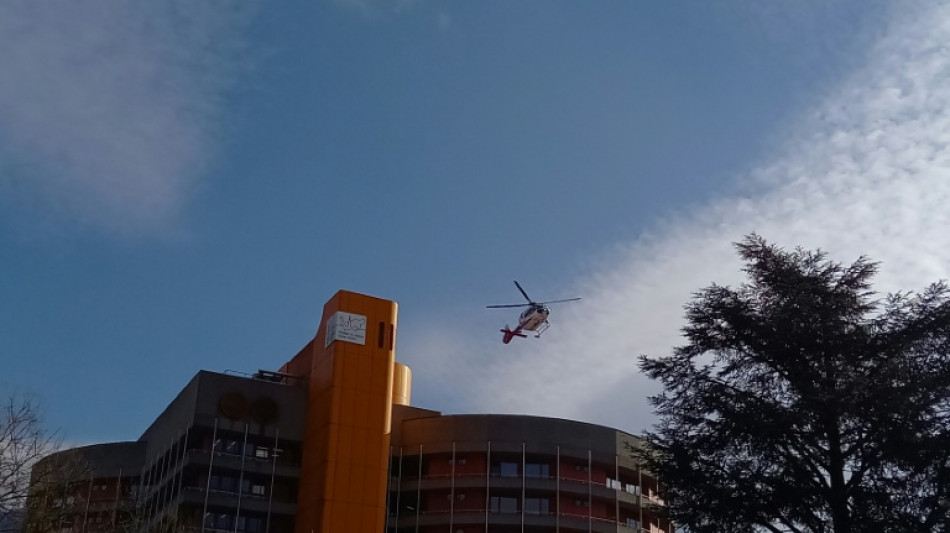
Twenty-four of the injured were being medically evacuated to other countries to help Switzerland's overloaded burn facilities, the EU's commissioner for crisis management, Hadja Lahbib, said on X.
Belgium, France, Germany, Italy, Luxembourg and Romania were among the countries taking in the survivors, she said.
The head of the Swiss canton where Crans-Montana is located, Mathias Reynard, told reporters a total of around 50 people would end up being transferred to other European countries "for treatment in special burn units".
Numerous foreign nationals were among the injured -- and were also expected to figure among the dead.
Gisler said that, of the injured, 71 were Swiss, 14 were French, 11 were Italian, and there were four Serbs, as well as individual Bosnian, Belgian, Polish, Portuguese and Luxembourg nationals.
In 14 cases the nationality was still unknown, he said.
- Scenes of chaos -
Videos posted online, and viewed by investigators, have pointed to sparklers stuck in Champagne bottles igniting the ceiling being the likely cause.
One video showed the low wooden ceiling -- covered with soundproofing fabric -- catching alight and the flames spreading quickly, but revellers continuing to dance, unaware of the death trap they were in.
Once they realised, panic set in.
Bystanders described scenes of chaos as people tried to break the windows to escape while others, covered in burns, poured into the street.
"Some of our hypotheses have now been confirmed. Indeed, everything suggests that the fire started from the sparklers or Bengal candles that had been placed on the Champagne bottles, which were held too close to the ceiling," the prosecutor, Pilloud, told reporters.
The bar's French managers -- said by multiple sources to be a couple from Corsica -- escaped unharmed and were questioned as "witnesses", with no liability established at this stage, she said.
Their information explained the layout of bar, and details about recent renovations and the bar's capacity, as well as indications to help with filling out a list of people present at the time of the fire, Pilloud said.
As authorities began moving bodies from the burned-out premises in central Crans-Montana, the resort appeared to be enveloped in a stunned silence on Friday.
"The atmosphere is heavy," Dejan Bajic, a 56-year-old tourist from Geneva who has been coming to the resort since 1974, told AFP.
"It's like a small village; everyone knows someone who knows someone who's been affected," he said.
- 'Apocalypse' -
Locals and tourists who witnessed the aftermath of the tragedy told AFP what they saw.
"We thought it was just a small fire -- but when we got there, it was war," Mathys, from the neighbouring village of Chermignon-d'en-Bas, said, declining to give his last name. "That's the only word I can use to describe it: the apocalypse."
Edmond Cocquyt, a Belgian tourist, said he saw bodies "covered with a white sheet" and "young people, totally burned, who were still alive ... screaming in pain".
The objective was also, he said, "to identify those responsible", pointing out that "the use of fireworks, even small ones, in a place like this seems irresponsible".
F.Claes--LCdB