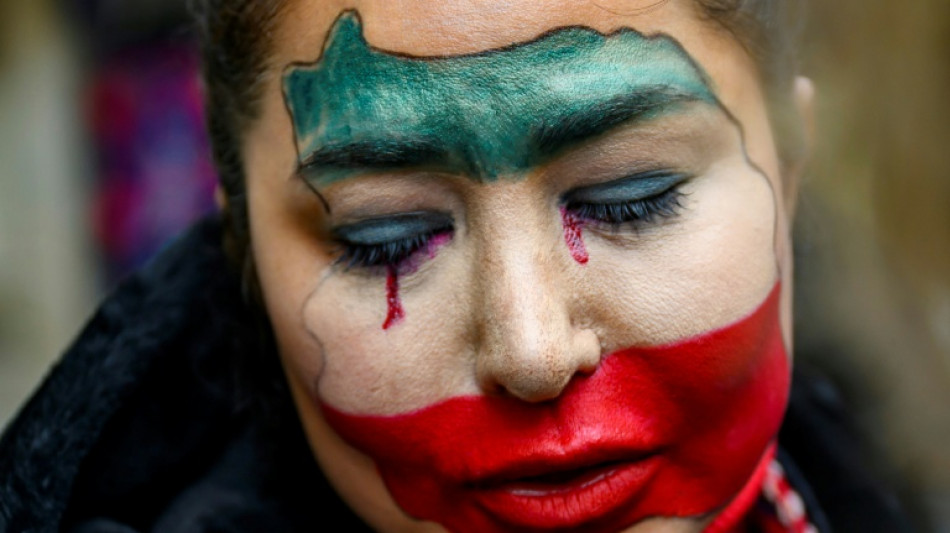
Fashion student, bodybuilder, footballer: the victims of Iran's crackdown / Photo: Yasin AKGUL - AFP
Rubina was a budding fashion designer inspired by Iran's multi-ethnic population. Rebin was an up-and-coming teen footballer. Mehdi was a champion bodybuilder who also won weightlifting titles. Erfan had just turned 18.
All four, from various regions and backgrounds, were according to rights groups victims of the Iranian government's crackdown on protests, gunned down by security forces in their prime.
With the scale of the clampdown only now starting to emerge, rights groups say they have verified the killing of hundreds of protesters but fear the final toll could extend into the thousands.
Iran Human Rights (IHR) director Mamood Amiry Moghaddam told AFP that protesters killed were "mostly young men", although six women had also been identified.
Nine of the 648 people it has identified and confirmed to have been killed by security forces were minors, he added.
"The killings are intense all over the country where there have been protests," he added.
Dozens of members of the security forces have also been killed, according to Iranian officials, who have blamed "rioters" and Iran's enemies abroad for turning protests initially motivated by economic grievances into days of unrest.
- A budding fashion designer -
Rubina Aminian, 23, was a student in textile and fashion design at the Shariati College in Tehran, a prestigious institution reserved for women.
Her Instagram feed shows her proudly displaying clothes inspired by her Kurdish origins in the west of the country, but also the region of Sistan-Baluchistan in its southeast.
On the evening of January 8, the first night of mass protests in which thousands of Iranians flooded into the streets, she left her college and joined the demonstrations, according to the Norway-based IHR, which analysed and verified her case.
She was shot at close range from behind, with a bullet striking her head, it quoted a family source as saying, adding that relatives travelled from Kermanshah in western Iran to identify her body and were "confronted with the bodies of hundreds of young people killed in the protests".
They were able to retrieve her body after overcoming objections from officials but, on returning to Kermanshah, were not allowed to hold any mourning ceremony and were forced to bury her by the side of the road.
- A teenager -
The Hengaw rights group, also based in Norway, has verified both the deaths and also the backgrounds of several protesters it said were killed by security forces.
Erfan Faraji, a resident of Rey, outside Tehran, was shot dead by Iranian government forces during the protests on January 7, it said. He had turned 18 just a week earlier.
A source close to Faraji's family told Hengaw his body was identified among those transferred on Saturday to the Kahrizak morgue, from where images of dozens of body bags sparked international alarm.
His family collected his body on Saturday and he was buried without any public announcement.
- A promising footballer -
Rebin Moradi, a 17-year-old Kurdish student, originally from Salas-e Babajani in Kermanshah province but a resident of Tehran, was a member of the capital's youth premier football league and a youth player with Saipa Club at the time of his death.
He was seen as "as one of the promising young talents in Tehran's youth football scene," Hengaw said.
Moradi was killed by Iranian government forces who shot him on Thursday, Hengaw said.
A source familiar with the case told Hengaw that Moradi's family received confirmation of his death but that they had not yet been allowed to take possession of his body.
- A champion bodybuilder -
Mehdi Zatparvar, 39, from Rasht in the Caspian Sea province of Gilan was a former bodybuilding champion who became a coach and held a master's degree in sports physiology, Hengaw said.
"Zatparvar began weightlifting at the age of 13 and earned national and international titles in powerlifting and weightlifting between 2011 and 2014," it added.
He was shot and killed on Friday, Hengaw said.
W.Blondeel--LCdB