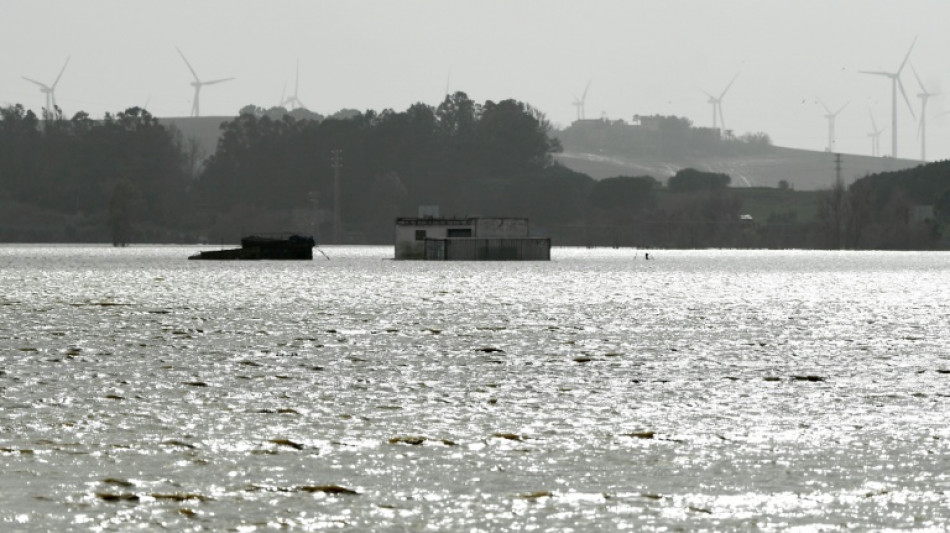
Spanish PM urges caution as fresh rain heads for flood zone / Photo: CRISTINA QUICLER - AFP
Spanish Prime Minister Pedro Sanchez pleaded for caution from flood-hit residents on Friday as more rain was expected to drench parts of the Iberian Peninsula already saturated by a deadly storm.
Portugal had barely recovered from last week's battering by rain and winds that killed five people, injured hundreds and left tens of thousands without power.
This week's Storm Leonardo has left one dead in Portugal and lashed the southern Spanish region of Andalusia, where rescuers were searching for a missing woman and evacuated 8,000 people.
Scientists say human-driven climate change is increasing the length, intensity and frequency of extreme weather events such as the floods and heatwaves that have struck both countries in recent years.
After some flooded municipalities received several months' worth of rain in 24 hours, Spain's AEMET weather agency lifted its highest alert for rain in Andalusia but warned of Storm Marta's arrival on Saturday.
"On top of what has already accumulated in previous days, it is highly likely to trigger further floods, spates and landslides" in mountainous parts of Andalusia, AEMET spokesman Ruben del Campo said in an audio note.
Sanchez visited a frontline coordination post in the province of Cadiz after surveying swathes of flooded fields in a helicopter, saying "we have all felt overwhelmed seeing all this relentless rain."
Faced with "complicated days" ahead as the new storm approached, he told the population "it is very important to be cautious", calling "for calm".
- Bracing for fresh storm -
In Portugal, where around 900 people have been evacuated, the IPMA weather agency said Marta would "contribute to another rise in river flows", notably in the south and the Lisbon region.
Civil Protection commander Mario Silvestre told a press conference that there had been "a slight improvement on the precipitation front" but warned of impending fresh rain and winds of up to 100 kilometres (62 miles) per hour.
The Civil Protection authority said they had dealt with more than 7,500 incidents and mobilised more than 26,500 rescuers since Thursday.
Prime Minister Luis Montenegro visited stricken areas of the country on Friday and spoke of a provisional estimate of damage exceeding four billion euros ($4.7 billion).
The floods were not expected to delay Sunday's presidential run-off, despite a postponement request from the far-right candidate.
burs-imm/kjm
O.Seuren--LCdB