RBGPF
-1.0100
German police searched on Sunday for believed linked to Islamist circles after a car ploughed into crowds near Berlin's Gay Pride celebrations, killing one person and wounding 16 others.
The incident shattered what had been a day of celebration for hundreds of thousands attending Christopher Street Day, one of Europe's largest Pride events. Revellers fled Berlin's most famous park as sirens echoed through the night.
Police told AFP the suspect's vehicle was found abandoned near the Tiergarten park. They launched a manhunt involving helicopters and officers from several German states across the capital.
The suspect was believed to have links to "Islamist circles", police spokesman Florian Nath said earlier.
The attack occurred shortly before 10:00 pm (2000 GMT) on Saturday.
A vehicle like a mini-van or an SUV "entered the Tiergarten park and hit several people," police said.
- Germany in shock -
One person died and 16 others were injured, including three with life-threatening injuries, according to Berlin fire department spokesman Dominik Pretz.
Around 30 more people were treated for shock at the scene.
One witness, who had been near the main Pride stage at the Brandenburg Gate, told AFP that celebrations abruptly ended when police instructed people to leave.
"Go home, please," officers told crowds as emergency crews rushed to treat victims.
The attack revived memories of a series of car rammings and attacks on markets that have shaken Germany in recent years and fuelled a fierce debate over security.
Chancellor Friedrich Merz vowed that those responsible for the latest incident would face justice.
In a statement, Merz described the incident as a "horrific act" and said he and Interior Minister Alexander Dobrindt were being kept informed of developments.
Berlin Mayor Kai Wegner condemned what he called a brutal attack on "a gathering for a tolerant and peaceful Berlin".
Police had deployed more than 2,000 officers to secure the event.
Following the attack, additional personnel from across Germany joined the search, supported by helicopters equipped with thermal-imaging cameras.
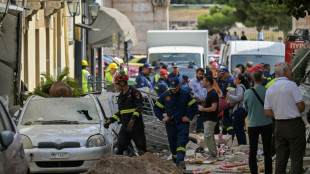
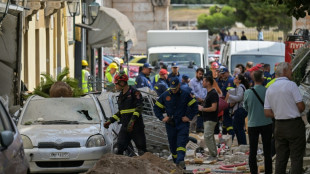
An AFP journalist at the scene saw numerous emergency vehicles lining a nearby road and a large tent erected as police combed the area.
- Violent attacks -
Hundreds of thousands of people took part in the Christopher Street Day event, which draws crowds from across Europe.
The march ended next to the Brandenburg Gate, which has hosted concerts since Friday.
Germany has been hit by several violent attacks at public spaces, including a stabbing in February 2025 at Berlin's Holocaust memorial, close to the scene of Saturday's incident, in which a Spanish tourist was seriously wounded.
A Syrian man, named only as Wassim Al M., was jailed in March for 13 years for the attack, with the court finding he acted in the name of the so-called Islamic State group.
In May, a German man drove a car at high speed on a street in the eastern city of Leipzig killing two people and injuring six.
Last month Taleb Jawad al-Abdulmohsen, a 51-year-old Saudi psychiatrist, was sentenced to life in prison for killing six people and wounding more than 300 when he drove a rented SUV through a crowded Christmas market in 2024 in the eastern city of Magdeburg.
The deadliest attack in recent years was a truck rampage at a Berlin Christmas market in December 2016 that killed 12 people.
Saturday's incident came two months before voters in Berlin elect a new state assembly.
Polls indicate that Merz's centre-right CDU will face a stiff challenge from the far-right Alternative for Germany (AfD) and the far-left Linke parties.
Berline mayor Wegner said this month he would not run for re-election after months of criticism over his handling of a major blackout in January apparently caused by sabotage.
E.Celis--LCdB