France firefighters hopeful, as Spain ends national emergency / Photo: Alain JOCARD - AFP
France firefighters on Thursday were hopeful a massive forest fire was no longer spreading, as Spain lifted a state of emergency over wildfires near Madrid.
Europe has been gripped by successive heatwaves and a major drought this year, which scientists have attributed to human-caused climate change.
The neighbouring countries have battled some of the worst forest fires in living memory over the past week, burning vast areas and forcing tens of thousands of people from their homes.
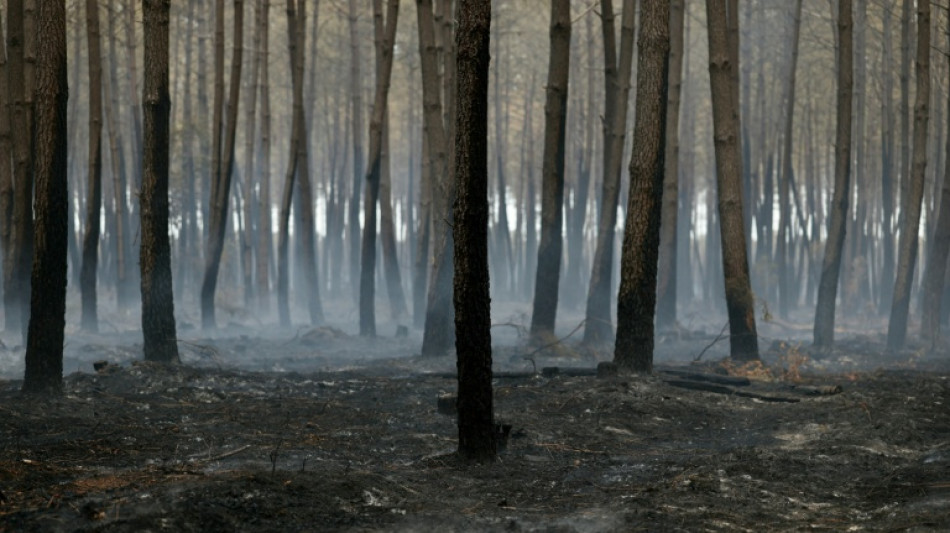
In France, temperatures cooled near the wine capital of Bordeaux, raising hopes that an end was near for the fire in a seaside pine forest that has displaced 220,000 people and destroyed around 240 homes.
The regional firefighting service said they were "reasonably optimistic", after the fire that broke out a week ago had not progressed beyond 42,000 hectares -- an area larger than the US city of Detroit -- since the weekend.
"We've just reached a new threshold, a kind of tipping point," firefighting chief Marc Vermeulen said around midday, saying hotspots had dropped from six to three since the morning.
Local authorities said they were allowing people to return home in nine villages of the coastal region that has seen France's worst wildfire since 1949.
In the area of Lanton, volunteer Maxence Cereja however remained cautious as he put out smouldering embers from the previous night's blaze.
"Yesterday morning it was as calm as it is now, and then it all flared up again in the afternoon," the owner of a tiling company told AFP
Earlier in the day, a clap of thunder had cracked over the town of Lege-Cap-Ferret, and a few raindrops started to fall.
"There's thunder, that's good," said a firefighter at the command post set up in the town's sports hall, though not much rain then fell on the area.
- New Spanish fire -
In Spain, Prime Minister Pedro Sanchez on Thursday lifted a state of emergency over wildfires threatening areas near Madrid, after the prefect's office said they had stopped expanding with "almost no flames left".
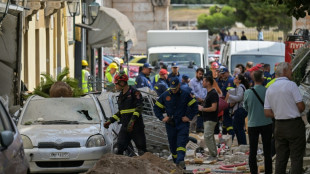
Just outside the town of San Martin de Valdeiglesias, a firefighting station was surrounded by scorched land, an AFP reporter said.
The white station building was untouched as was a red firefighting truck and small helicopter parked in front of the building.
The blaze west of Madrid has burnt 27,000 hectares and destroyed at least 100 homes since last week, according to a local official.
By Thursday morning, only a thousand evacuees remained in the region, after thousands returned home on Wednesday.
But a new fire broke out on Wednesday in Fermoselle, western Spain, just a few kilometres from the Portuguese border, forcing the evacuation of more than 600 people, emergency services said.
Another inferno, that has been raging since last week slightly further west in Avila, is the largest Spain has experienced since records began in 1961, with around 50,000 hectares burnt.
Elsewhere in Europe, thousands of people were evacuated late on Wednesday as fires threatened a tourist resort on the Greek island of Crete and continued to rage on Thursday, fanned by violent winds, authorities said.
The fire is believed to have burnt down homes, agricultural facilities and farm animals, but the toll is unclear as the fire is ongoing, local official Maria Lioni said.
In Portugal, hundreds of firefighters were battling a forest fire in the northern area of Valpaco, the civil defence said.
Turkey was also battling at least 115 fires across the country, although at least 110 were under control, according to the country's agriculture minister.
- 'We'll sell the house' -
The repeated heatwaves and wildfires have jolted the public into reflection on the reality of climate change.
"Honestly, I've talked it over with my wife, and if there's another one in the coming years, we'll sell the house," he told AFP at the wheel of his Tesla as the rain began to fall in Bordeaux.
burs-ah/st
L.Dumont--LCdB