King Charles, Macron to view Bayeux Tapestry as French leader starts UK visit / Photo: Carl Court - POOL/AFP
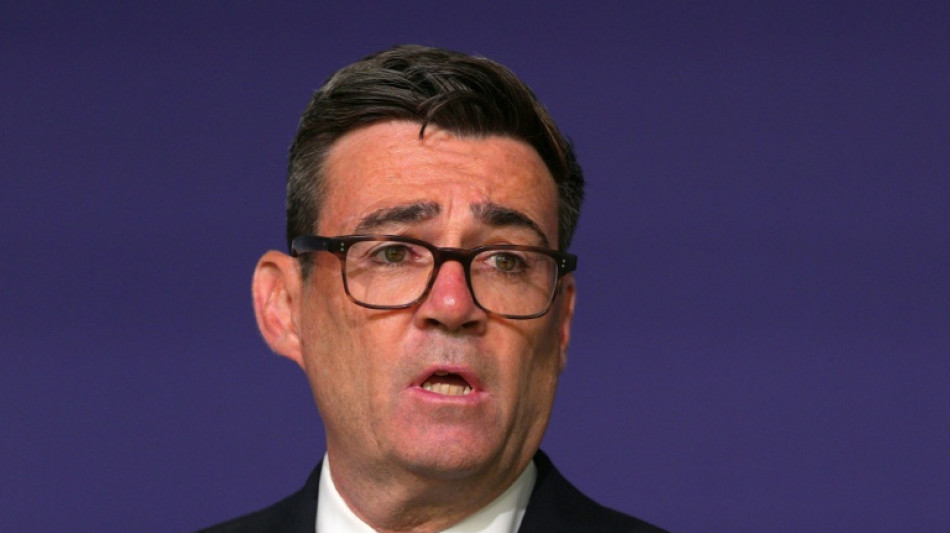
French President Emmanuel Macron begins a two-day visit to Britain on Wednesday, viewing the landmark Bayeux Tapestry exhibition with King Charles III and becoming the first EU leader to be hosted by Prime Minister Andy Burnham.
Charles and Queen Camilla are set to join Macron and his wife Brigitte later Wednesday to view the tapestry, which depicts the Norman conquest of England in 1066. The work, on display to the public from next week at the British Museum, has not left France since it was made nearly 1,000 years ago.
The two couples will be joined by Burnham and his wife Marie-France van Heel at the exhibition, the culmination of years of diplomacy and viewed as another step towards healing the rancour of the Brexit years.
The French president has been instrumental over recent years in championing the daring gambit to loan the medieval tapestry depicting the Norman conquest of England to the British Museum. It will be on display there until next July.
Meanwhile Burnham will be looking for concrete outcomes when he holds talks with Macron on Thursday, eyeing closer post-Brexit cooperation with the European Union.
The British leader -- who replaced predecessor Keir Starmer in July -- has vowed to boost sluggish UK growth and keep pushing France for help stopping migrants crossing the Channel to Britain on small boats.
"The loaning of the tapestry is a great example of French-British cooperation -- the same cooperation that has helped us reduce summer small boat crossings to a seven-year low," Burnham told parliament on Wednesday.
The UK leader has largely focused on domestic policy since taking over, but has maintained London's support for Ukraine in its war with Russia.
- 'Just as important' -
Anand Menon, professor of European politics and foreign affairs at Kings College London, warned there was a danger the visit would be "style without substance" even though Britain and France can appear "best buddies" on non-EU business like Ukraine.
Macron and Starmer enjoyed good ties and adopted lead roles in a so-called Coalition of the Willing of nations supporting Ukraine.
"The president had developed with prime minister Starmer a very friendly and highly effective relationship, particularly on Ukraine and the Middle East," a French presidential official said, asking not to be named.
Coordination with Burnham was expected to be "just as important and regular", added the official.
For Macron, who will arrive from a trip to the Netherlands, the visit will also be significant as he approaches the final months of his presidential term.
The French leader remains eager to press his vision of European sovereignty not dependent on the United States -- and the UK is seen as having a crucial role to play even after Brexit.
- 'We need progress' -
Starmer was also part of a tight E3 trio with Macron and German Chancellor Friedrich Merz that Burnham will likely want to maintain.
However, he will be aware a new French president looms on the horizon in less than a year, while Germany's leader is under immense pressure at home from the rise of the far right.
Burnham has so far only welcomed Ukrainian President Volodymyr Zelensky to his Downing Street office since becoming prime minister and visited Kyiv on his first overseas trip.
On the train to Ukraine, Burnham met EU Council President Antonio Costa, telling him "the UK had to be bolder in terms of getting closer to the bloc", according to Downing Street.
The 11th-century Bayeux Tapestry, which famously depicts the Norman conquest of England by William the Conqueror, arrived in London in July for the sell-out exhibition.
Macron is "very eager" to see the tapestry displayed "in optimal conditions", laid out flat at full length on a table, the French presidential official said. At its home in Bayeux in Normandy the work has been displayed on a wall.
"You can have as much of a bromance as you want, but we need progress on the EU negotiations, and I suspect we won't get any movement on that," she said.
A.Gerard--LCdB