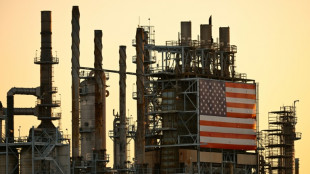
EU-Mercosur deal delayed as farmers stage Brussels show of force / Photo: NICOLAS TUCAT - AFP
The signing of a trade deal between the EU and South American bloc Mercosur will be postponed to January, officials said Thursday, after farmers staged a show of force against the pact outside a Brussels leaders' summit.
Mercosur nations were notified of the move, which came after EU plans to seal the pact this week were upended by heavyweights France and Italy demanding a delay, a European Commission spokeswoman said.
The EU-Mercosur deal would create the world's biggest free-trade area and help the 27-nation bloc to export more vehicles, machinery, wines and spirits to Latin America at a time of global trade tensions.
But Paris and Rome want more robust protections for their farmers, who fear being undercut by a flow of cheaper goods from agricultural giant Brazil and its neighbours.
Thousands of farmers flooded the Belgian capital Thursday -- rolling around 1,000 honking tractors into the city -- as the deal loomed large over the European leaders' gathering.
Having initially reacted with a now-or-never ultimatum to its EU partners, Brazil opened the door on Thursday to delaying the deal's signature to allow time to win over the holdouts.
Brazil's President Luiz Inacio Lula da Silva said Italian Prime Minister Giorgia Meloni had asked him for "patience" and had indicated that Italy would eventually be ready for the agreement.
EU chief Ursula von der Leyen subsequently informed EU leaders in Brussels that the signing would be pushed back to "early January", the commission spokeswoman said.
- Potatoes and tear gas -
Key power Germany, as well as Spain and the Nordic countries, strongly support the Mercosur pact, eager to boost exports as Europe grapples with Chinese competition and a tariff-happy administration in the White House.
But farmers say it would also facilitate the entry into Europe of beef, sugar, rice, honey and soybeans produced by their less-regulated South American counterparts.
Tensions boiled over in Brussels Thursday after a mostly peaceful protest involving at least 7,000 farmers.
Rowdy scenes erupted outside the European Parliament, where protesters lit fires, set off fireworks and hurled potatoes, bottles and other objects at the police who responded with tear gas and water cannon.
"We're here to say no to Mercosur," Belgian dairy farmer Maxime Mabille told AFP, accusing von der Leyen of seeking to "force the deal through".
Farmers are also incensed at EU plans to overhaul the 27-nation bloc's huge farming subsidies, fearing less money will flow their way.
Police charged several times to clear the area. Minor scuffles ensued and at least a handful of people were arrested, an AFP reporter saw.
"It's not fair," Luis, a 24-year-old cattle farmer from Belgium's French-speaking south who did not want to give his full name, said of the Mercosur deal.
"They are going to export cheap meat that is going to lower our prices," he said, adding that South American farmers used cheap feed as well as hormones banned in principle under the deal but in practice hard to detect.
- 'Not there yet' -
Von der Leyen had hoped to win a final approval from member states in time to fly to Brazil for a signing ceremony on Saturday.
But with Paris, Rome, Hungary and Poland in opposition, the deal's critics had enough clout within the European Council to shoot down the deal, were it to be put to a vote.
Italy and France both want tougher safeguard clauses, tighter import controls and more stringent standards for Mercosur producers.
Rome said it was "ready to sign the agreement as soon as farmers are given the necessary answers, which depend on the decisions of the European Commission and can be defined in a short period of time".
V.Renard--LCdB