Oil rebounds, stocks drop as US strikes douse Iran war hopes / Photo: ATTA KENARE - AFP
Oil prices rebounded slightly on Tuesday while stock markets mostly retreated and the dollar firmed after US military strikes on Iran deflated hopes of an imminent deal to reopen the Strait of Hormuz.
The United States and Iran have been working on an agreement to end the Middle East war and reopen the crucial waterway to tanker and cargo traffic since a fragile ceasefire on April 8.
Stock markets had rallied Monday and crude futures dropped below $100 a barrel after reports that a deal could be announced in the coming days.
Those hopes were tempered when US forces said they attacked missile sites in southern Iran and boats trying to lay mines.
Brent North Sea crude, the international benchmark, jumped more than three percent Tuesday, but was still below $100.
"The increase in oil prices is modest, underlining the market's strong belief that the Strait of Hormuz will reopen" said Arne Lohmann Rasmussen, a commodities analyst at Global Risk Management.
"There also appears to be an increase in traffic through the strait," he said, citing Iranian media reports.
Equity markets mostly slid, though London was higher in midday deals, with traders returning after a long holiday weekend in the UK.
"The FTSE 100 was playing catch up to European counterparts after progress on a potential agreement between the US and Iran," said AJ Bell investment director Russ Mould.
"However, continued doubts about the potential for a deal and an overnight pre-emptive US strike on Iran mean any euphoria is being kept in check," he said.
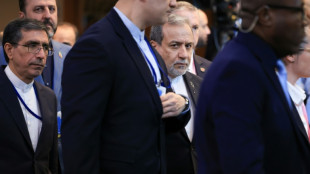
The strikes came as top Iranian negotiators arrived in Doha for another round of talks to end a conflict now nearing its third month, and as the Israeli military stepped up hostilities with Iran-backed Hezbollah in southern Lebanon.
On the corporate front, Seoul's stock market hit a new record high above 8,000 points as chipmakers, carmakers and shipbuilders continued to outperform.
In Europe, investors were quick to express disappointment at Ferrari's unveiling of its first electric model, with shares in the Italian luxury carmaker skidding six percent.
Traders will later in the week monitor how the US Federal Reserve reacts to key consumer inflation data and its potential effect on interest rates.
Higher prices triggered by the US-Israeli war against Iran will limit the likelihood of interest rate cuts by the Fed to boost US growth, many economists have warned.
New US Federal Reserve Chair Kevin Warsh vowed to be "reform-oriented" as he was sworn in at the White House last Friday, with President Donald Trump insisting the central bank chief would be "totally independent".
But Trump has exerted unprecedented pressure on the central bank to reduce interest rates, attempting to fire a Fed governor and his Justice Department pursuing a criminal probe against Warsh's predecessor, Jerome Powell.
- Key figures at around 1045 GMT -
Brent North Sea Crude: UP 2.1 percent at $95.36 a barrel
London - FTSE 100: UP 0.7 percent at 10,538.59 points
Paris - CAC 40: DOWN 0.9 percent at 8,181.89
Frankfurt - DAX: DOWN 0.5 percent at 25,251.89
Hong Kong - Hang Seng Index: FLAT at 25,599.45 (close)
Tokyo - Nikkei 225: DOWN 0.3 percent at 64,996.09 points (close)
Shanghai - Composite: DOWN 0.2 percent at 4,145.37 (close)
Euro/dollar: DOWN at 1.1643 from 1.1646 on Monday
Pound/dollar: DOWN at 1.3484 from $1.3502
Dollar/yen: UP at 159.13 from 158.90 yen
Euro/pound: UP at 86.35 from 86.25 pence
burs-bcp/ajb/js
H.Goossens--LCdB