Shanghai and Singapore Ink 16 Deals to Deepen Finance and Innovation Ties
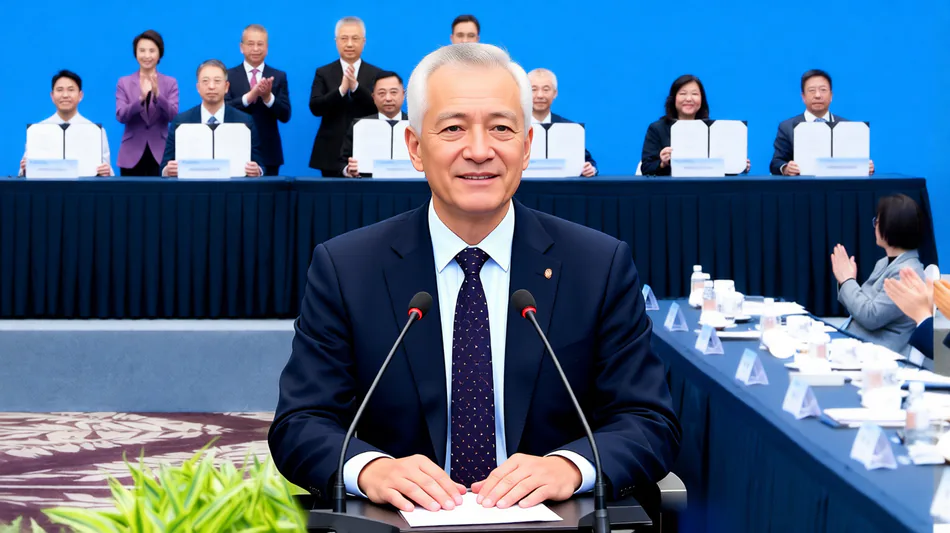
Shanghai and Singapore have formalized 16 new collaborative agreements to strengthen cross-border finance, innovation ecosystems, and cultural exchange. The deals were signed during the seventh meeting of the Shanghai-Singapore Comprehensive Cooperation Council (SSCCC) in Shanghai on Thursday, marking a significant step in deepening institutional ties between the two cities.
Shanghai and Singapore have formalized 16 new collaborative agreements to strengthen cross-border finance, innovation ecosystems, and cultural exchange. The deals were signed during the seventh meeting of the Shanghai-Singapore Comprehensive Cooperation Council (SSCCC) in Shanghai on Thursday, marking a significant step in deepening institutional ties between the two cities.
The session highlighted efforts to leverage the complementary strengths of both urban centers to fuel growth through closer two-way engagement. A white paper featuring case studies of Singapore-Shanghai business registration was also released during the event, showcasing Shanghai's experience with online business registration processes.
A central focus of the meeting was the operationalization of cross-border tech capital flows. The Shanghai Sci-Tech Innovation Center Capital signed a capital contribution confirmation agreement with Singapore’s HL Stellar Pte. Ltd. to activate their Qualified Foreign Limited Partnership (QFLP) fund. This arrangement sets a benchmark for two-way investment, channeling long-term Singaporean capital into Shanghai’s innovation ecosystem while providing local startups with pathways to global markets.
Yang Bin, president of the Shanghai Sci-Tech Innovation Center Capital, stated that the partnership brings global long-term capital into China's tech sector while formalizing cross-border investment channels. He noted that the fund has amassed nearly 300 billion yuan in cumulative investment and backs leading domestic technology firms, including 100 enterprises listed on the STAR Market. Half of the committed capital has already been drawn down, with the remainder to be contributed in tranches in 2027 and 2028.
Financial services provider DBS Bank (China) also expanded its footprint by signing three memorandums of understanding covering financial services, technology, and cultural exchange. Ginger Cheng, CEO of DBS Bank (China), emphasized the synergies between the two cities, noting that Shanghai serves as a global financial hub brimming with tech innovation momentum, while Singapore offers broad access to Southeast Asian and global markets.
As part of these efforts, DBS will partner with the Shanghai Science and Technology Commission and Shanghai Media Group to launch WeStart. This dedicated dialogue platform aims to connect tech founders with financial institutions, highlighting Shanghai's vibrant startup ecosystem.
On the cultural front, the Shanghai Art Museum and Singapore’s National Heritage Board sealed a new cooperation pact. The agreement facilitates joint exhibitions, collection exchanges, and professional training between the Shanghai Art Museum and Singapore’s Asian Civilisations Museum. Wang Yichuan, party secretary and executive curator of the Shanghai Art Museum, said the SSCCC framework has steadily lifted cultural collaboration. The two institutions first partnered at the fourth council meeting, and their joint exhibition "Lim Tze Peng: A Singapore Story in Ink" opened earlier this month at the Shanghai Art Museum.
During the plenary session, municipal leaders urged both sides to seize the momentum of the meeting to lift cooperation to a higher level. Zhu Zhongming, Mayor of Shanghai, highlighted the council's seven-year track record of steady collaboration and called for stronger alignment in trade, investment, and services opening. He emphasized the need for better-connected innovation ecosystems, digital economy collaboration, exchanges on urban governance, and richer cultural engagement.
Edwin Tong, Singapore’s Minister for Law and Second Minister for Home Affairs, served as Singapore's co-chair of the SSCCC. He noted that the framework has driven expanding, more sophisticated cooperation, with pilot schemes translating innovative ideas into tangible results. Amid rapid technological change, Tong urged greater connectivity in finance, digital sectors, maritime affairs, and trade. He also called for wider adoption of artificial intelligence in manufacturing, healthcare, and urban management, as well as joint efforts to refine innovation ecosystems.
Tong pushed for more collaboration on sustainability to power the green transition and expanded knowledge and talent exchanges. Under the SSCCC banner, pilot projects are intended to help scale proven models and take the Shanghai-Singapore partnership to new heights.
N.Lambert--LCdB