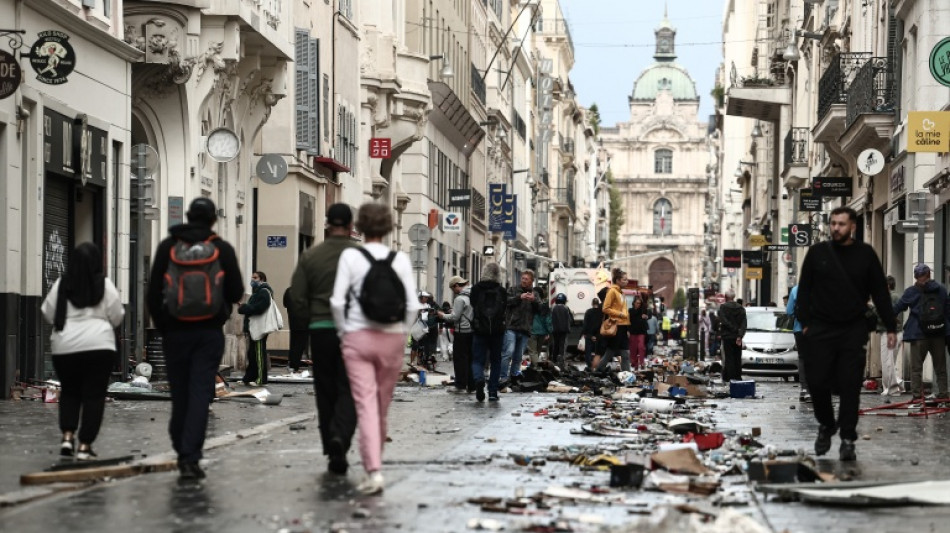
'Like we had a war': France counts cost of violent protests / Photo: Thibaud MORITZ - AFP
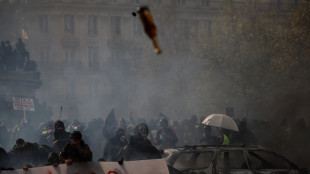
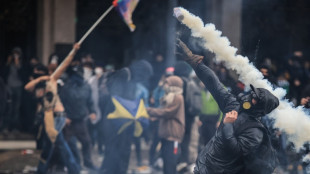
France was reeling on Sunday from widespread damage caused in violent protests the day before that saw 1,800 people arrested, a historic town hall torched and widespread looting.
"It's like we had a war," a 78-year-old resident in central Paris, Mehmet Ozeden, told AFP amid burnt street barricades from the protests.
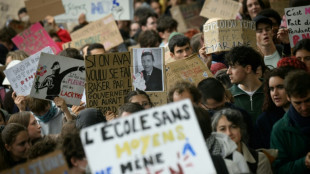
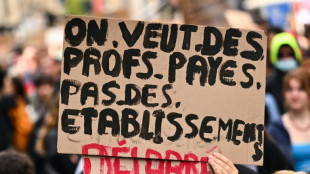
The convulsion raised the stakes for President Emmanuel Macron, who is in his final months in power before elections to replace him in six months' time. It followed weeks of student protests that had also turned violent at times.
Macron will address the nation Sunday evening, his office said.
Interior Minister Laurent Nunez said 1,800 people were arrested, with investigations under way "to identify the perpetrators of these acts so they can be brought to justice".
In Paris, where police said a record 855 people were arrested, torched cars, smashed shopfronts and burnt debris scarred numerous streets.
The capital experienced "a level of violence that we have never, I believe, seen before", said Paris deputy mayor Lamia El Aaraje.
Hundreds of shops were looted in Paris and other cities, including Marseille, Bordeaux, Nice and Strasbourg, during the protests over the cost of living.
Around 1,500 businesses were damaged, causing losses estimated in the hundreds of millions of euros, according to the Retail and Trade Federation.
One Paris resident, Anita Gras, out for a jog between the debris, said she saw young men loot a sports shoe retailer.
"They stayed until 1:00 am, we were afraid they were going to throw things at us," she said.
"It’s appalling, terrifying -- groups of young people came here yesterday (Saturday), looting, smashing everything, with total impunity," said another resident, 57-year-old Cecile Rogue, surveying a pile of charred bicycles.
- 'Wild horde' -
The city of Limoges lost its 19th-century town hall to a fire. The local prefect, Maurice Barate, told news channel LCI it had been deliberately set by "a wild horde" and was only brought under control early Sunday.
The mayor of Lyon, Gregory Doucet, said "the chaos that reigned in the city for several hours was abominable".
A tourist office in the centre of Lyon was set ablaze during the protests, which saw multiple clashes and looting.
Political recriminations quickly followed, with the government and far-right leader Marine Le Pen blaming ultra-left groups, while far-left leader Jean-Luc Melenchon accused authorities of inflaming tensions.
Paris's Socialist deputy mayor El Aaraje accused Le Pen's party of "acting like a pyromaniac firefighter" over the protests to further her presidential ambitions.
US Vice President JD Vance also waded in, implying on X that the unrest was because France had "imported the third world".
- Half a million demonstrators -
In Paris, startled tourists were seen Saturday running with suitcases along streets filled with tear gas and protesters.
"It was awful, I was so afraid," a tourist who declined to give her name said Sunday.
The Paris prosecutor's office said more than 500 people were in custody, most facing charges of receiving stolen goods, association with intent to commit violence, and vandalism.
Around 500 police, firefighters and paramedics were hurt in the protests, the interior minister said, adding that the figure was provisional. He was to visit Marseille on Sunday to survey the extensive damage caused there.
The violence took place on the sidelines of nationwide protests that the interior ministry said were attended by 550,000 people. The CGT union said 800,000 people participated.
A 17-year-old boy had his right hand blown off by a crowd-control grenade in the southern city of Saint-Etienne.
Analyst Mujtaba Rahman of the Eurasia Group think tank said on X that Saturday's "terrible scenes" were "not political protest in any true sense. Most of the real demonstrations against high oil prices and failing schools were peaceful".
He added: "The violence came from a fringe of the ultra left. The looting by opportunistic gangs from the poor suburbs. All good news for Marine Le Pen."
The principal grievance was the cost of living, pushed up in part by the war in the Middle East, which has helped send inflation soaring in Europe as elsewhere.
burs-rmb/jhb
E.Celis--LCdB