Ukraine rallies UN allies to isolate Russia on international stage
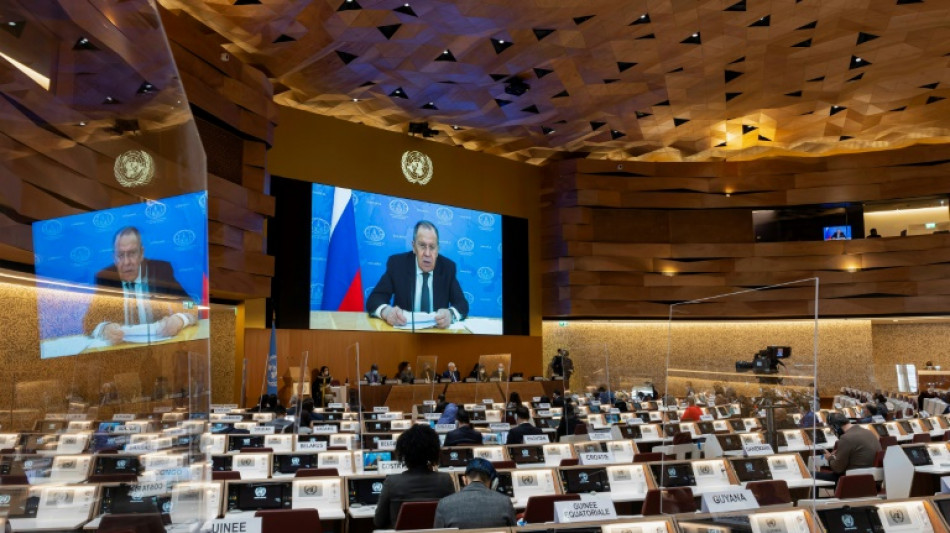
From standing ovations for Ukrainian speakers to a diplomatic walkout as Russia's foreign minister begins to speak, Moscow has found itself very publicly isolated at the United Nations this week.
Seven days into Russia's full-scale invasion of Ukraine, the conflict has taken centre stage at the UN, with Kyiv's diplomats seizing every opportunity to put Moscow's international pariah status on display.
Ukraine "is seeking to use every international forum possible where it is a member and where Russia is a member to isolate Russia," a Western diplomat in Geneva told AFP, adding that "this is the right diplomatic strategy to be pursuing".
Russia's ostracisation was evident in New York on Wednesday, when the UN General Assembly overwhelmingly adopted a resolution deploring Moscow's invasion "in the strongest possible terms" and demanding that Russia "immediately" withdraw from Ukraine.
China was among the 35 countries which abstained in that vote, while just five -- Eritrea, North Korea, Syria, Belarus and of course Russia -- voted against it.
In Geneva, where the UN Human Rights Council kicked off its main annual session this week, Ukrainian Ambassador Yevheniia Filipenko has led the push to show off which of the warring parties enjoys international support.
The Conference on Disarmament is also hosting high-level meetings, and thanks to the recent lifting of Covid measures, many ministers and ambassadors have gathered in person to see the diplomatic rallying around Ukraine on display.
- Standing ovation -
When Ukraine's deputy foreign minister Emine Aiiarovna Dzhaparova addressed the rights council Wednesday via video message, her speech was greeted with a standing ovation in the room.
Her reception stood in stark contrast to how diplomats greeted two video addresses by Russian Foreign Minister Sergei Lavrov on Tuesday -- by leaving the room.
Russia's top diplomat had been scheduled to come to Geneva to address both the UN-linked disarmament body and the UN Human Rights Council in person on Tuesday.
But he cancelled at the last minute, with Moscow blaming "anti-Russian sanctions" imposed by EU countries, relieving him of the embarrassment of watching the diplomats turning their backs on him and following Filipenko out of the room.
"Thank you very much for this wonderful show of support to Ukrainians who are fighting for their independence," she told the crowd gathered around a large Ukrainian flag outside the rights council chamber, where Lavrov's speech continued for only a scattering of remaining ambassadors.
Earlier, diplomats had also filed out as a separate Lavrov address played before a meeting of the Conference on Disarmament, a body created in 1979 to try to stem the Cold War arms race.
- Urgent debate -
Filipenko has, with broad support, meanwhile secured an urgent debate before the rights council on Thursday on the abuses committed in the Ukraine conflict.
During that debate, countries will consider a draft resolution presented by Kyiv calling for an international investigation into alleged abuses committed in the conflict, dating back to 2014 when the Kremlin annexed Crimea.
Russia's bid to block the debate received support from only four of the council's 47 members, in addition to itself: China, Eritrea, Cuba and Venezuela.
Efforts are now underway to try to convince the 13 countries, many of them from Africa, who abstained in the vote on holding the debate to back the resolution.
A number of Western diplomats have meanwhile been busy tweeting out their support for Ukraine.
US Ambassador Sheba Crocker for instance shared images of the Lavrov walkouts, as well as of a friendly dinner with Filipenko, receiving "likes" from French and British colleagues.
And on Friday, Russian Ambassador Gennady Gatilov will host a rare press conference and likely try to make Moscow's case in person.
K.Cox--LCdB