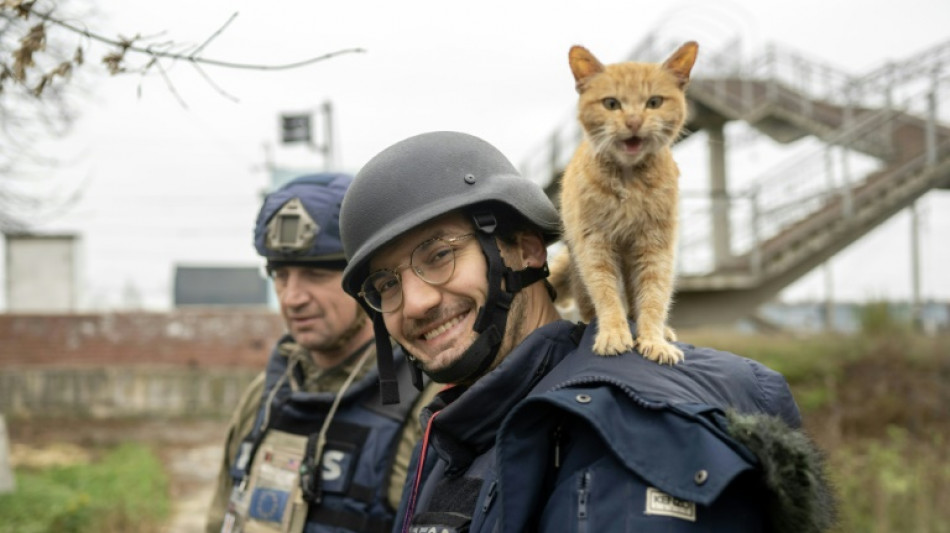
Tributes pour in for AFP reporter killed in Ukraine / Photo: Bulent KILIC - AFP
Messages of grief poured in Wednesday following the death of AFP journalist Arman Soldin in Ukraine, paying tribute to his bravery in covering Europe's worst conflict since World War II.
He was killed when an AFP team came under fire by Grad rockets while they were with a group of Ukrainian soldiers near Bakhmut, the epicentre of the fighting for months.
His death brings to at least 11 the number of journalists, fixers or drivers for media teams killed since Russia invaded Ukraine more than a year ago, according to advocacy groups.
French Foreign Minister Catherine Colonna on Wednesday paid tribute to Soldin's "courage" and described his work as "essential" to understanding the facts around the war in Ukraine.
"Arman was a talented and courageous journalist and his death is obviously devastating for those who knew him," said UK Prime Minister Rishi Sunak's spokesman.
"Journalism continues to shine a light in the darkness of this war, and Arman's work was vital to that.
Ukrainian Culture Minister Oleksandr Tkachenko blamed Russia for Soldin's death and said those responsible must be held accountable.
- 'Destruction and suffering' -
"Our condolences to Arman's family and friends, and gratitude for his courage," he said in a post on social media.
Pavlo Kyrylenko, the head of the Donetsk region where Bakhmut lies and which has been partially controlled by Kremlin-backed forces for years, offered his condolences to Soldin's friends and family.
"I thank everyone who -- risking their own lives -- continues to tell the truth about our war," he said.
Soldin, a French citizen born in Bosnia, once said he was drawn to telling stories of people displaced by fighting, stemming from his family's experience fleeing conflict.
The Bosnian member of the country's tripartite presidency, Denis Becirovic, condemned Soldin's killing, describing his death as a "great loss" and a "painful reminder" of the risks undertaken by frontline journalists.
"At the cost of his own safety, he had been travelling to the front lines since day one, doing his job as a journalist, establishing the facts and showing images of the destruction and suffering in Ukraine," Becirovic said.
Phil Chetwynd, AFP's global news director, said Wednesday "we are all incredibly shocked at AFP this morning" and that news of Soldin's death was "incredibly painful".
"He's someone who understood the risks but really wanted to tell the story, in particular the human story of what was happening on the ground in Ukraine," he added.
- 'Indebted' -
"It was the commitment to that story that took him back to the front again and again and again."
The Director General of UNESCO, Audrey Azoulay, denounced Soldin's killing and urged parties of the conflict to adhere to international law.
"I condemn the attack that killed video journalist Arman Soldin and call for an investigation to identify the circumstances of his death," she said.
French President Emmanuel Macron earlier hailed Soldin on Twitter, applauding his "bravery".
And in Washington, White House Press Secretary Karine Jean-Pierre said the world was "indebted" to the journalists who lost their lives covering the conflict.
"We need to understand the circumstances of the death of this journalist," Kremlin spokesman Dmitry Peskov said.
"We can only express sadness on this matter," he added, referring further questions to the defence ministry.
L.Dumont--LCdB