Russia says drone attack near Moscow a 'terrorist' act by Kyiv / Photo: NATALIA KOLESNIKOVA - AFP
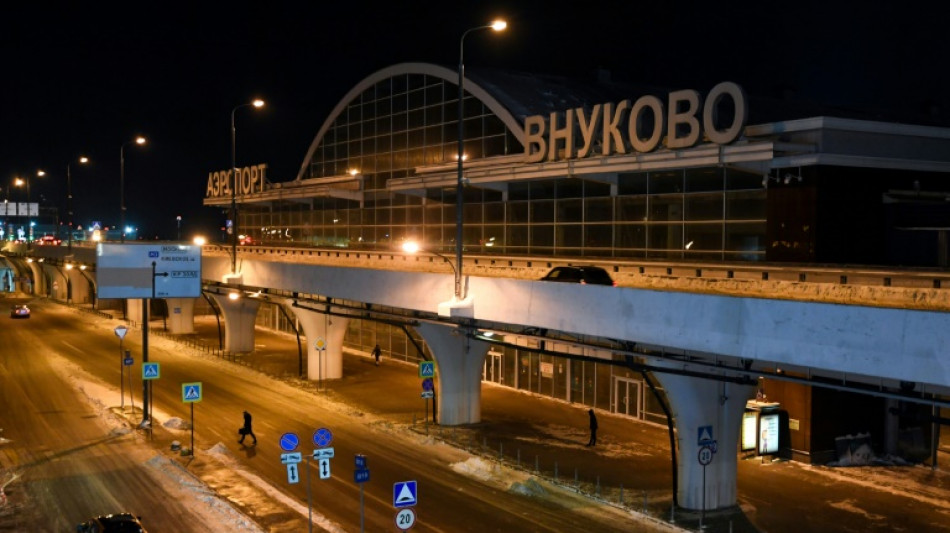
Russia said Tuesday it had downed five Ukrainian drones in the Moscow region, calling it a "terrorist act" that briefly disrupted air traffic at an international airport near the capital.
Ukrainian officials meanwhile said 38 people, including12 children, had been hospitalised following a Russian strike on the town of Pervomaisky in the eastern Kharkiv region.
"An attempt by the Kyiv regime to attack a zone where civil infrastructure is located, including an airport that receives international flights, is a new terrorist act," foreign ministry spokeswoman Maria Zakharova said on social media.
The early-morning incident is the latest in a series of recent drone attacks -- including on the Kremlin and Russian towns near the border with Ukraine -- that Moscow has blamed on Kyiv.
The Russian military said it had downed all five drones and that there was no damage or casualties.
Four were destroyed by anti-air defence systems while a fifth was neutralised by "electronic means," it said.
Emergency services cited by the state-run RIA Novosti news agency said one of the drones was neutralised at Kubinka, about 40 kilometres (25 miles) from Vnukovo airport.
Several flights were redirected to other airports and Russia's air transport agency said traffic at Vnukovo resumed at 0500 GMT.
Russia's Federal Air Transport Agency said that other airports in Moscow and the surrounding region were operating normally.
- Burning, overturned cars -
Moscow mayor Sergei Sobyanin described the incident as "another Ukrainian drone attack attempt."
Drone attacks have hit Russian cities throughout Moscow's offensive in Ukraine, but have intensified in recent months.
Moscow and its environs, lying some 500 kilometres from the Ukrainian border, have up to now been rarely targeted.
In early May, two drones were shot down above the Kremlin, and later the same month drones hit Moscow high-rises.
Kyiv said early Tuesday that Russia had launched 22 Iranian "Shahed" attack drones and three missiles at the Sumy, Donetsk and Zaporizhzhia regions.
Its forces had "destroyed" 16 of the drones, it said.
The strike in the eastern Kharkiv region bordering Russia hit a parking lot outside a residential building in Pervomaisky, a town of some 28,000 people.
The head of Kyiv's presidential office Andriy Yermak distributed images of burned and destroyed cars, some of which were lying upside down or on their side.
And the governor of the Kharkiv region, Oleg Sinegubov, posted a video from the scene, showing smoke rising from burnt cars near a Soviet-era housing block.
Prosecutors said the strike wounded at least 38 people.
- 'Tragic' Kherson shelling -
Authorities meanwhile announced that Russian shelling on a residential area in the southern frontline city of Kherson had killed two people.
"Today began with tragic news for the Kherson region. A Russian artillery strike ended the lives of two civilians in Kherson," Oleksandr Prokudin, the head of the Kherson region's military administration said in a statement on social media.
The drone attacks on Moscow come several weeks into a Ukrainian counter-offensive to claw back territory captured by Moscow since large-scale hostilities erupted last February.
The Institute for the Study of War, a US-based military observatory group, said Tuesday that Ukrainian forces had won limited gains during recent fighting.
Andriy Yermak, the presidential chief of staff, meanwhile said Ukrainian forces were "doing a great job" around the embattled city of Bakhmut in the eastern Donetsk region, claiming: "The Russians are losing."
Around 200 people attended a commemorative ceremony on Tuesday in Kyiv's St Michael's cathedral for the Ukrainian writer Victoria Amelina, who died of her wounds in a Russian strike on a restaurant in eastern ukraine.
Z.Barbier--LCdB