Wagner chief is still in Russia: Belarus leader / Photo: YURIY DYACHYSHYN - AFP
Wagner chief Yevgeny Prigozhin is still in Russia, Belarus's president said Thursday, raising questions about the deal to end the mercenary leader's mutiny last month.
Rescue workers meanwhile were clawing through rubble in the UNESCO-protected western Ukrainian city of Lviv, which was hit by a Russian missile early Thursday that killed four and injured dozens more.
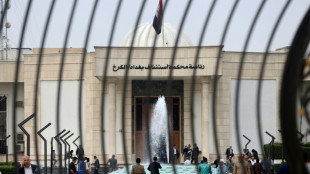
Belarus leader Alexander Lukashenko mediated a deal to end Prigozhin's revolt -- the most serious challenge to Russian President Vladimir Putin's rule -- that was to see the mercenary head into Belarusian exile.
"As far as Prigozhin is concerned, he is in Saint Petersburg... He is not in Belarus," Lukashenko, who has ruled isolated Belarus for nearly three decades, told reporters from foreign media outlets in Minsk.
Speaking in the presidential palace, Lukashenko said he knew "for sure" that Prigozhin was a free man, adding: "I spoke to him on the phone yesterday".
The Kremlin replied by saying it was "not following" Prigozhin's movements, nearly two weeks after the June 23 mutiny that saw armed fighters on the march toward Moscow.
Lukashenko said that members of Prigozhin's Wagner mercenary group have not established a base in Belarus yet, despite an offer from the Kremlin for those who took part in the failed mutiny to do so.
"At the moment the question of their transfer and set-up has not been decided," Lukashenko said.
Images broadcast by Russian media on Wednesday showed police entering Prigozhin's residence, a vast and luxurious mansion with a helicopter parked in the grounds, reportedly on June 25.
- 'Vicious' attack -
Lukashenko's comments came hours after what Lviv's mayor said was the biggest attack on civilian infrastructure in the city since the start of the Russian invasion last February.
While Russia regularly pounds Ukraine with missiles, artillery and drones, the Lviv region in the west, hundreds of kilometres from the frontlines and near the Polish border, has largely been spared the aerial onslaughts.
The US embassy in Ukraine described the attack as "vicious" and said in a tweet that "Russia's repeated attacks on civilians are absolutely horrifying."
"We will not stand by and will continue to strengthen Ukraine's ability to defend itself," it added.
Interior Minister Igor Klymenko wrote on Telegram that the missiles had struck a residential building.
"The 3rd and 4th floors in two sections of the house were destroyed," he said.
At least four people had been killed in the attack and 32 were wounded, including a child, the emergency services said later, updating an initial toll.
The attack came as President Volodymyr Zelensky, who vowed a tangible response to the strike, arrived for an official visit in Bulgaria, a major ammunition producer and supporter.
- 'Ceiling started to fall' -
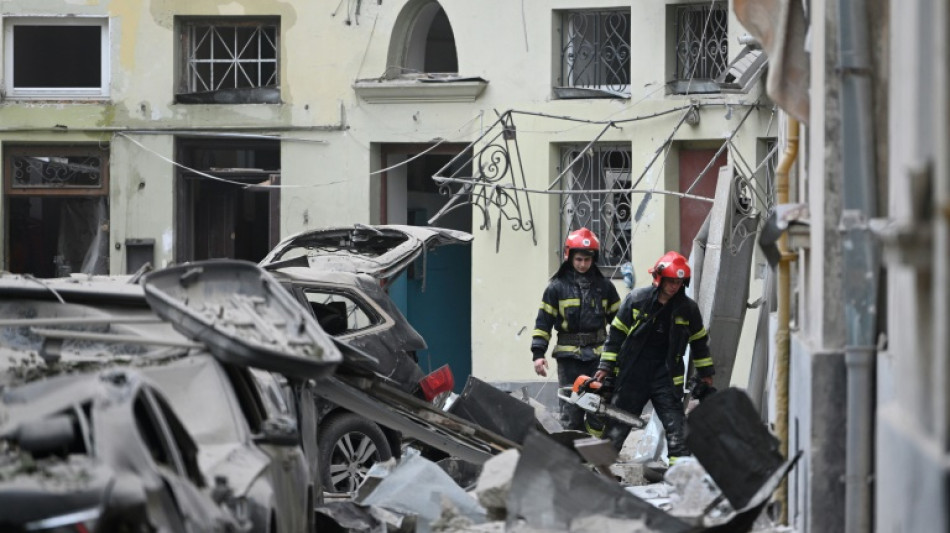
Rescuers were working to reach those still trapped, and AFP footage showed emergency responders clearing rubble and wood from the gutted first floor of a building in Lviv.
Cars covered in dust and with their windows blown out lined a pavement piled with debris.
One elderly woman carried a cage with a bird inside away from the scene.
"I woke up from the first explosion, but we didn't have time to leave the apartment," Olya, 37, told AFP.
"There was a second explosion, the ceiling started to fall, my mother was immediately hit," she said.
"I got to the window, started screaming, and in about half an hour the rescuers got to me, took me out and took me to the 8th hospital," Olya added.
"I came back and found out that my mother had died, my neighbours had died. At this point, it seems that I was the only one who survived from the fourth floor. It's a miracle."
More than 50 apartments were "ruined" and a dormitory at Lviv Polytechnic University was damaged, Mayor Andriy Sadovyi posted on Telegram.
An office building had been damaged and a school building had been destroyed, he said, later announcing two official days of mourning.
Zelensky said on social media that "Russian terrorists" were responsible for the destruction, adding: "There will definitely be a response to the enemy. A tangible one."
- 'Sorting through debris' -
On June 20, Lviv was hit by a major Russian drone assault that also targeted other cities including Kyiv.
Ukraine has recently bolstered its air defence systems with Western-supplied weapons and the number of Russian missiles and drones breaking through has diminished.
But the spokesman for Ukraine's air force, Yuriy Ignat, recently said that newly supplied systems were still insufficient to cover the whole country.
Slow weapons deliveries to Ukraine delayed Kyiv's planned counteroffensive, allowing Russia to bolster its defences in occupied areas, Zelensky said in a TV interview broadcast Wednesday.
Zelensky announced his arrival in Bulgaria on social media saying he had plans to meet with his counterpart Rumen Radev and Prime Minister Nikolay Denkov.
burs-brw-str-jbr/oc/jmm
V.Renard--LCdB