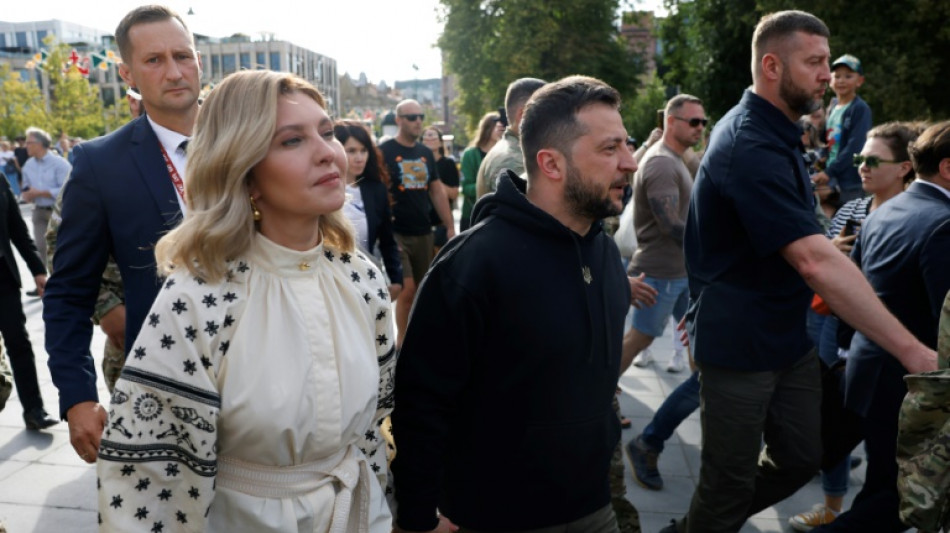
After NATO frustration, West offers Ukraine security commitments / Photo: Odd ANDERSEN - AFP
Western powers will propose long-term security commitments for Ukraine on Wednesday after NATO dashed President Volodymyr Zelensky's hopes of a clear timeline for joining the alliance.
Zelensky will hold symbolic talks with NATO's 31 leaders at their summit in the Lithuanian capital Vilnius, a day after blasting them for not moving faster to bring Ukraine into the fold.
In a bid to reassure the Ukrainian leader, the G7 group of nations are expected to issue a declaration on how they will help Kyiv defeat Russia and deter any new aggression in the coming years.
"As Ukraine makes strategic progress in their counteroffensive ... we are stepping up our formal arrangements to protect Ukraine for the long term," British Prime Minister Rishi Sunak said in a statement.
"We can never see a repeat of what has happened in Ukraine and this declaration reaffirms our commitment to ensure it is never left vulnerable to the kind of brutality Russia has inflicted on it again."
The announcement will provide a framework under which individual nations will later agree bilateral deals with Kyiv detailing the weapons they will give.
US President Joe Biden has previously mooted a model for Ukraine similar to one under which Washington has committed to giving Israel $3.8 billion in military aid per year over a decade.
- 'Absurd' -
Western backers have already sent weapons worth tens of billions to Ukraine to help it fight back against Russia's invasion.
Germany on Tuesday said it would provide more tanks, Patriot missile defences and armour vehicles worth another 700 million euros ($772 million).
France said it was sending long-range missiles and a coalition of 11 nations announced they will start training Ukrainian pilots on F-16 jets from next month.
But the pledges, while desperately needed by Ukraine's troops, fall short of Zelensky's aspirations of putting Kyiv under NATO's collective defence umbrella.
NATO leaders vowed after the first day of their summit that "Ukraine's future is in NATO" and shortened the eventual process Kyiv would have to go through to enter the alliance.
"We will be in a position to extend an invitation to Ukraine to join the alliance when allies agree and conditions are met," a statement said.
But that didn't go much beyond a 2008 vow on future membership, and reflects the concerns of dominant power the United States about being dragged into a potentially nuclear conflict with Russia.
Zelensky had earlier fired a broadside saying that failure to issue Ukraine a timeframe for joining was "absurd". "Uncertainty is weakness," he thundered.
As part of their attempt to convince Zelensky that Kyiv is moving closer to the alliance, NATO organised an inaugural meeting of a Ukraine-NATO council with him in Vilnius.
On the sidelines of the sit-down, Zelensky will hold meetings with key allies, including Biden, to press for more support.
Biden will later also give a keynote speech at Vilnius university laying out Washington's commitment to defending every inch of NATO territory.
W.Blondeel--LCdB