In Uganda, Iran president attacks West on LGBTQ rights / Photo: SIMON MAINA - AFP
Iranian President Ebrahim Raisi on Wednesday launched into a condemnation of Western attitudes on homosexuality during a visit to Uganda which has just introduced some of the harshest anti-gay laws in the world.
Raisi, on a mission to strengthen ties with the first trip by an Iranian leader to Africa in 11 years, called out the West at a press conference with President Yoweri Museveni after talks with the veteran Ugandan leader.
"The West today is trying to promote the idea of homosexuality and by promoting homosexuality they are trying to end the generation of human beings," Raisi announced.
Museveni signed the bill into law on May 29, triggering outrage among human rights groups, the United Nations and LGBTQ activists as well as Western powers.
The new law makes "aggravated homosexuality" a capital offence and penalties for consensual same-sex relations of up to life in prison.
Raisi told the press conference the West was "acting against inheritance and culture of nations".
The Iranian leader also offered Museveni support for the major project to build a domestic oil refinery and pipeline that has been opposed by environmental groups and faced legal action in France and criticism in the European Parliament.
Raisi said Tehran was ready to share its oil industry experience, while the West was "not generally interested to see countries who enjoy great resources and national reserves to be independent".
The visit comes as the Islamic Republic tries to shore up diplomatic support to ease its international isolation, with Raisi due to travel to Zimbabwe on Thursday.
He had met Kenyan President William Ruto early Wednesday in Nairobi, describing his visit to the East African powerhouse as "a turning point in the development of relations" between the two countries.
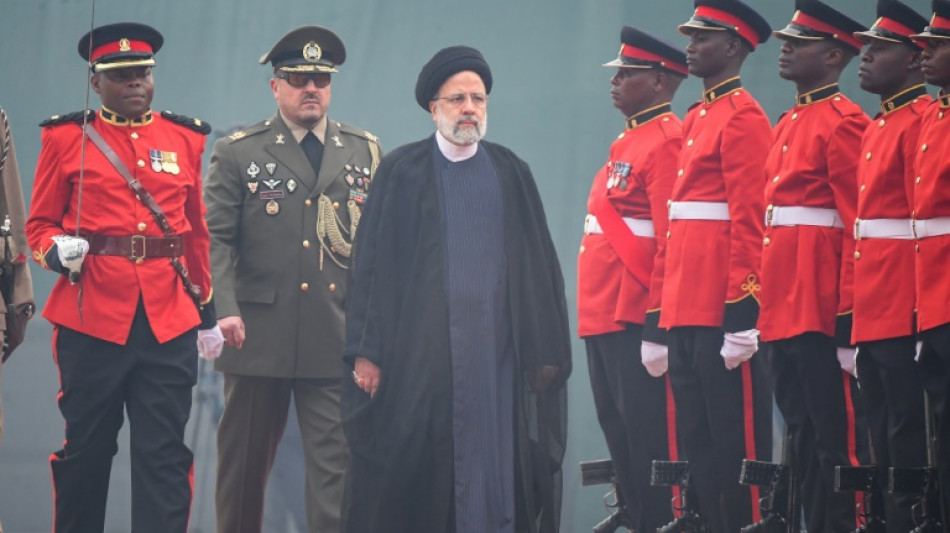
He then flew to the Ugandan city of Entebbe, where he was welcomed with a gun salute and military parade, public broadcaster UBC showed.
He is due to meet with his Zimbabwean counterpart Emmerson Mnangagwa on Thursday.
Africa has emerged as a diplomatic battleground in recent months, with Russia and the West vying for support over Moscow's invasion of Ukraine, which has had a devastating impact on the continent, sending food prices soaring.
Western powers have also sought to deepen trade ties with the continent, along with India and China, which have been on an infrastructure spending spree in Africa.
Raisi said his talks with Ruto reflected "the determination and resolve of both countries for expansion of economic and trade cooperation, political cooperation, cultural cooperation".
Ruto described Iran as "a critical strategic partner" and said the two sides had signed five memoranda of understanding covering information technology, investment, fisheries and other areas.
"These memoranda will enhance and further deepen our bilateral relations for sustainable growth and development," he said.
Ruto told reporters that Raisi had also shared plans for Iran to set up a plant in the port city of Mombasa "to manufacture an indigenous Iranian vehicle that has now been given the Kiswahili name, 'Kifaru', meaning rhino."
- 'Common political views' -
Iran's official IRNA news agency said Raisi's delegation includes the foreign minister as well as senior businesspeople.
Iranian foreign ministry spokesman Nasser Kanani had expressed optimism that the trip could help bolster economic and trade ties with African nations.
He also said on Monday that Tehran and the African continent share "common political views", without elaborating.
Iran has stepped up its diplomacy in recent months to reduce its isolation and offset the impact of crippling sanctions reimposed since the 2018 withdrawal of the United States from a painstakingly negotiated nuclear deal.
Last week, Iran became a member of the Shanghai Cooperation Organisation (SCO), which includes Russia, China and India.
In March, Tehran agreed to restore ties with regional rival Saudi Arabia under a China-mediated deal. It has since been looking to re-establish relations with other countries in the region including Egypt and Morocco.
In June, Raisi undertook a Latin American tour that included Venezuela, Nicaragua and Cuba before a trip to Indonesia.
burs-amu/bp/gw
E.Willems--LCdB