Russia puts Black Sea cargoes on alert after grain deal exit / Photo: Oleksandr GIMANOV - AFP
Russia said Wednesday it would consider cargo ships headed for Ukraine via the Black Sea as potential military targets, following Moscow's decision to exit a landmark deal for the export of grain from Ukraine.
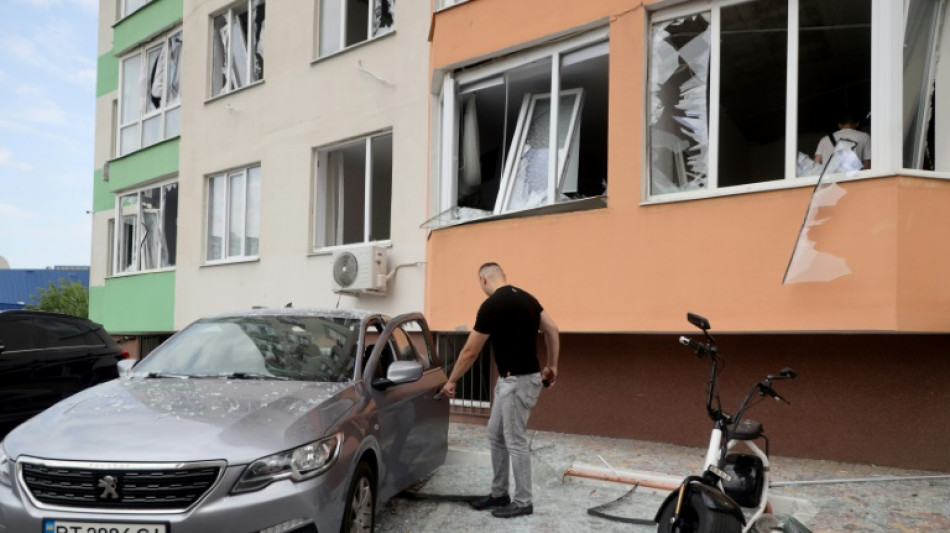
Following a second night of strikes around the southern Ukrainian port of Odesa, President Volodymyr Zelensky accused Russia of deliberately targeting grain export infrastructure and putting vulnerable countries at risk.
Kyiv at the same time urged other countries in the Black Sea region to intervene to assure the safe passage of cargo ships.
The effective closure of the sea route reignited fears of being flooded with cheap grain among Ukraine's European neighbours, who called on the EU to extend an import ban.
"From 00:00 am Moscow time on 20 July 2023 (2100 GMT Wednesday), all vessels sailing on the Black Sea to Ukrainian ports will be regarded as potential carriers of military cargo," the Russian defence ministry said.
"Flag states of such vessels will be considered to be involved in the Ukrainian conflict on the side of the Kyiv regime," the ministry said in the warning.
The beginning of Moscow's Ukraine campaign last year saw Black Sea ports blocked by warships until the agreement, brokered by the UN and Turkey.
The Kremlin said it was exiting the deal on Monday, after months of complaining that a related agreement allowing the export of Russian food and fertilisers had not been honoured.
- 'Robbing the world' -
Moscow accused Ukraine of using the Black Sea grain corridor for "combat purposes", following Russia's withdrawal from the deal.
The Russian army said in a statement it had hit "military industrial facilities, infrastructure for fuel, and ammunition depots of the Ukrainian armed forces near the city of Odesa" in the overnight assault.
But Kyiv said the strikes had destroyed 60,000 tonnes of grain waiting for export.
"Russian terrorists deliberately targeted the grain deal infrastructure, and every Russian missile is a blow not only to Ukraine, but to everyone in the world who wants a normal and safe life," Zelensky said on social media.
The deal enabled the export of more than 32 million tonnes of Ukrainian grain over the last year, bringing relief to countries facing critical food shortages such as Afghanistan, Sudan and Yemen.
With the strikes in Odesa, Russian President Vladimir Putin "is robbing the world of any hope of Ukrainian grain", German Foreign Minister Annalena Baerbock said on Twitter.
Ukraine said it was prepared to continue grain exports despite the end of the deal and called on other countries to help.
"A UN mandate should be added here to create a military patrol that would include countries in contact with the region, for example Turkey, Bulgaria or any others," Ukraine's presidential aide Mykhailo Podolyak told AFP.
Meanwhile, Ukraine's European neighbours urged the EU to extend a grain import ban until the end of the year, amid fears local farmers would be undercut by diverted Ukrainian supplies.
In June, Brussels agreed to allow Poland, Bulgaria, Hungary, Slovakia and Romania to restrict imports of grain from Ukraine through September.
"Either the European Commission agrees to develop... regulations to extend this ban, or we will do it ourselves," said Polish Prime Minister Mateusz Morawiecki, whose country is otherwise a staunch supporter of Ukraine.
- Civilian evacuation -
Elsewhere, the Russian army said it had advanced one kilometre (less than one mile) along the frontline in Ukraine's northeastern region of Kharkiv.
In Crimea, Russian officials ordered the evacuation of 2,000 people, following the fire at a military site on the Moscow-annexed peninsula.
"The temporary evacuation of residents of four localities adjacent to the military field in the Kirovsky district is planned," said the Moscow-installed head of Crimea, Sergei Aksyonov.
Authorities did not specify the cause of the fire, but some Russian media reported that detonations were heard in the area and footage showed columns of black smoke in the sky.
"We know that there was a fire there. Emergency measures are being taken, the situation is being clarified," Kremlin spokesman Dmitry Peskov said.
Military targets on the peninsula, a key supply artery for Russia's war in Ukraine, have been hit repeatedly in recent months.
Y.Bernard--LCdB