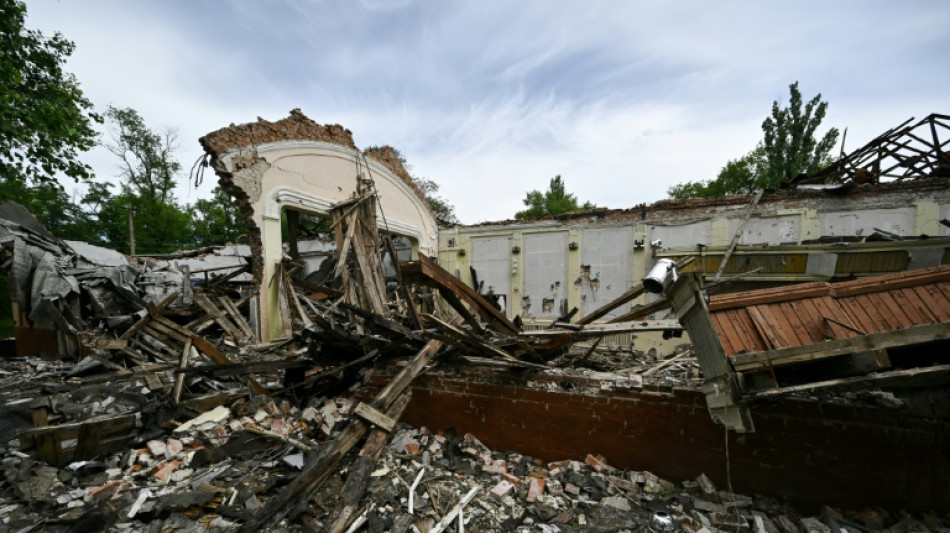
Russia puts Black Sea ships on alert after grain deal exit / Photo: Genya SAVILOV - AFP
Russia said Wednesday it would consider cargo ships destined for Ukraine via the Black Sea potential military targets, following its decision to exit a landmark deal that permitted the export of grain from Ukraine.
Following a second night of strikes around the southern Ukrainian port of Odesa, President Volodymyr Zelensky accused Russia of deliberately targeting grain export infrastructure and putting vulnerable countries at risk.
Kyiv at the same time urged other countries in the Black Sea region to intervene to assure the safe passage of cargo ships.
The effective closure of the sea route used to export Ukrainian grain to North Africa and the Middle East reignited fears among Ukraine's European neighbours of being flooded with cheap grain.
The Russian defence ministry said all vessels sailing to Ukrainian ports on the Black sea will be regarded as potential carriers of military cargo and its flag states "will be considered to be involved in the Ukrainian conflict on the side of the Kyiv regime."
The beginning of Moscow's Ukraine campaign last year saw Black Sea ports blocked by warships until the agreement, brokered by the United Nations and Turkey.
The Kremlin said it was exiting the deal Monday, after months of complaining that a related agreement allowing the export of Russian food and fertilisers had not been honoured.
Moscow also accused Ukraine of using the Black Sea grain corridor for "combat purposes."
- 'Robbing the world' -
The Russian army said in a statement it had hit "military industrial facilities, infrastructure for fuel, and ammunition depots of the Ukrainian armed forces near the city of Odesa" in the overnight assault.
But Kyiv said the strikes had destroyed 60,000 tonnes of grain waiting to be exported to China.
"Everyone is affected by Russian terror," Zelensky said in his daily address to the nation. "Everybody in the world must be interested in bringing Russia to justice for this terror."
As strikes intensified, wheat prices on the European stock exchange soared Wednesday up 8.2 percent from the previous day to 253.75 euros per tonne, while corn prices were up 5.4 percent.
The deal enabled the export of more than 32 million tonnes of Ukrainian grain over the last year, bringing relief to countries facing critical food shortages such as Afghanistan, Sudan and Yemen.
With the strikes in Odesa, Russian President Vladimir Putin "is robbing the world of any hope of Ukrainian grain", German Foreign Minister Annalena Baerbock said on Twitter.
But Putin in a government meeting late Wednesday accused the West of using the grain deal as "political blackmail" and that the agreement "has lost all meaning".
He added he would consider rejoining the agreement only "if all principles under which Russia agreed to participate in the deal are fully taken into account and fulfilled".
Ukraine said it was prepared to continue grain exports despite the end of the deal and called on other countries to help.
"A UN mandate should be added here to create a military patrol that would include countries in contact with the region, for example Turkey, Bulgaria or any others," Ukraine's presidential aide Mykhaylo Podolyak told AFP.
Meanwhile, Ukraine's European neighbours urged the EU to extend a grain import ban until the end of the year, amid fears local farmers would be undercut by diverted Ukrainian supplies.
In June, Brussels agreed to allow Poland, Bulgaria, Hungary, Slovakia and Romania to restrict imports of grain from Ukraine through September.
- Civilian evacuation -
On the front, fighting is concentrated in eastern Ukraine, where Kyiv's counteroffensive is so far struggling to break through Russia's defensive lines despite extensive support from its allies.
The Russian army said it had advanced one kilometre (less than one mile) along the frontline in Ukraine's northeastern region of Kharkiv.
In Crimea, Russian officials ordered the evacuation of 2,000 people, following a fire at a military site on the Moscow-annexed peninsula.
Authorities did not specify the cause of the fire, but some Russian media reported that detonations were heard in the area and footage showed columns of black smoke in the sky.
Ukraine is expected to receive more military support in the conflict with the United States announcing a new $1.3 billion aid package featuring air defence systems, anti-tank missiles, drones and other equipment.
O.Seuren--LCdB