Iraq expels Sweden envoy as Koran stomped in Stockholm / Photo: Ahmad AL-RUBAYE - AFP
Iraq on Thursday expelled Sweden's ambassador after a man stomped on a copy of the Koran at a Stockholm demonstration just hours after the Swedish embassy in Baghdad was torched over the planned protest.
Sweden-based Iraqi refugee Salwan Momika, 37, stomped and kicked the Koran but left the protest without burning it, just weeks after he set fire to pages of the book outside Stockholm's main mosque.
Sweden and other European countries have previously seen protests where far-right and other activists, citing free speech protections, damage or destroy religious symbols or books, commonly sparking protests and heightening diplomatic tensions.
Around the time of Thursday's protest in Stockholm, Iraqi Prime Minister Mohamed Shia al-Sudani "instructed the Swedish ambassador in Baghdad to leave Iraqi territory", according to a statement by his office.
It said the decision was "prompted by the Swedish government's repeated permission for the burning of the holy Koran, insulting Islamic sanctities and the burning of the Iraqi flag".
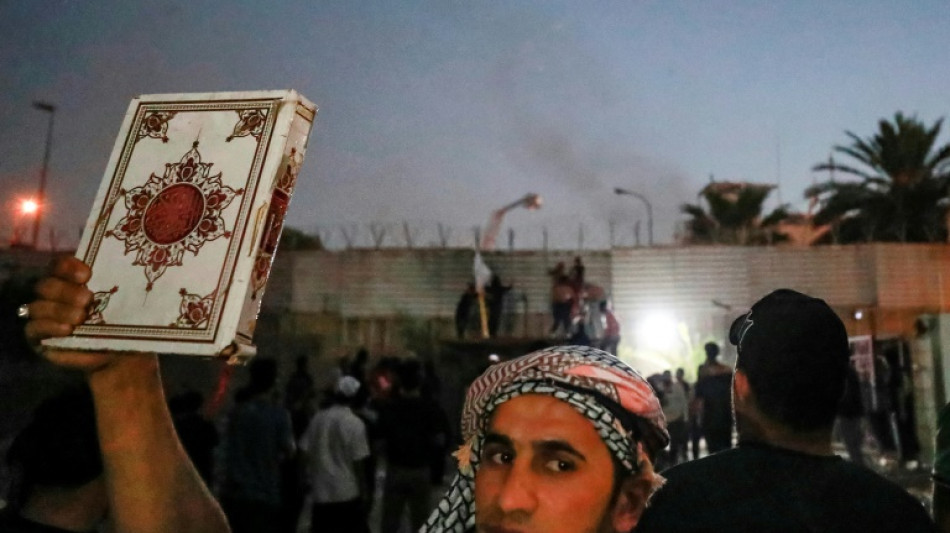
Overnight protesters had breached and set fires within the compound of the Swedish embassy in Baghdad and clashed with riot police, prompting an emergency meeting with the prime minister.
The Iraqi government strongly condemned the embassy attack but also issued a warning to Sweden if it allowed the second Koran burning protest to go forward.
Baghdad had informed Stockholm "that any recurrence of the incident involving the burning of the Holy Koran on Swedish soil would necessitate severing diplomatic relations," according to a statement from Sudani's office.
- Protecting the right to protest -
Swedish police had granted a permit for the protest in line with Swedish legislation on the rights to freedom of assembly and speech.
"The constitution states that a lot is needed to deny a person a permit for a public gathering so the day before yesterday we granted a permit for a private individual to protest," Ola Osterling with the Stockholm police told AFP.
On June 28, Salwan Momika also burnt pages of the Koran, outside a Stockholm mosque, sparking a wave of indignation and anger across the Muslim world.
Hundreds massed at the Baghdad embassy, as they had done in response to the previous Stockholm protest, scaled the walls and torched parts of it.
Rock-throwing protesters then clashed with Iraqi riot police who used electric batons and water cannon to disperse them.
One protester, Hassan Ahmed, told AFP that "we mobilised today to denounce the burning of the Koran, which is all about love and faith".
Calm has returned by morning, when police blocked the road leading to the embassy, and the full extent of the fire damage was not yet clear.
Sweden's foreign ministry told AFP that all of its employees in Baghdad were "safe" during the unrest.
Swedish Foreign Minister Tobias Billstrom later said Iraq's charge d'affaires would be summoned.
"What has happened is completely unacceptable and the government condemns these attacks in the strongest terms," he said in a statement.
"Iraqi authorities have an unequivocal obligation to protect diplomatic missions and personnel under the Vienna Convention."
- 'Serious security breach' -
Sudani "strongly condemned burning the Swedish embassy in Baghdad, viewing it as a serious security breach requiring immediate action", the Iraqi government statement said.
"Those accountable for security must be held responsible," it added, as an Iraqi security source told AFP about 20 protesters had been taken into custody.
Iraq also said it "reaffirms its commitment to ensuring the security and protection of all diplomatic missions, vowing to confront any attacks targeted at them".
Momika staged his previous Koran burning in front of Stockholm's largest mosque during Eid al-Adha, a holiday celebrated by Muslims around the world.
That incident prompted followers of Sadr to briefly storm the Swedish embassy in Baghdad the following day.
The powerful cleric has repeatedly mobilised thousands of demonstrators.
In the summer of 2022, during a dispute over the appointment of a new prime minister, Sadr supporters invaded Baghdad's parliament building and staged a sit-in that lasted several weeks.
Y.Simons--LCdB