Kenya protest call unheeded barring isolated clashes / Photo: SIMON MAINA - AFP
Kenyans largely ignored a call by the opposition to boost anti-government protests on Thursday, although isolated clashes flared in the capital between police and stone-throwing demonstrators.
Police fired tear gas and live rounds at protesters in Nairobi's Kibera slum, an opposition stronghold, AFP journalists saw, but no violence was reported elsewhere in contrast to earlier demonstrations.
Veteran opposition leader Raila Odinga called for three days of demonstrations this week, with Wednesday's protests claiming six lives according to Amnesty International's Kenya chapter, which said it had cross-checked the toll with victims' families.
Since March, 20 people have died in the demonstrations, according to figures released by the government and hospitals, and the unrest has alarmed Kenyans and the international community alike.
President William Ruto on Thursday repeated his call for a halt to the demonstrations, saying they were "not a solution to the problems of Kenyans".
Odinga says Ruto's government is illegitimate and responsible for a cost-of-living crisis and had urged Kenyans to show up in large numbers on Thursday, tweeting: "The voice of the People must be heard."
But no major demonstrations were reported on Thursday, apart from skirmishes in Kibera, where police clashed with protesters, while some residents armed with sticks stood guard to prevent burglaries.
"Yesterday, five shops were looted in this area, we are here to avoid that happening today, we are tired of it," said Jacob Anyango, 45.
Schools in Nairobi and the opposition bastions of Kisumu and Mombasa reopened, with the interior ministry assuring Kenyans that it had taken "adequate measures to guarantee the safety and security of learners".
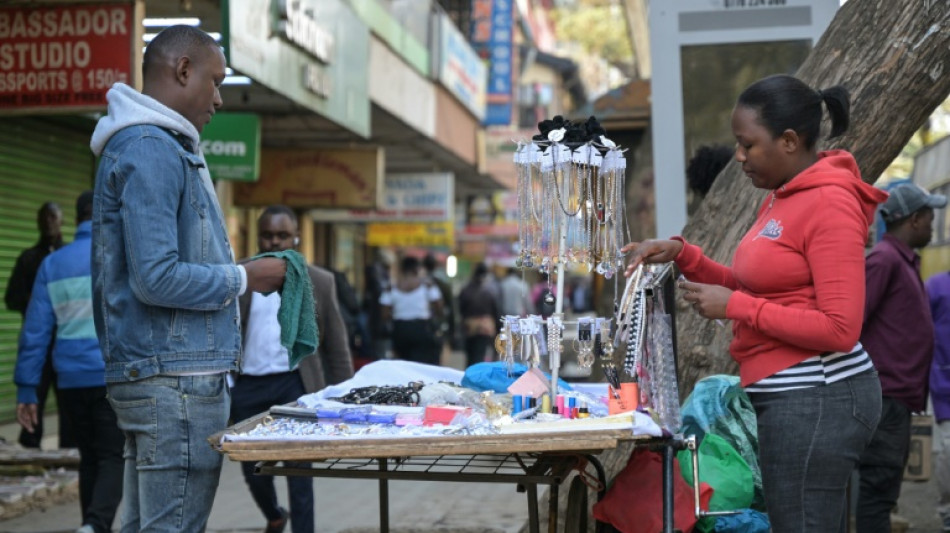
Nairobi's business district, which was largely shuttered on Wednesday, also went back to work, with stores reopening.
"The shop was closed yesterday because there was a lot of tension, and we felt people can take advantage of the situation to loot," said mobile phone salesman Peter Wangui.
"We feel today is safer... but it is not as busy as it used to be, the protests are hurting businesses," the 24-year-old told AFP.
- 'Put out the fire' -
The police response to the demonstrations has sparked outrage from rights groups, with Amnesty on Thursday condemning the "use of excessive, unnecessary and unlawful force, including lethal force".
Opiyo Wandayi, minority leader of the National Assembly, also criticised the authorities, saying: "The police brutality is alarming and we want the international community to take note of this".
The unrest has raised fears for Kenya, which is seen as a beacon of stability in a volatile region.
Leading newspapers published a joint editorial on Thursday calling for Odinga and Ruto to hold talks.
The two men "owe it to themselves and to the people of Kenya to consider if they want any more blood on their individual hands," it said.
"The sparks of conflagration have already been lit, and it is upon them both that lies the greatest responsibility to put out the fire before it spreads out of control."
"The nation stands on a precipice," it warned.
- 'Hand to mouth' -
Odinga called off demonstrations in April and May after Ruto agreed to dialogue, but the talks broke down.
"With many Kenyans living hand to mouth, asking for three days of protests (in) a week is too much for them," said Edgar Githua, lecturer at USIU Africa and Strathmore University in Nairobi.
"If these protests continue this way... and with a lot of violence and looting, they will lose purpose and even the leaders will eventually lose credibility," he told AFP.
Opposition protests following Odinga's election loss in 2017 continued until he brokered a surprise pact with his erstwhile foe, former president Uhuru Kenyatta, that became known as "the handshake".
R.Lacroix--LCdB