Ukraine claims drone attack in Moscow / Photo: Alexander NEMENOV - AFP
Ukraine on Monday claimed a drone attack in central Moscow, the latest in a series of attacks revealing Russian vulnerabilities, while Kyiv said Russian forces again hit grain facilities near Odesa.
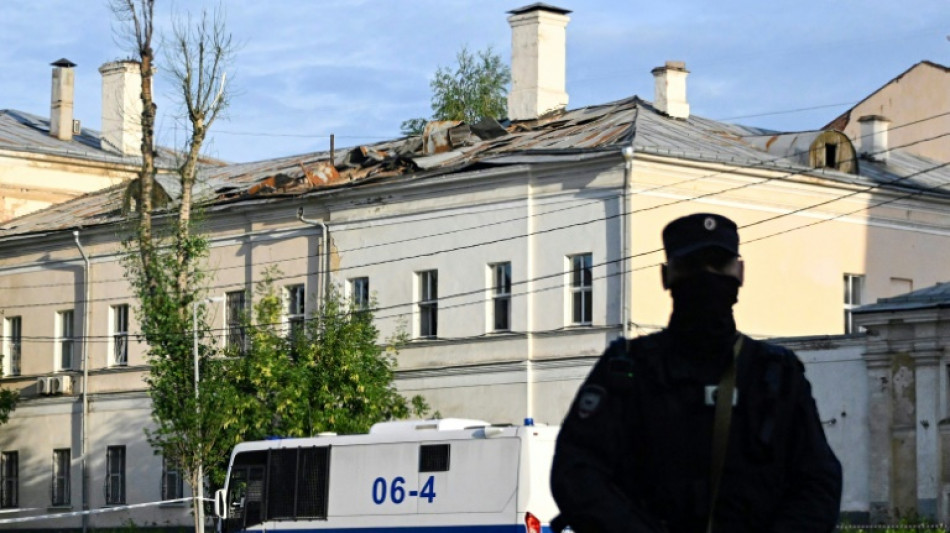
Police wearing masks cordoned off streets near the defence ministry in Moscow where one of the drones crashed, while the second shredded floor-to-ceiling glass walls of an office building in a southern district.
A Ukrainian defence source told AFP the attack -- one day after Kyiv vowed to "retaliate" for a Russian missile strike in the UNESCO-protected city of Odesa -- was a "special operation" carried out by Ukraine's military intelligence.
AFP reporters at the scene of the strike near the ministry on Komsomolsky Prospekt saw a two-storey building whose sloping, metal sheeted roof had been torn up by the impact of the drone's crash.
"I wasn't asleep. It was 3:39am. The house really shook," Vladimir, who lives nearby told AFP.
"It is scandalous that a Ukrainian drone almost flew into the defence ministry," the 70-year-old who declined to give his last name said while taking pictures at the scene.
In Crimea, the peninsula annexed by Russia in 2014, Moscow-installed governor Sergei Aksyonov said an ammunition depot had been hit and a private house damaged in a separate drone attack.
Villages near the depot were being evacuated, he added.
- Crimea, Odesa strikes -
Crimea -- a regular Ukrainian target since Russia's large-scale offensive launched last year -- has come under more intensive attacks in recent weeks.
Kyiv has repeatedly said it plans to take back Crimea.
Russia's defence ministry said 14 Ukrainian drones that targeted Crimea overnight were "suppressed" by electronic air defences and three others were shot down.
Meanwhile in southern Ukraine's Odesa region, officials reported a four-hour Russian drone attack on port infrastructure on the Danube River.
"A grain hangar was destroyed and tanks for storing other types of cargo were damaged," Ukraine's southern military command said on Telegram.
The Danube delta region, which spans across Romania and Ukraine, is being used as an export route for Ukrainian grain.
Russia last week pulled out of a key deal which had allowed the safe export of Ukrainian grain through the Black Sea.
Since then Kyiv has accused Russia of targeting grain supplies and infrastructure vital to grain exports.
Ukraine's military said it shot down three of the drones used in Monday's attack while Odesa governor Oleg Kiper said seven people had been injured.
Kyiv meanwhile said it had recaptured over 16 square kilometres of territory from Russian forces last week in the east and south, nearly two months into its highly-anticipated counteroffensive.
- Kremlin denies cathedral hit -
Russia's defence ministry branded the Moscow drone attack a "terrorist act," while Mayor Sergei Sobyanin said there had been "no serious damage".
Moscow and its environs lie around 500 kilometres (310 miles) from Ukraine but have been hit by several drone attacks this year, with one hitting the Kremlin in May.
Russia said this month it had downed five Ukrainian drones that disrupted the functioning of Moscow's Vnukovo international airport.
The Russian strike on Odessa on Sunday killed two people and severely damaged a historic cathedral.
Clergymen rescued icons from rubble inside the badly damaged Transfiguration Cathedral, which was demolished under Stalin in 1936 and rebuilt in the 1990s after the collapse of the Soviet Union.
The Kremlin on Monday denied that Russian forces targeted the cathedral, instead blaming the damage on Ukraine's air defence systems.
K.Cox--LCdB