Russia says thwarted Ukrainian drone attacks on Moscow, Crimea / Photo: Alexander NEMENOV - AFP
Russia said on Sunday it had downed Ukrainian drones targeting Moscow and the Crimea peninsula, in attacks that damaged two office towers in the capital and briefly shut an international airport.
One drone targeting Moscow was shot down on the city's outskirts and two others were "suppressed by electronic warfare" and smashed into an office complex early on Sunday, the Russian defence ministry said, adding that there were no injuries.
Moscow and its environs, lying about 500 kilometres (310 miles) from the Ukrainian border, had rarely been targeted during the conflict in Ukraine until several drone attacks this year.
The attack reported Sunday is the latest in a series of recent drone assaults -- including on the Kremlin and Russian towns near the border with Ukraine -- that Moscow has blamed on Kyiv.
The defence ministry called it an "attempted terrorist attack".
"On the morning of July 30, the Kyiv regime's attempted terrorist attack with unmanned aerial vehicles on objects in the city of Moscow was thwarted," it said on Telegram.
"One Ukrainian UAV was destroyed in the air by air defence systems over the territory of the Odintsovo district of Moscow region.
"Two more drones were suppressed by electronic warfare and, having lost control, crashed on the territory of Moscow-City's non-residential building complex."
Moscow-City is a commercial development in the west of the capital.
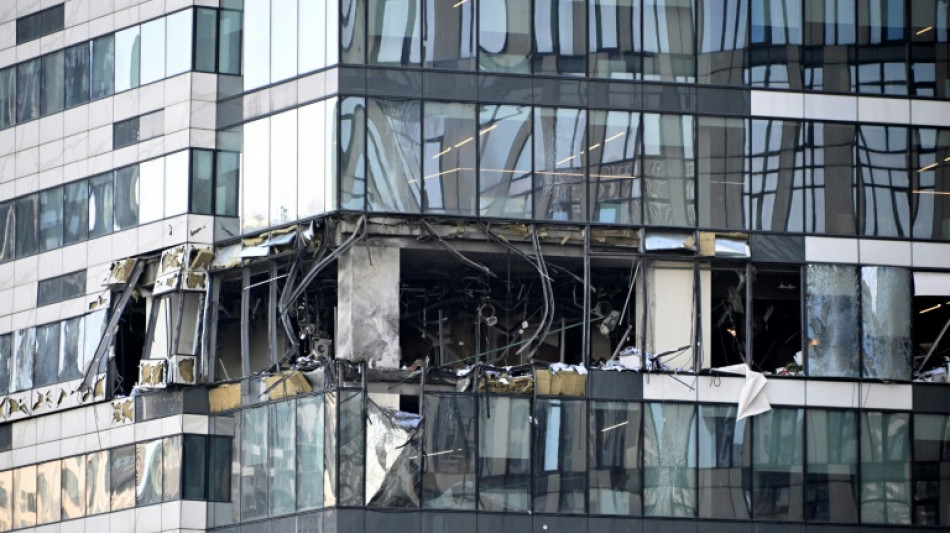
Its mayor Sergei Sobyanin posted on Telegram that the "facades of two city office towers were slightly damaged".
He added that there were "no victims or injured".
Several windows had been blown out on the corner of the buildings, AFP photos showed, with mangled steel beams visible and documents strewn on the ground below.
Police officers had cordoned off the area.
- Airport briefly closed -
The TASS state news agency reported that the capital's Vnukovo airport was "closed for departures and arrivals, flights are redirected to other airports".
Within less than an hour, operations appeared to have returned to normal.
The defence ministry also said on Sunday that 16 Ukrainian drones were destroyed by air defence fire in an overnight attack on Crimea, a peninsula Moscow annexed in 2014.
"Another nine Ukrainian drones were suppressed by means of electronic warfare and, without reaching the target, crashed into the Black Sea," the ministry said, adding that there were no victims.
Crimea has been targeted by Kyiv throughout Moscow's Ukraine offensive but has come under more intense, increased attacks in recent weeks.
Kyiv has repeatedly said it plans to take Crimea back.
The attacks on Moscow come several weeks into a Ukrainian counter-offensive to claw back territory captured by Russia since large-scale hostilities erupted in February 2022.
Russia's foreign ministry has said such attacks "would not be possible without the help provided to the Kyiv regime by the US and its NATO allies".
On Friday Russia said it had intercepted two missiles over its southern Rostov region bordering Ukraine, with at least 16 people wounded by debris falling on the city of Taganrog.
Shortly after, it said it had downed a second S-200 missile near the city of Azov, with debris falling in an unpopulated area.
On the other side of the border, a Russian strike killed two people in the southern city of Zaporizhzhia on Saturday, authorities there said.
And at least one civilian was killed in a missile attack on the northeastern city of Sumy, according to Ukrainian national police, who added that there were five injured.
According to public broadcaster Suspilne, the building was destroyed in an explosion at about 8:00 pm (1700 GMT).
In early July, a Russian drone attack hit an apartment building in the same city, killing three and wounding 21.
N.Moens--LCdB