Three killed in air strikes on western Ukraine / Photo: Genya SAVILOV - AFP
Russian missiles killed three people in the Ukrainian city of Lutsk early Tuesday, the latest deadly strike on the west of the country suffering an uptick in aerial attacks.
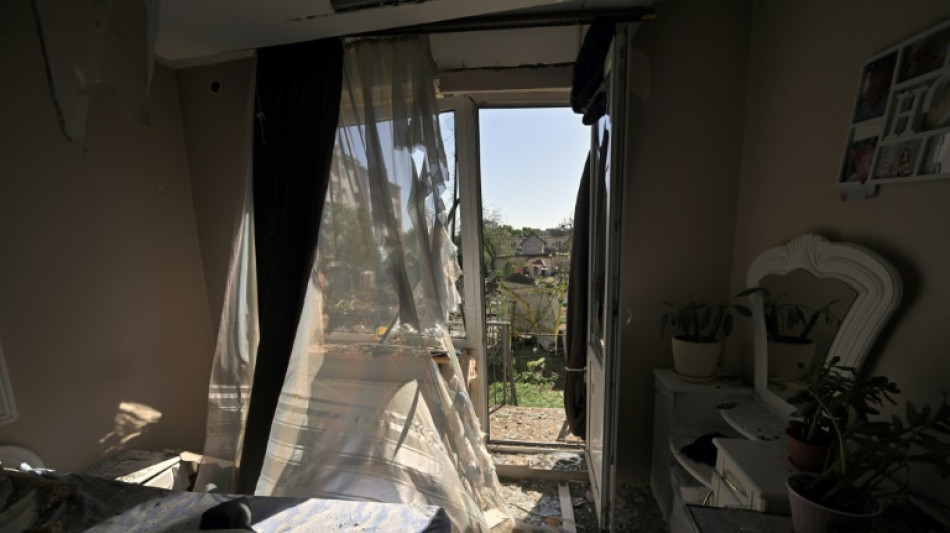
The bombardment of nearly three dozen missiles also tore through a playground in Lviv, western Ukraine's largest city, and sparked a blaze that left a five-storey residential charred and its windows burnt out.
The barrage of several types of missiles came as Russia's defence minister said during a military expo in Moscow that Ukraine was running low on military resources, with Kyiv posting slow battlefield progress.
Lutsk mayor Igor Polishchuk announced the death toll on social media and said emergency services were searching for survivors.
They later said they had pulled a victim from the debris alive.
The regional governor Yuriy Poguliaiko said air defence forces had repelled overnight air attacks but confirmed one missile hit an industrial facility in Lutsk.
The town had a pre-war population of over 200,000 and is less than 100 kilometres (60 miles) from Ukraine's border with Poland.
"Deliberate large-scale attacks on civilians. Solely for the sake of killing and psychological pressure," was how senior presidential aide Mykhailo Podolyak described the barrage in its aftermath.
- 'No safe place' -
Fatal Russian strikes in western Ukraine are sporadic. In March last year, four Ukrainian soldiers were killed and six wounded in Russian strikes on the Lutsk military airport.
But they have increased in recent weeks and AFP journalists in the western region of Ivano-Frankivsk this week witnessed family members bury an eight-year-old boy killed by Russian cruise missiles targeting a western airbase last week.
In Lviv, mayor Andriy Sadovyi said several missiles had been downed but confirmed widespread damage to dozens of buildings and said four people were injured.
"There's no safe place in Ukraine anymore," Olga Bura, a 64-year-old retired economist in Lviv, told AFP.
Her voice cracked with emotion as she surveyed the extensive damage to her home in a Lviv neighbourhood, broken glass crackling underfoot.
Mayor Sadovyi said that more than 100 apartments were damaged and that a kindergarten was "destroyed" after a missile flew into its yard.
A supermarket ceiling collapsed "due to falling missile fragments", regional governor Maksym Kozytskyi added.
Lviv has mostly been spared the daily bombardments that have hit other parts of Ukraine.
Last month 10 people were killed in what Sadovyi said was the biggest Russian missile attack on the city's civilian infrastructure since the invasion.
UNESCO said it was the first to take place in an area protected by the World Heritage Convention and had damaged a historic building.
The Ukrainian air force said Russia fired a total of 28 missiles both from Russian territory and warships on the Black Sea. It said it downed 16.
Russian defence minister Sergei Shoigu made his assessment of Ukraine's fighting capacity during a security conference in Moscow, from which Western firms were excluded.
"Despite comprehensive assistance from the West, Ukraine's armed forces are unable to achieve results," Shoigu said.
"Preliminary results of the hostilities show that Ukraine's military resources are almost exhausted".
- Ukrainian gains -
On the frontline, the Ukrainian military said Monday it had pushed Russian forces out of pockets of territory in the east and south of the country, building on a gruelling counter-offensive launched two months ago.
The gains came as Russia claimed its forces had progressed in the eastern Kharkiv region, undermining Kyiv's highly anticipated campaign.
Ukraine kicked off its counter-offensive against Russian forces in June after building up assault battalions and stockpiling Western-donated weapons.
G.Hendrickx--LCdB