Russia says destroys drones in Moscow, Black Sea / Photo: NATALIA KOLESNIKOVA - AFP
Russian forces destroyed Ukrainian drones targeting Moscow and its Black Sea Fleet, officials said Friday, the latest in a surge of attacks on the capital and the flashpoint waterway.
The drone assaults came as a Russian-proxy official confirmed speculation that Ukrainian forces had breached the left bank of the Dnipro river, the de facto frontline in the south of the country.
Russia's defence ministry said its air force downed a Ukrainian drone over the capital at about 04:00 (0100 GMT) on Friday.
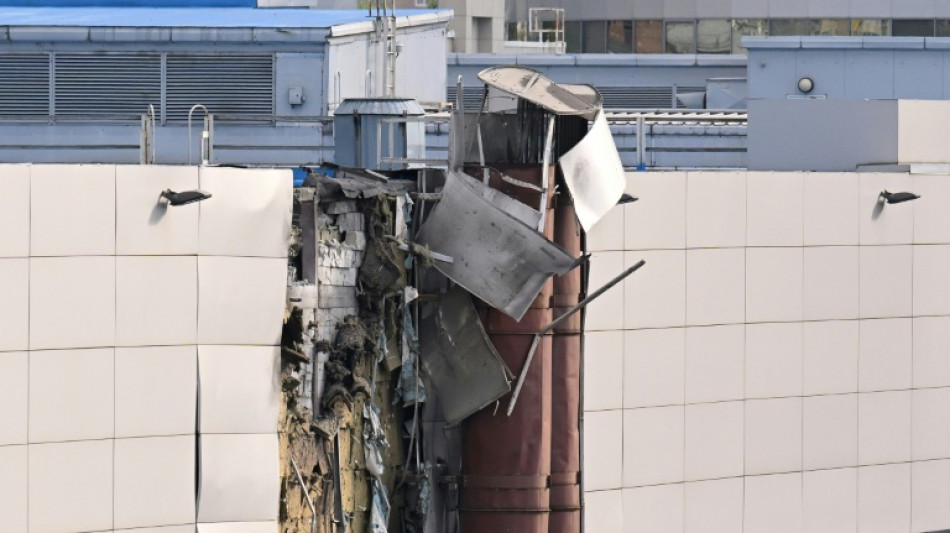
"The UAV, after being exposed to air defence weapons, changed its flight path and fell on a non-residential building in the Krasnopresnenskaya embankment area of Moscow," the ministry said.
Moscow's mayor said emergency services were on the scene, but that early reports indicated there were no casualties.
"The wreckage of the UAV fell in the area of the Expo Centre, and did not cause significant damage to the building," Sergei Sobyanin said on social media.
The walls of the venue's pavilion had partially collapsed, AFP journalists on the scene reported.
Russian news agencies reported that airspace near Vnukovo international airport was briefly closed, with departures and arrivals delayed.
- 'War' coming to Russia -
The expo centre, on the Krasnopresnenskaya embankment of the Moskva River, hosts regular exhibitions and trade shows.
The venue is 100 metres (328 feet) from Moscow-City, an office block in the capital's main business district that was struck twice within days by debris from downed drone strikes this month.
Until a series of attacks in recent months, the capital had not been targeted during the conflict in Ukraine, which began more than a year ago.
Last week, Russia destroyed a Ukrainian drone over Moscow's west, with debris landing in a park on the Karamyshevskaya embankment.
In May drones were shot down near the Kremlin, less than five kilometres from the Expo Centre.
Ukrainian President Volodymyr Zelensky warned last month that "war" was coming to Russia and that its "symbolic centres and military bases" were targets.
Hours before the strike on Moscow, Russia thwarted a Ukrainian marine drone attack on its warships in the Black Sea, the latest in a string of assaults on its fleet.
Russia's defence ministry said the drone was destroyed late Thursday by patrol ships, 237 km (147 miles) southwest of Sevastopol -- the base of its Black Sea Fleet on the Moscow-annexed Crimean peninsula.
- Black Sea attack -
Attacks from both sides have escalated in the Black Sea since Russia pulled out of a deal that had allowed safe export of Ukrainian grain through the shipping hub.
The overnight attack came hours after a civilian cargo ship sailing through the Black Sea from Ukraine reached Istanbul in defiance of a Russian blockade.
Moscow announced last month that it would consider any ships nearing Ukraine in the Black Sea as potential military cargo carriers.
Ukrainian President Volodymyr Zelensky said the ship was using a "new humanitarian corridor" Kyiv established after the grain deal collapsed.
Days ago, a Russian navy ship fired warning shots and boarded a Turkish-owned but Palau-flagged cargo vessel that was sailing to a Ukrainian river port.
Russia has also ramped up attacks on Ukraine's port infrastructure in the Black Sea and the Danube River, a vital export route since the grain deal's scrapping, in recent weeks.
Vladimir Saldo said Ukrainian "sabotage groups" had managed to hide out on the outskirts of the Russian-controlled town of Kozachi Lageri, near the Dnipro river, but that they were later "cleared out" by Moscow's forces.
His comments come after Ukraine's Deputy Defence Minister Ganna Malyar this week confirmed that "certain units performed certain tasks," on the left bank of the Dnipro river in Kherson, without elaborating.
N.Lambert--LCdB