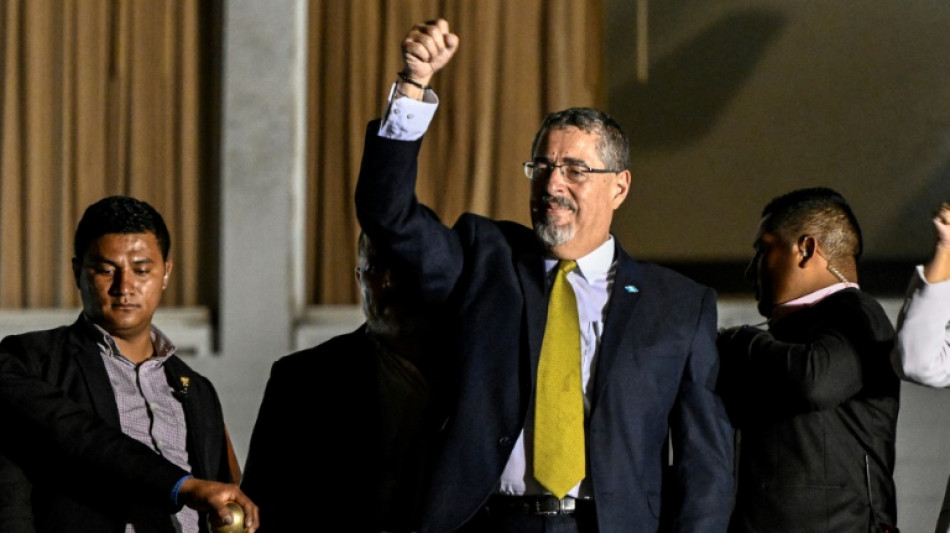
Guatemala outsider Arevalo stuns with presidential election triumph / Photo: Luis ACOSTA - AFP
Dark horse candidate Bernardo Arevalo scored a landslide victory in Guatemala's presidential election, final results showed Monday, as he vowed to crack down on pervasive corruption.
The bespectacled 64-year-old sociologist swept from obscurity in what observers see as a stinging rebuke of a government that has cracked down on efforts to fight graft in the Central American country.
"The people of Guatemala have spoken forcefully," Arevalo told the media in his first comments after winning with 58 percent of the vote, with all ballots counted.
"Enough with so much corruption."
He added that outgoing President Alejandro Giammattei had called to congratulate him and together they had agreed "to draw up a timetable for the transition plan."
His rival in the runoff, former first lady Sandra Torres -- who enjoyed the backing of the incumbent as well as the elite -- came in second with 37 percent of the vote.
She has yet to admit defeat, and said she would "take a definitive position when results are clarified with total transparency."
Before the vote, Torres, the ex-wife of late leftist president Alvaro Colom, accused the country's electoral board of leaning toward Arevalo's party.
Arevalo will become the first leftist president at the helm of Guatemala in 12 years when he takes office in January.
Ambassadors from the United States and European Union have expressed willingness to work with Arevalo, who said the presidents of neighboring Mexico and El Salvador had already offered their congratulations.
Thousands of Arevalo's supporters celebrated with rallies in squares in the capital and cities around the country.
"This triumph is a defeat of a corrupt system," said sociologist Jorge Mendoza.
- Defeat of the old politics -
Under Giammattei, several prosecutors fighting graft have been arrested or forced into exile. He had also cracked down on critical journalists.
"Arevalo's victory means a defeat of the old politics, of the ruling party and those nostalgic for the Cold War. A different era is beginning for our country," independent analyst Miguel Angel Sandoval told AFP.
Ahead of Sunday's vote, observers and foreign allies sounded the alarm about meddling and efforts to undermine the electoral process, after a top prosecutor tried to have Arevalo disqualified and ordered raids on his party offices and the election body.
The Supreme Court on Friday overturned the order to disqualify Arevalo's Semilla political party, which had prompted protests.
On the campaign trail, Arevalo claimed to be the victim of "political persecution by a corrupt minority that knows it is losing power by the day."
Francisco Rojas, the rector of the UN-created University for Peace in Costa Rica, predicted "complex times" in the five months until Arevalo takes office.
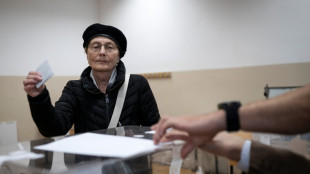
In Sunday's election, fed-up voters expressed despair over the poverty, violence and corruption that have gripped the Central American nation, pushing thousands of its citizens to emigrate in search of better lives, many to the United States.
"You can no longer live anywhere, because there is so much crime," said 66-year-old housewife Maria Rac, an Indigenous Mayan who voted in the town of San Juan Sacatepequez, 30 kilometers (20 miles) northwest of the capital.
Guatemala has some of the worst poverty, malnutrition and child mortality rates in Latin America, according to the World Bank.
The murder rate is one of the highest in the world, with many killings attributed to gang violence related to drug trafficking.
- 'New faces' -
Arevalo is the son of reformist president Juan Jose Arevalo (1945-1951), who is fondly remembered as the first democratically elected leader of the country after the dictatorship of Jorge Ubico, an admirer of Adolf Hitler who imposed forced labor on the indigenous Mayan population.
Mayan farmer Brigido Chavix, 57, said he did not support Arevalo, "but I voted for him because we want new faces."
"That lady (Torres) has already been around for a long time talking about policies, policies, and she has never carried them out."
burs-fb/bfm
J.Hermans--LCdB