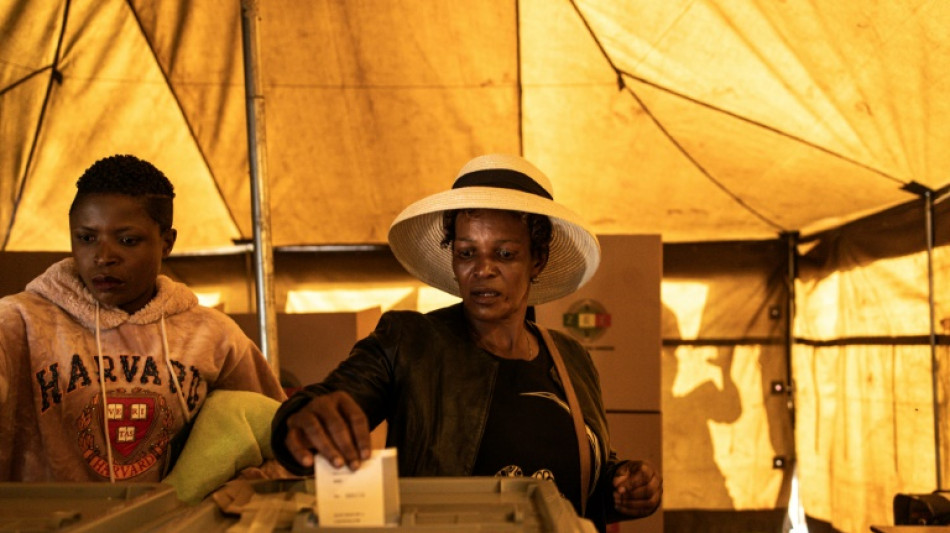
Zimbabwe high stakes vote spills into day two as opposition alleges rigging / Photo: JOHN WESSELS - AFP
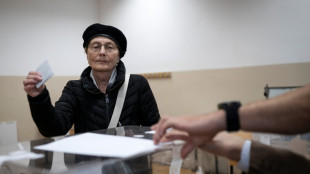
Zimbabwe's president Wednesday extended voting by another day after long delays marred the start of balloting in key districts and sparked opposition accusations of "rigging" and "voter suppression".
As polling began to close in some voting stations, it was only starting in others, prompting opposition accusations of vote manipulation after a campaign marked by tension and a clampdown.
"I do, by this proclamation in respect of the affected polling stations for the wards... fix the 24 of August 2023 as the last day of polling," President Emmerson Mnangagwa announced in a presidential directive contained in a government notice.
Less than a quarter of polling stations in Harare -- an opposition stronghold -- opened on time, according to electoral authorities, who blamed the problem on delays in the printing of ballot papers.
"This is a clear case of voter suppression, a classic case of Stone Age, antiquated, analog rigging," Nelson Chamisa, 45, the head of the leading opposition party, the Citizens Coalition for Change (CCC) told a press conference in the capital.
Chamisa is the main challenger to Mnangagwa, 80, who came to power after a coup that deposed late ruler Robert Mugabe in 2017.
Mnangagwa is seeking a second term in an election that came on a backdrop of widespread discontent at the southern African country's economic troubles.
The poll is being watched across southern Africa as a test of support for the ZANU-PF party, whose 43-year rule has been battered by an economic slump and charges of authoritarianism.
Chamisa blamed the governing ZANU-PF party, which has ruled the country since independence, for the delays, saying it was "desperate" to cling to power and risking plunging the country into a "crisis".
The electoral commission blamed the problem on delays in the printing of ballot papers "arising from numerous court challenges".
- Graft and economy -
Polling in Harare's oldest suburb of Mbare started closing at around 7:00 pm (1700 GMT), while opening at another station in a suburb west of Harare.
"This is a way to frustrate Harare voters. A way to manipulate the election results," voter Tafadzwa Dhlodhlo said at a Warren Park polling station.
Ballots at a school serving as a polling station in a poor neighbourhood arrived only after 2:30 pm (1230 GMT), whereas polling had been scheduled to start at 7:00 am.
"I am so disappointed," said Linda Phiri, 53, a mother of three who had been waiting for eight hours. "I'm sleeping here. I want to cast that vote so that we are liberated," said Phiri.
Chamisa lashed out at the problems, saying it was a "classic of voter suppression" targeting CCC strongholds.
"The fact they have targeted Harare... is an indication that they are scared of people in the urban areas."
At least 6.6 million people were registered to vote, with more than a million living in Harare.
Publication of the results is legally required within five days.
To clinch re-election, Mnangagwa must win an absolute majority or face a runoff.
Casting his ballot in his hometown of Kwekwe in central Zimbabwe, a confident Mnangagwa -- nicknamed the "Crocodile" for his determination -- said: "If I think I'm not going to take it, then I will be foolish."
The opposition has been hoping to ride a wave of discontent over corruption, high inflation, unemployment and entrenched poverty.
In Harare's upscale Borrowdale Brooke, retired lawyer Brian Crozier, 79, said he wants "an honest government, less corruption, more tolerance of other views. Not this idea of 'you're the enemy if you don't agree with everything I say'".
- Chamisa's struggle -
A lawyer and pastor, Chamisa has promised to root out graft, relaunch the economy and end Zimbabwe's long international isolation.
Yet in a nation with a history of tainted elections, few believe he will emerge the outright winner.
His party had complained about being unfairly targeted by authorities, its members arrested, dozens of its events blocked, and little or no airtime has been allotted to it on national television.
Chamisa narrowly lost to Mnangagwa in 2018, a poll that he condemned as fraudulent and was followed by a deadly crackdown on protests.
The former British colony, then named Rhodesia, broke away from London in 1965 under white-minority rule.
After a long guerrilla war, it gained independence in 1980 and was renamed Zimbabwe.
ub-fj-str-sn/kjm
S.Leysen--LCdB