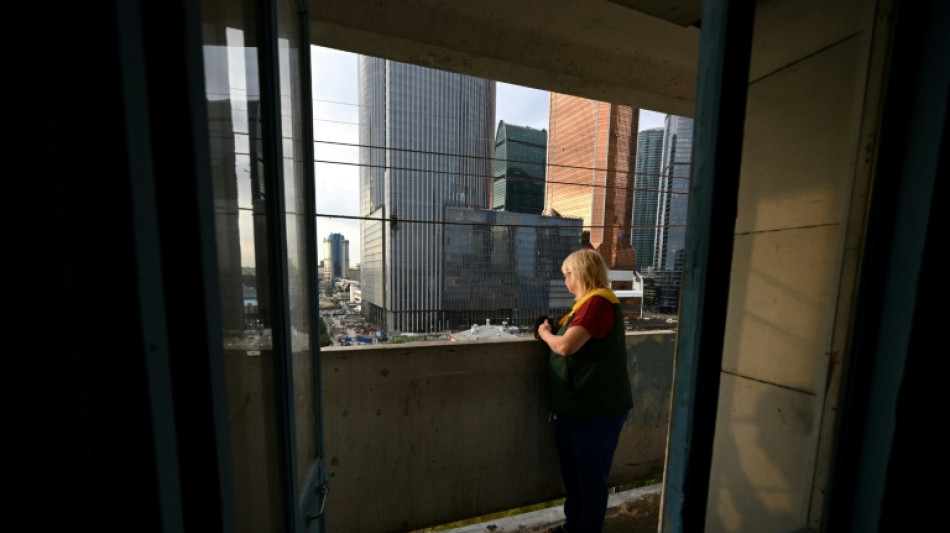
Russia hails air defences after massive drone attack on Crimea / Photo: NATALIA KOLESNIKOVA - AFP
Russia on Friday praised the work of its air defences, saying they had downed 42 drones over the Moscow-controlled Crimean peninsula, a day after Ukraine claimed its forces launched a raid there.
Crimea, annexed by Russia in 2014, has been targeted by Kyiv throughout Moscow's Ukraine offensive but has come under more intense attacks in recent weeks.
"All air defence systems are working quite effectively," Kremlin spokesman Dmitry Peskov said, adding that "minor damage" was sometimes unavoidable.
He was responding to a question about whether the Kremlin was concerned about increasingly frequent drone attacks, after waves of drones were downed over the peninsula.
Nine drones were "destroyed... over the territory of the Republic of Crimea," the defence ministry wrote on Telegram early Friday.
Thirty-three others "were suppressed by electronic warfare and crashed without reaching the target," it said, without specifying whether there had been any damage.
The ministry later said it downed a drone over the Kaluga region, southwest of the capital.
Moscow has been targeted by almost daily drone attacks in recent days.
The Kaluga region was also targeted by a "missile" overnight, which was detected and destroyed by air defences, the ministry said.
Flights to and from Moscow's Vnukovo and Domodedovo airports were briefly halted, the TASS news agency reported, without specifying the reason.
- 'Engaged in combat' -
A local Russian-installed official earlier said several drones had been destroyed in the sea near Sevastopol, which is home to Russia's Black Sea fleet.
Emergency services reported no damage to civilian infrastructure from those drones, the Moscow-backed governor of Sevastopol Mikhail Razvozhayev wrote on Telegram.
It was not clear whether they were among the 42 reported by the defence ministry.
"All forces and services are in a state of combat readiness," Razvozhayev said.
Russian military bloggers have criticised air defence around the peninsula, especially after Ukraine destroyed a powerful anti-aircraft system there on Wednesday.
And on Thursday, Ukraine said its forces had landed on the peninsula and flown the country's flag during a "special operation" to mark its Independence Day.
Special forces troops landed overnight on Crimea's western shore near the towns of Olenivka and Mayak, where they "engaged in combat", Ukraine's GUR intelligence agency said.
Moscow has also accused Ukraine of attacking the Russian-built Crimean bridge, which connects the peninsula to Russia.
The bridge has been closed due to multiple incidents including a massive explosion in October last year.
- 'Absolute lie' -
Reports of the aerial attack came as the Pentagon said it would begin training Ukrainian F-16 pilots in the United States starting next month.
The jets have long been sought by Kyiv, now bogged down in a plodding counter-offensive aimed at retaking land held by Russian forces.
US President Joe Biden and Ukrainian leader Volodymyr Zelensky spoke on Thursday about plans to train Ukrainian pilots to fly F-16 fighter jets, the White House said.
Earlier, Biden said he was "not surprised" at news Yevgeny Prigozhin, head of the Wagner mercenary group and who led a brief mutiny against Russia's military, may have died in a plane crash.
"I don't know for a fact what happened, but I'm not surprised," Biden said.
The Kremlin on Friday reacted to these suggestions.
"Of course, in the West, this speculation is being presented from a certain angle. All of this is an absolute lie," Peskov said.
Putin on Thursday broke his silence about the crash, paying a qualified tribute to the mercenary boss and the paramilitary group he led.
K.Smeets--LCdB