Russian airport attacked from own territory, Ukraine says / Photo: Roman Pilipey - AFP
Ukraine's military intelligence said Friday that a recent drone attack on an airport in northwestern Russia which damaged several transport planes was carried out from within Russian territory.
The claim, falling on the first day of the school year, came as President Vladimir Putin told Russian students that their country was "invincible" and police in Kyiv scrambled to respond to bomb threats in schools.
The attack this week on Pskov airport some 700 kilometres (more than 400 miles) from Ukraine marked the latest strike to rock Russian territory since Kyiv vowed to "return" the conflict to Moscow in July.
"The drones used to attack the 'Kresty' air base in Pskov were launched from Russia," Ukraine's intelligence chief Kyrylo Budanov said on social media Friday.
"Four Russian IL-76 military transport planes were hit as a result of the attack. Two were destroyed and two were seriously damaged," he added.
Budanov said the aircraft had been used by the defence ministry to transport troops and cargo.
The Kremlin said this week that military experts were working to find out which routes the drones were taking in order "to prevent such situations in the future".
Asked about Ukrainian claims on Friday, Kremlin spokesman Dmitry Peskov declined to comment and instead deferred questions to the defence ministry.
The region of Pskov, which was also targeted by drones in late May, is surrounded by NATO members Estonia and Latvia to its west and Belarus to its south.
- 'Calm' urged after bomb scare -
Budanov's comments came hours after Russian air defences destroyed a drone approaching Moscow, the city's mayor said, a day after a similar attack on the capital.
Russian media reported that air traffic at Moscow's Domodedovo and Vnukovo airports had been temporarily halted.
An uptick in aerial assaults have hit the capital's financial district, ripped holes in commercial buildings and even struck the Kremlin but officials have dismissed the increase in attacks.
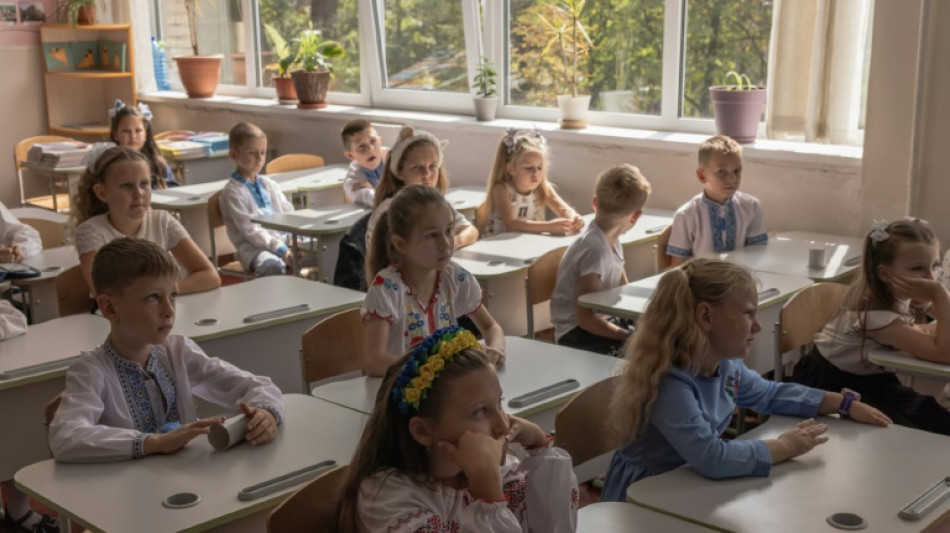
The reports of bomb threats in Ukraine's capital coincided with the start of the country's academic year, as the education ministry said nearly four million students were returning to school, both online and in person.
Ukrainian officials said Russian attacks since the beginning of the invasion in February 2022 had damaged or destroyed thousands of schools.
Andriy Sadovy, the mayor of the western city of Lviv, said pupils will be learning to fly drones, releasing a picture of students behind computers.
"This is our new reality," he wrote on social media alongside images of children holding controllers and sitting in front of monitors simulating drone flights.
Putin meanwhile congratulated Russian students on the beginning of the new school year, telling them it was impossible to defeat Russia as Moscow's offensive in Ukraine grinds through its nineteenth month.
"I understood why we won the Great Patriotic War," Putin said, referring to World War II.
"It is impossible to defeat this kind of nation with this kind of attitude. We were absolutely invincible. And we are the same now," he said.
Ukrainian forces, however, have been making slow gains against Russian positions, in particular in the south of the country, since launching a counteroffensive in June.
Kyiv, which has been criticised for the pace of the gains, has said it is not under pressure from the West to move more quickly and hailed its recent capture of the village of Robotnye as a gateway to the annexed Crimean peninsula.
The White House on Friday chimed in saying Ukrainian forces in recent days have made "notable progress" against Russian troops in their southern offensive.
"Any objective observer of this counteroffensive, you can't deny... that they have made progress now," White House national security spokesman John Kirby told reporters, calling criticism of the Ukrainian effort by anonymous officials "not helpful".
- Putin to host Erdogan -
Alongside the increase in drone attacks inside Russia, tensions have been building on the Black Sea after Moscow in July scrapped a deal allowing maritime exports from Ukraine.
But Ukraine has established an alternate route for cargo vessels and announced Friday that two more vessels had departed, defying a Russian naval blockade.
Turkey, which brokered the deal allowing grain exports from Ukraine with the United Nations, has urged Moscow to return to the accord.
The Kremlin announced Friday that Putin will host his Turkish counterpart Recep Tayyip Erdogan in the Black Sea resort of Sochi for talks on Monday, likely on the scuppered agreement.
"But it turned out that it is more difficult to do this than to build new corridors and new land routes," Shoigu said, referring to Ukraine's new maritime routes on the Black Sea.
H.Vermeulen--LCdB