Gabon new leader vows 'free' elections but gives no date / Photo: - - AFP
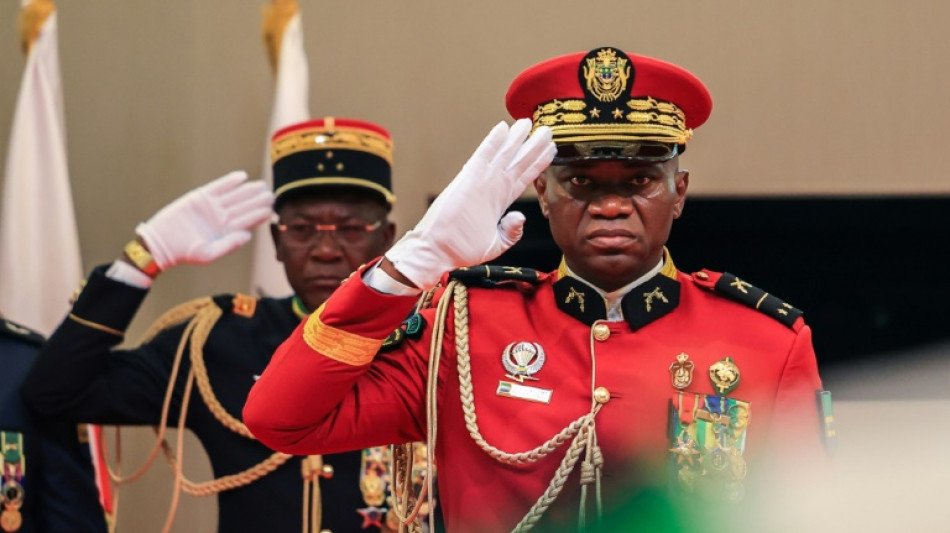
General Brice Oligui Nguema, who led a coup last week that toppled Gabon's 55-year-old ruling dynasty, took the oath of office as interim president on Monday, promising "free, transparent and credible elections" to restore civilian rule but without giving a timeframe.
He also vowed to amnesty political prisoners, in a speech in which he insisted the coup had saved Gabon from bloodshed after elections that were "obviously loaded."
Oligui, head of the elite Republican Guard, last Wednesday led officers to detain President Ali Bongo Ondimba, scion of a family that had ruled the oil-rich central African nation since 1967.
The ousting came just moments after Bongo, 64, was proclaimed victor in presidential elections -- a result branded a fraud by the opposition.
In a speech after taking the oath of office, Oligui said the promised elections would be the stepping stone to "handing power back to the civilians," although he did not specify any date.
He said he was seeking the participation of all of Gabon's "core groups" to draft a new constitution, which "will be adopted by referendum."
Oligui, 48, wearing the red ceremonial uniform of the Republican Guard, also said a new government would be named "in a few days" comprising "experienced" and "seasoned" people.
He said he would instruct the future government "to consider ways of amnestying prisoners of conscience" and "facilitating the return of all exiles" from abroad.
- 'Surprised' by condemnation -
After detaining Bongo, the coup leaders on Wednesday said they had dissolved the nation's institutions, cancelled the election results and temporarily closed the borders.
"We feel the freedom, joy and above all the hope of a better future," said Lucrece Mengue, 28, who was among thousands of people gathered outside the presidential palace.
Oligui in his speech strongly defended the coup, saying the military had acted to save lives following "an electoral process that was obviously loaded."
"Without violence, clashes or loss of blood, the Committee for Transition and Restoration of Institutions changed the regime which for years had usurped the powers of the institutions of the public, flouting democratic rules," he said, referring to the name given to the junta.
Quoting South African anti-apartheid hero Desmond Tutu, he said: "If you are neutral in situations of injustice, you have chosen the side of the oppressor."
He hit out at "international organisations," which he did not name, for criticising the military takeover.
Gabon joins Mali, Guinea, Sudan, Burkina Faso and Niger in the ranks of African countries that have undergone coups in the last three years -- a trend that has sounded alarm bells in Africa and beyond.
"We are greatly surprised to hear certain international organisations condemn the act taken by soldiers who were simply upholding their oath to the flag -- to save their country at the risk of their lives," said Oligui.
Several Western countries and organisations have attacked the takeover, while acknowledging that it is different to others on the continent due to concerns over the credibility of the vote itself.
- 'Make noise' -
Oligui, who for years worked in the wings under Bongo and his father Omar, has held high-profile discussions with business and religious leaders, unions, political parties, NGOs, diplomats and journalists.
He sternly warned business chiefs that corruption would no longer be tolerated and unveiled plans to reform Gabon's dysfunctional pension system, a bugbear for many people.
A fringe of the former opposition has urged Oligui to hand over power but many Gabonese seem happy about the overthrow of the Bongo dynasty, with celebrations in the streets of the capital Libreville and the economic hub of Port-Gentil.
Bongo had been seeking his third term in office after coming to power in 2009 following the death of Omar Bongo, who ruled for more than four decades, gaining the reputation as a kleptocrat.
National TV on Friday showed rolling images of the deposed president's son Noureddin Bongo Valentin and other arrested officials in front of suitcases filled with cash allegedly seized from their homes.
"We study but we don't find work. I've been unemployed for five years," midwife Anouchka Minang, 31, said.
"They tell us the coffers are empty and we end up finding all this money with them," she grumbled.
O.Seuren--LCdB