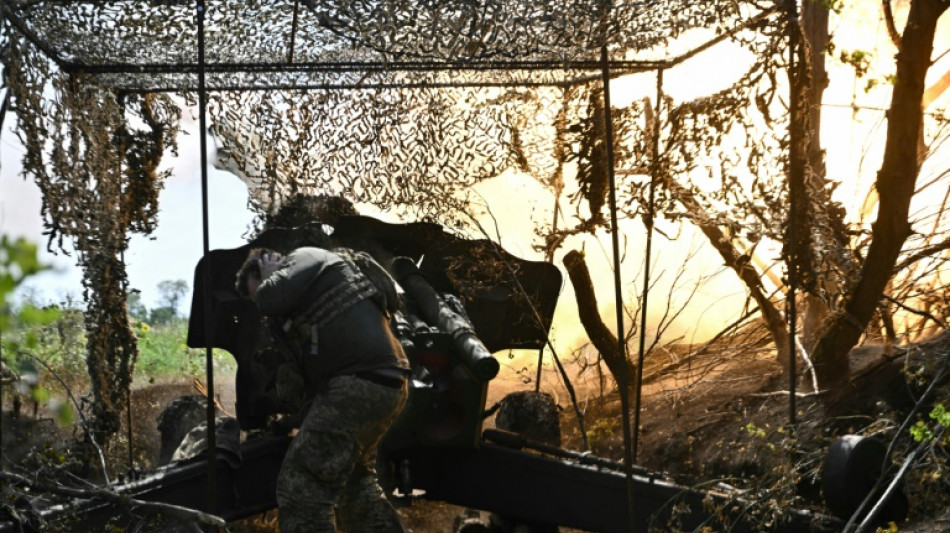
Ukraine says punctured Russian defence lines near Bakhmut / Photo: Genya SAVILOV - AFP
Kyiv said Monday its forces had broken through Russia's defensive lines near the war-battered town of Bakhmut, one of the key axes of a slow-moving but high-stakes Ukrainian counteroffensive.
The claim comes after Ukrainian forces announced last week they had wrested back control of two villages south of the industrial hub, cementing the battle for Bakhmut as the longest and likely bloodiest of the invasion.
"Fierce fighting continues in the area of Bakhmut. As a result of the successful actions of our troops, the enemy's defence line was broken," Ukraine's ground forces commander Oleksandr Syrskyi said.
Kyiv launched its bid to wrest back territory controlled by Moscow in June, after stockpiling Western-supplied weapons and recruiting assault battalions.
Its efforts have focused on both Bakhmut in the eastern Donetsk region, as well as several points along the frontline in the south, towards Crimea.
The defence ministry said earlier Monday it had recaptured a total of seven square kilometres (nearly three square miles) last week near Bakhmut and also along the southern front.
But Ukraine's progress against entrenched Russian positions has been limited since June, spurring debate among Kyiv's Western allies over its military strategy.
- 'Sabotage-terrorist acts' -
Russian forces in the meanwhile have pursued their aerial bombardment campaign, targeting Ukraine's southern regions and maritime export hubs in particular.
Ukraine said its air defence systems had downed a swarm of attack drones and 17 cruise missiles in Russia's latest barrage overnight.
The air force said it had brought down 18 out of 24 Russian attack drones over the Black Sea regions of Odesa and Mykolaiv.
Russia however said that with the strikes it had hit storage facilities for British Storm Shadow cruise missiles and ammunition with depleted uranium -- a controversial weapon supplied by the United States to Kyiv.
In part of the Donetsk region under Russian control, authorities said a Ukrainian strike had damaged the building of the local Moscow-installed administration.
And in southern Russia, security services said they had arrested two Russian nationals who were preparing "sabotage-terrorist acts" on the orders of the anti-Kremlin nationalist group "Freedom of Russia Legion".
The Ukraine-based group organised a dramatic cross-border incursion into the Russian region of Belgorod in May -- with Moscow even deploying helicopters and artillery to halt the push into its territory.
The FSB security service said it detained the two Russian citizens in the southern Rostov region near the border with Ukraine "while they were preparing to set fire to an administrative building".
- Chinese diplomat to visit -
Rostov-on-Don, the main city in the southern region, was also the scene of an armed rebellion by Wagner mercenary fighters this summer.
Kyiv announced its territorial gains as Beijing said China's top diplomat, Wang Yi, would begin a four-day visit to Russia on Monday for security talks.
China and Russia are strategic allies. Both countries frequently tout their "no limits" partnership and economic and military cooperation.
China's foreign ministry said Wang would hold security consultations at the invitation of Nikolai Patrushev, secretary of Russia's Security Council.
The visit was due a day after North Korean leader Kim Jong Un left Russia following a rare six-day trip, which appeared to solidify his country's ties with President Vladimir Putin and fanned Western fears that Pyongyang could provide Moscow with weapons.
"The situation of human rights in the Russian Federation has significantly deteriorated since its invasion of Ukraine in February 2022," UN Special Rapporteur Mariana Katzarova said in her first report on Russia.
Russia has criminalised criticism of the military, and law enforcement officials have detained thousands for protesting or speaking out against the invasion.
V.Nijs--LCdB