EU, Germany press Poland over 'serious' cash-for-visas scandal / Photo: John MACDOUGALL - AFP
The European Union and Germany on Wednesday pressed the Polish government to clear up allegations about "serious" visa fraud in a scandal with politically sensitive ramifications for Warsaw's partners in the bloc.
Polish media reports said a system for giving out visas to people from the Middle East and Africa in exchange for bribes had been put in place through the Polish consulates and some external companies in the countries concerned.
Amid growing tensions within the EU over migration, the affair has heightened fears of a wave of illegal entries into the Schengen free movement zone grouping more than two dozen European countries.
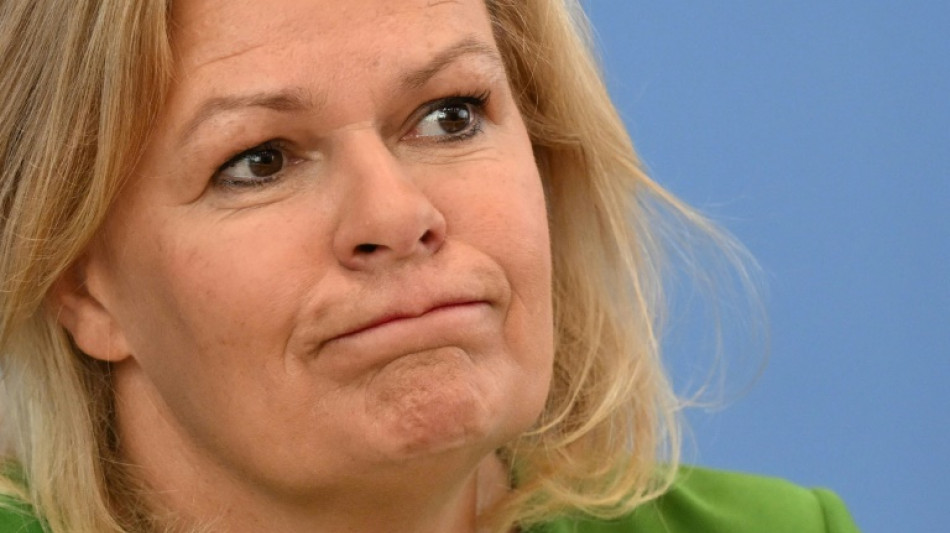
German Interior Minister Nancy Faeser called her Polish counterpart Mariusz Kaminski Tuesday and her ministry asked Warsaw's envoy to Berlin to appear over the issue, officials said.
During the talks, Berlin demanded that Warsaw provide "rapid and complete clarification" of the "serious" allegations.
The European Commission on Wednesday gave Warsaw two weeks to provide "clarifications" of the charges, calling the reports "very concerning".
Berlin's queries prompted an angry response from Kaminski, who rejected the "absurd" claims regarding the scope of the affair.
"Unfortunately, the German press latched onto the opposition's completely absurd narrative regarding the scale of what we were dealing with," Kaminski told Poland's Radio Zet.
"I spoke to the German interior minister yesterday... I explained the actual scale."
- 'Century's biggest scandal' -
While the authorities in Warsaw say the scheme may have involved several hundred Polish work visas, the Polish opposition says the real number could be around 250,000.
Poland's secret service said last week that seven people had been detained in the scandal ahead of October 15 elections, in which the governing party is running on an anti-immigration platform.
Three of the seven are under arrest, according to the prosecutor's office, which is leading an inquiry into the alleged racket for fraudulently obtaining visas.
Polish media have reported that the foreign ministry was involved in the scheme, which the opposition Civic Platform party has branded "the biggest scandal in Poland in the 21st century".
Deputy Foreign Minister Piotr Wawrzyk resigned over the affair last week, though the official reason for his departure was "absence of sufficient cooperation".
German interior ministry spokesman Mehmet Ata told reporters that Berlin was seeking information from Warsaw about how many visas were issued and when, as well as the nationalities of the recipients.
Warsaw had briefed Berlin on the ongoing investigation without providing further details, he added.
Germany's federal police had already stepped up checks at the Polish border before the scandal erupted due to an increased influx of migrants.
- EU tensions -
The friction with Poland comes against the backdrop of heightened tensions within the EU over the fair distribution of asylum seekers.
Berlin said last Friday that it had stopped accepting migrants living in Italy under a European solidarity plan to send "a signal" to Rome.
On a visit to Italy on Wednesday, German President Frank-Walter Steinmeier told daily Corriere della Serra that both Germany and Italy were "at their limits" when it comes to taking in migrants.
He said that it was now necessary to work "together and in a concentrated manner on humane and sustainable European solutions".
Poland's governing Law and Justice (PiS) party has for years used anti-immigrant rhetoric, which was credited as one of the main reasons behind their victory in 2015 parliamentary elections.
Poland last year completed construction of a steel barrier along the border to dissuade would-be migrants and has deployed thousands of soldiers there.
Warsaw accused Minsk and Moscow of engineering the flow of migrants as a "hybrid" attack intended to destabilise the region -- a charge Minsk denies.
B.Janssens--LCdB