Kyiv says breaks Russian lines and kills 'senior' naval officers / Photo: Handout - Planet Labs PBC/AFP
Ukraine has reported breaking through Russian defence lines in the south as its army said Saturday that senior Russian navy commanders were among dozens killed or wounded in a missile attack on Moscow's Black Sea Fleet headquarters in Crimea.
In the latest claims of progress in the Zaporizhzhia area, the Ukrainian general leading the counteroffensive there told US media that the advance was still underway.
"On the left flank (near the village of Verbove) we have a breakthrough and we continue to advance further," general Oleksandr Tarnavskiy told CNN in an interview published Friday.
Ukraine launched its counteroffensive to claw back territory from Russian forces in June.
Progress has been slow, with much of the territory heavily mined, but Kyiv has in recent weeks reported making strategic advances in the Zaporizhzhia region.
"Not as fast as it was excepted, not like in the movies about the Second World War," Tarnavskiy said in the CNN interview, adding it was important "not to lose this initiative".
Last month Kyiv declared a strategic victory when it recaptured the southern village of Robotyne.
Tarnavskiy said a major breakthrough would be if Kyiv recaptured the city of Tokmak -- 20 kilometres (12 miles) from the front line -- which fell to Russian forces at the start of their invasion.
Retaking Tokmak would allow Ukrainian forces to push further toward occupied Melitopol and annexed Crimea.
"I think it (a breakthrough) would happen after Tokmak," he said, but warned: "At the moment (Russian forces) are relying on the depth of their defensive line there."
Tarnavskiy disagreed with some predictions that Ukraine's push could be further slowed in the coming winter months.
"The weather can be a serious obstacle during advance, but considering how we move forward, mostly without vehicles, I don't think (it) will heavily influence the counteroffensive," he said.
- Assault squads -
He gave some insight into the type of fighting taking place in the south, 19 months into Moscow's invasion, saying "Right now, neither the enemy nor us uses large formations, companies, battalions or brigades. We use assault squads, groups of 10 to 15 men".
"They conduct titanic work of concentrating enemy fire on them and using all the means they have to use to survive."
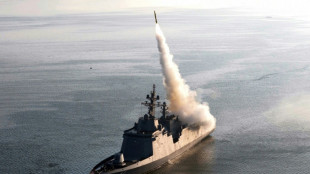
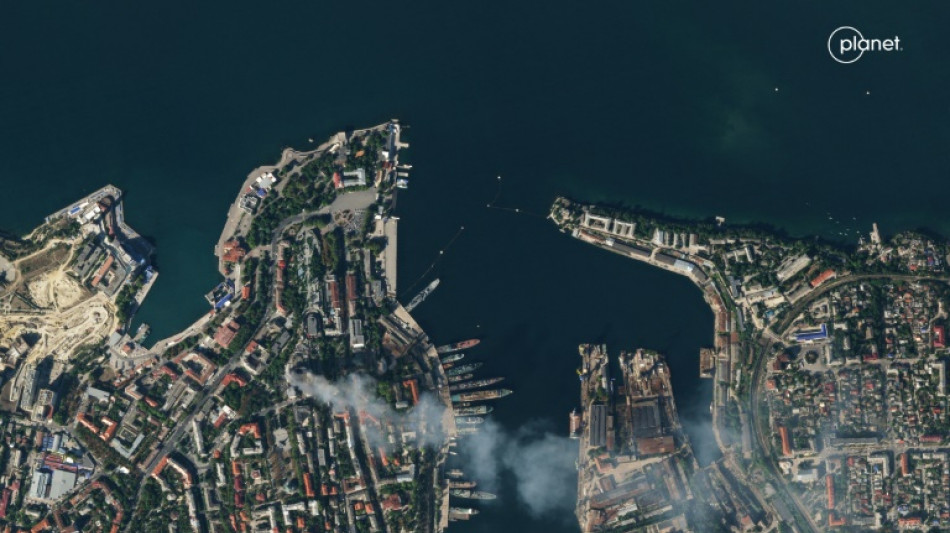
The interview was published a day after Kyiv struck Russia's Black Sea Fleet headquarters in the Crimean port of Sevastopol, claiming to have killed "senior" commanders.
The army said the strike happened during "a meeting of the Russian navy's leadership".
Kyiv's intelligence chief Kyrylo Budanov said the attack killed "at least nine people", including generals, in comments to Voice of America.
"The details of the attack will be revealed as soon as possible and the result is dozens of dead and wounded occupants, including senior fleet commanders," the Ukrainian army said.
AFP is not able to verify this information.
Russia has said one of its servicemen is missing after the attack.
Kyiv has vowed to take back Crimea, annexed by Moscow in 2014.
- Battlefield 'mess' -
Tarnavskiy said the counteroffensive's success depends not only on what happens on the front, but also on "destroying command centres" that create "a mess on the battlefield".
He added that strikes on Crimea improved morale for Ukrainian troops: "It helps us but it also gives us hope for the future."
The Russian-installed head of Sevastopol had warned of a possible new Ukrainian missile attack on Saturday.
But soon after he announced the "danger is over".
Meanwhile, Ukraine's President Volodymyr Zelensky met Friday with Canada's Prime Minister Justin Trudeau, who pledged additional aid to the war-torn country.
Zelensky earlier this week addressed the United Nations and held talks in Washington with the US Congress and President Joe Biden, who pledged the imminent arrival of US tanks to bolster Ukraine's arsenal.
L.Dumont--LCdB