Russian missile strike on Ukraine village wreaks carnage / Photo: Genya SAVILOV - AFP
Spread out on the grass opposite the ruins of a cafe, blackened and dismembered bodies lay among the carnage wrought by a Russian missile strike on the eastern Ukrainian village of Groza.
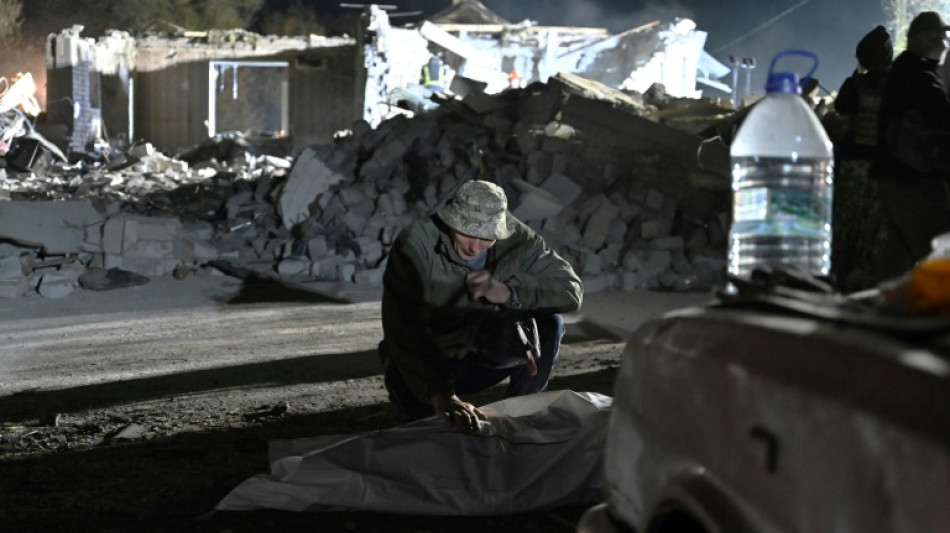
As night fell six hours after the attack, police and soldiers numbered unidentifiable bodies and placed them in white body bags.
Soldiers loaded around twenty victims onto an army lorry that would transport them to the nearby city of Kharkiv.
Sergiy, his face frozen in pain, crouched motionless beside a bag still on the ground. His right hand rested on the top of the white plastic.
His wife Svetlana had been cooking for the wake at the cafe when the missile hit.
She was among the 51 people killed, along with a child, according to the latest official report, which also said six people were wounded.
He was a kilometre away when it happened, Sergiy managed to say. He was unable to say more.
Inside the final bags for removal, police placed body parts they had grouped together in small piles in a children's play area, near two swings and a slide.
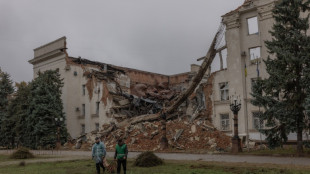
All that was left of the cafe itself were three walls -- the rest was a mass of concrete and metal.
- Gathering body parts -
Under the harsh glare of the spotlights, rescue workers and firefighters dug through the rubble with shovels, stopping occasionally to gather up and bag a body part.
By evening, there were still 15 unidentified bodies, Sergiy Boldyrev, head of the Kharkiv regional police investigation department, told journalists at the scene.
Forensic experts would carry out DNA searches on the bodies taken to Kharkiv, he added.
When the missile struck, Sergiy Pletinka, a 34-year-old soldier on leave, was visiting his parents just opposite the cafe.
"I ran and got there first," he said. "I saw smoke and flames. And I heard a woman screaming.
"She was trapped under a refrigerator and a collapsed wall. There were dead people lying all around her.
"Another man and I evacuated other wounded people," he added.
The wake at the cafe had been for a soldier who was killed a month after Russia invaded. He had been buried in the southern city of Dnipro -- away from his home village, then under Russia occupation.
He was reburied in Groza on Thursday morning.
- Investigation -
The village was seemingly hit by an Iskander ballistic missile, Ukraine's interior ministry said Thursday -- a short-range missile deployed by the Russian military.
Police told AFP they were looking at several possibilities as to why the village was targeted. One was that someone gave the Russians the coordinates of the cafe.
Gorza was one of the villages in northeastern Kharkiv that was occupied by Russia in the early days of its February 2022 invasion, before Ukrainian troops took it back later that year.
Its population has dwindled over the months from 500 before the war to 330.
In an evening address, Ukrainian President Volodymyr Zelensk said he had no doubts that the strike had been deliberate.
"The Russian military could not fail to know where they were hitting," he said.
"It was not a blind strike."
I.Kusters--LCdB