Israel accused of killing 3 Hezbollah members in border escalation / Photo: Mahmoud ZAYYAT - AFP
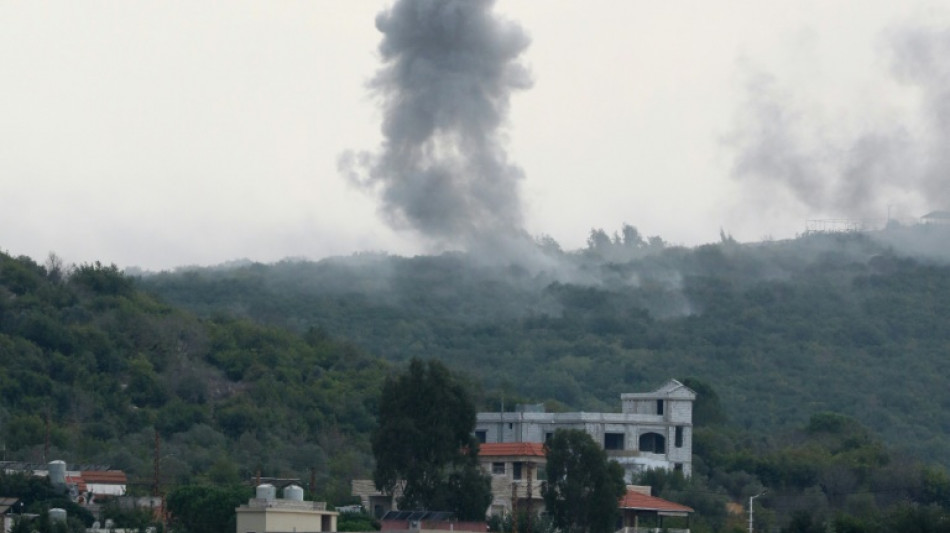
Israeli strikes on Lebanon killed three Hezbollah members Monday, the Iran-backed group said, as tensions surged after Palestinian militants tried to infiltrate into Israel from Lebanon.
The escalation on Israel's northern border with Lebanon comes two days after Hamas militants launched an unprecedented multi-pronged attack on Israel's southern flank from the blockaded Gaza Strip.
Hezbollah issued three separate statements confirming the death of its members, all of them "martyred as a result of the Zionist aggression on south Lebanon Monday afternoon", the group said.
The group retaliated by striking two Israeli barracks, it later said.
"Groups of the Islamic Resistance (Hezbollah), in an initial response, attacked" two Israeli barracks "using guided missiles and mortar shells that hit them directly", Hezbollah said in a statement.
A Hezbollah source had earlier told AFP a member was killed "in an Israeli strike on a watchtower in south Lebanon" near Aita al-Shaab village. A spokesperson for the group confirmed the death.
Israeli mortar shelling outside the border village of Rmeish "slightly wounded" a Lebanese officer, the army said in a statement Monday.
Israel's army said its soldiers had "killed a number of armed suspects" who had crossed the frontier from Lebanon and that its helicopters were striking the area.
The Palestinian Islamic Jihad group's armed wing, which claims to be fighting Israel alongside Hamas, said earlier it was behind a thwarted bid to infiltrate Israel from Lebanon.
"The Al-Quds Brigades claim responsibility for the afternoon operation on the south Lebanon border," the group said in a statement.
The mayor of the Lebanese border village of Dhayra said Israel was shelling the area.
"Fields on the outskirts of the village were subjected to intense Israeli artillery shelling, preceded by intermittent gunfire," the mayor, Abdullah al-Gharib, told AFP.
- 'Utmost caution' -
Hezbollah, whose arch-foe is Israel, had earlier denied any involvement in the border clashes.
An AFP photographer at the scene said he saw dozens of Lebanese and Syrian families fleeing as the outskirts of Aita al-Shaab village came under heavy bombardment.
The Lebanese army in a statement said the periphery of "Dhayra, Aita al-Shaab and other border areas were subjected to air and artillery bombardment by the Israeli enemy".
It urged citizens "to take the utmost caution" and avoid border areas.
Andrea Tenenti, spokesperson for the United Nations Interim Force in Lebanon (UNIFIL), which acts as a buffer between Lebanon and Israel, said UNIFIL commander Aroldo Lazaro was "in contact with the involved parties".
He said Lazaro had urged them to exercise "maximum restraint" to prevent "further escalation and loss of life".
The clash comes a day after Hezbollah said it had fired artillery shells and guided missiles at Israel, "in solidarity" with attacks launched from Gaza by its ally Hamas.
Israel's army said it hit back on Sunday with artillery into southern Lebanon.
In 2006 Hezbollah and Israel fought a 34-day war that left more than 1,200 dead in Lebanon, mostly civilians, and 160 in Israel, mostly soldiers. The two countries remain technically at war.
Israel has warned Hezbollah against involvement in the war with Gaza.
At least 800 people in Israel and 560 in Gaza have been killed since the conflict erupted on Saturday, according to tolls from officials on both sides.
D.Pauwels--LCdB