Blow for UK's Sunak as Tories lose two previously safe seats / Photo: JUSTIN TALLIS - AFP
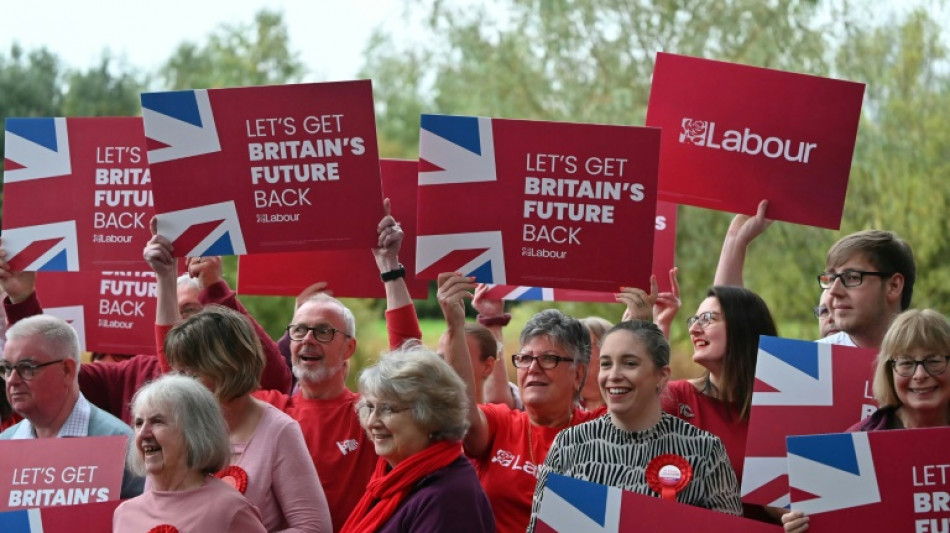
Britain's Conservative Party lost two parliamentary seats to Labour on Friday, another ominous setback for Prime Minister Rishi Sunak and his ruling party ahead of a general election expected next year.
The by-election results, the latest in a string of traditionally safe Tory seats lost to rival parties in recent years, saw Labour overturn huge majorities to further fuel hopes of a return to power after nearly 14 years in opposition.
Labour had played down its prospects in the Conservatives' previously "super safe" seats of Tamworth and Mid Bedfordshire, both in central England, which became vacant after their MPs quit, including one following sexual misconduct allegations.
But Britain's ailing economy, the worst cost-of-living crisis in decades and several years of tumult within the Tories, who had three leaders within three months last year, helped trigger the historic outcome.
In Mid Bedfordshire, a Conservative-held seat for almost a century, Labour overturned a majority of nearly 25,000 -- the biggest overhaul at a by-election since 1945.
Jubilant Labour leader Keir Starmer hailed the "phenomenal results" as showing his party had "changed", after it registered its worst election performance in decades in 2019 under ex-leader Jeremy Corbyn.
"I hope that that persuades other voters across the country who may have voted for other parties in the past," he said on a visit to Mid Bedfordshire.
He called Labour "the party of national renewal to reject the decline of the last 13 years".
- 'Pointer' -
Polling expert John Curtice said the results were "extremely bad news" for the Conservatives and suggested they will lose the next general election. They currently hold a large overall majority in parliament.
"It is a pointer that, unless the Conservatives can fairly dramatically and fairly radically turn things around, then they are in truth staring defeat in the face," he added.
Conservative Party chair Greg Hands sought to downplay the results, arguing Tory voters had simply stayed home while stressing there were "legacy issues" related to both seats' former MPs.
"I don't see any enthusiasm for Labour," he told Times Radio.
Sunak, who is visiting the Middle East following the latest outbreak of hostilities between Israel and Hamas, was yet to comment on the losses.
He has recently made several high-profile policy shifts, including cancelling part of a costly high-speed rail link and delaying measures aimed at helping the UK achieve net-zero emissions by 2050.
Sunak pitched the moves as showing he is a leader willing to take tough decisions in the long-term, despite criticism they were aimed more at drawing dividing lines with Labour.
But after a year in charge, he is struggling to revive his beleaguered party's fortunes.
The Tories saw a 20,000 majority overturned by Labour in a July by-election, while the Liberal Democrats have snatched several of their seats since 2019.
Labour has been leading national polls by double-digit margins for over a year.
- 'Had enough' -
The Tamworth poll was triggered when Chris Pincher quit after being found to have groped two men in an "egregious case of sexual misconduct".
Then-prime minister Boris Johnson's handling of the case led to a raft of ministerial resignations that brought the end of his premiership.
The Mid Bedfordshire poll was called when former culture secretary Nadine Dorries, a Johnson loyalist who blames Sunak for his political downfall, quit her seat.
Sunak succeeded Liz Truss as prime minister a year ago after Truss's short-lived tenure rocked financial markets.
He has struggled to win the support of former Johnson allies and others within his party, as well as the wider electorate.
Labour candidate Alistair Strathern won Mid Bedfordshire by 1,192 votes, with the 44 percent turnout resilient for a by-election. He said it proved that "nowhere is off limits for this Labour Party".
M.Lenaerts--LCdB