In devastated Gaza with the Israeli military / Photo: Daphné LEMELIN - AFP
Gaza City's suburbs began to appear after about 30 minutes of navigating broken roads. We were approaching the focal point of the fight between Israel and Hamas in the territory.
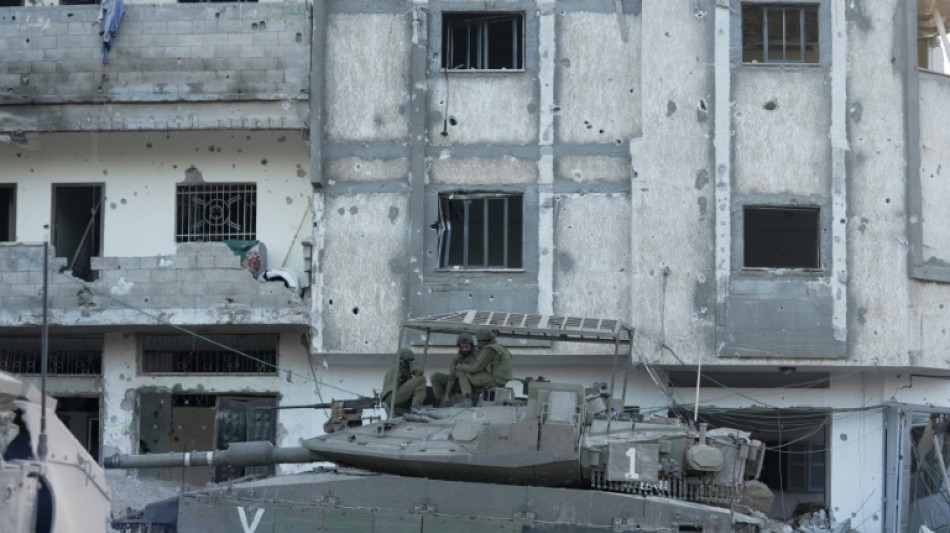
On Wednesday, AFP was embedded with Israeli soldiers, and witnessed the devastation of a month of war at first hand. Our still and video images were submitted to the Israeli military censor for approval.
Security was at a maximum for our incursion which lasted a few hours, and was organised for several representatives of the foreign media covering the Israel-Hamas war.
We drove the few kilometres (miles) from the southern border of Israel into northern Gaza City in an Israeli armoured vehicle which jolted over bumps in the road.
The outside landscape could be seen on screens inside the vehicle: broken palm trees, distorted road signs and twisted lampposts along the ruins of what was once north Gaza's main arterial route.
Israeli flags now fly over buildings at beach resorts in northern Gaza. There is little sign of any human presence amid the destruction.
It is concentrating on the northern part of the Palestinian territory run by Hamas, targeting the Islamist group's military infrastructure.
The armoured car containing the journalists stopped outside one gutted building several storeys tall, its windows and doors open to the elements. It was guarded by a group of soldiers.
An Israeli officer told us the building was "a Hamas weapons factory", in which scuba diving gear was found along with drone and bomb parts.
- Massive destruction -
On the ground, in the concrete debris, could be seen drone wings and a few tools.
On the top floor we were taken into a pink room. It had books inside, as well as dolls and a broken mirror. The army said children had been living there, immediately above the arms factory.
Israel's military regularly accuses Hamas, which the United States and European Union class as a "terrorist organisation", of using civilian facilities such as hospitals -- as well as the population of Gaza itself -- as human shields.
Through the broken windows of the building the sea could be seen, before a cloud of dust from a passing tank obscured the view.
Israel launched its operation to destroy Hamas after the Islamist group's gunmen stormed across the border from Gaza on October 7 and killed 1,400 people, mostly civilians. They also seized 239 hostages.
Inside Gaza, the Hamas-run health ministry said Wednesday 10,569 people have been killed in Israeli attacks, again mostly civilians and including 4,324 children.
The war has brought massive destruction down on the densely populated territory of 2.4 million people.
According to the United Nations, 1.5 million people have fled their homes in northern Gaza to the south of the territory.
On Wednesday, you could still see traces of how things were before October 7.
A chicken pecked in the sand beside military vehicles, and a colourful clothesline was still attached to a section of wall.
Gunfire rang out while we were there, and it sounded quite close. The soldiers tensed and adopted defensive postures.
Later, on the way back into Israel, the convoy of vehicles halted so the bomb squad could defuse an explosive device.
P.Verhoeven--LCdB