CMSC
0.0800
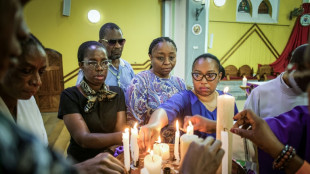
Liberians were voting on Tuesday to decide whether to hand former football star George Weah a second term as president despite a mixed record or elect political veteran Joseph Boakai.
Turnout appeared lower than in the first round of voting on October 10, with shorter queues outside polling centres around the capital, Monrovia, an AFP journalist saw.
By late morning, voting was taking place peacefully and there were no reports of major incidents or violence.
"I want to commend the peace we see at all polling stations -- we salute the Liberian people," Nevers Mumba, a former vice president of Zambia, now leading the Electoral Institute for Sustainable Democracy In Africa, told AFP at a polling centre in the suburb of Paynesville.
He said turnout appeared to be roughly two-thirds of the record 78.86 percent of the first round, when the presidential vote was coupled with parliamentary elections.
"This election is going to decide the future of this country," said Bestman Todawiah, 55, a school administrator voting in Monrovia.
"What I expect from this election is that (it) should be free, fair and transparent, and at the end of it, whoever wins becomes the president of this country."
The run-off is expected to be close between the rivals, who also faced off in 2017 when Weah won in the second round with more than 61 percent.
- Thin margin -
Last month, Weah, 57, and Boakai, 78, came roughly neck and neck on more than 43 percent, with the incumbent taking a 7,126-vote lead.
The elections are the first since the United Nations in 2018 ended its peacekeeping mission in Liberia, created after more than 250,000 people died in two civil wars between 1989 and 2003.
More than 2.4 million people were registered to vote, with polls open between 8:00 am (0800 GMT) and 6:00 pm (1800 GMT).
The incumbent is popular among young people but must defend his record in office, while Boakai is an old hand who has held a multitude of positions in the public and private sectors.
Student Taiyee Success Iledare, 22, waiting to cast her ballot in the Monrovia suburb Duazon, said she would vote for Weah.
"When you look around you see a lot of development... When he wins I want him to make sure he deals with the issue of drugs that is destroying our young people," she said.
Irene Palwor, a 41-year-old petty trader said she backed Boakai, popularly known as JNB.
"I feel that he will make a change... JNB will create job opportunities for the women and for the youths."
The electoral commission has 15 days to publish the results but could do so sooner, one of its officials, Samuel Cole, said.
- Alliances -
Edward Appleton, who came third in the first round of voting, has backed Boakai, as have two of the other top six candidates.
Weah -- who grew up in the Monrovia slums to become the only African to win football's most prestigious individual award, the Ballon d'Or -- is widely seen as approachable and peaceful.
He says he has supported education, built roads and hospitals, and brought electricity into homes.
He was president when the Covid-19 pandemic hit at a time when Liberia was still recovering economically from back-to-back civil wars and the 2014-2016 Ebola epidemic.
His detractors say he is disconnected from the realities of skyrocketing prices and shortages.
Boakai blames Weah for corruption, which is endemic in Liberia and has worsened on the incumbent's watch, according to Transparency International.
The former vice president has forged alliances with local barons, including former warlord and senator Prince Johnson, who supported Weah six years ago.
Clashes during the campaign left several dead and raised fears of post-election violence.
Boakai's camp has denounced irregularities during the first round.
S.Denis--LCdB