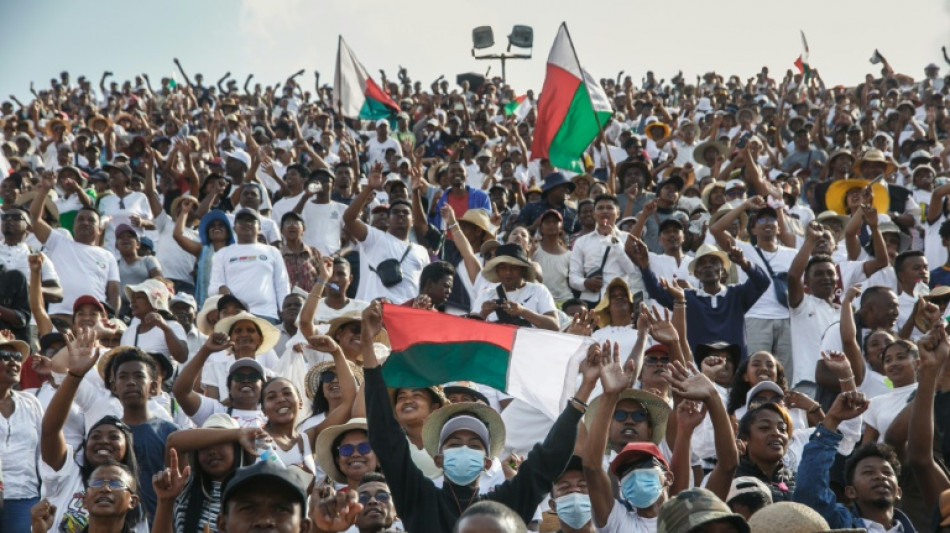
Madagascar votes in presidential election hit by boycott / Photo: RIJASOLO - AFP
Madagascar’s President Andry Rajoelina urged people to vote on Thursday in a highly contested presidential election in which he is seeking a new term, and slammed an opposition call to boycott the polls.
Rajoelina is one of 13 candidates on the ballot but 10 of the others have called on voters to shun the elections, complaining of an "institutional coup" in favour of the incumbent.
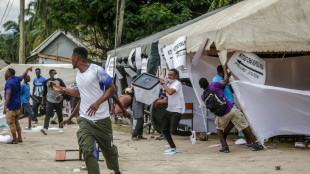
Following a night-time curfew and weeks of protests, voting got calmly under way early Thursday, according to AFP journalists, with voters emerging from rudimentary polling centres, their thumbs stained with green and gold indelible ink.
Polls are scheduled to stay open until 05:00 pm (1400 GMT).
Rajoelina has brushed off criticism and expressed confidence that he will secure re-election in the first round of voting.
After casting his ballot in the capital, Antananarivo, Thursday, he urged voters to do the same.
"The only democratic path... are elections," he said, denouncing people "who try to cause trouble".
The Indian Ocean island nation is the leading global producer of vanilla but also one of the world's poorest countries, and has been shaken by successive political crises since independence from France in 1960.
"I'm voting, but we know this isn't normal," said 43-year-old Eugene Rakatomalala. "There weren't any candidates who did campaigns."
"We do not want to participate in this fraud, it is a joke on Madagascar," Roland Ratsiraka, one of the protesting candidates, said on Tuesday.
Since early October, the opposition grouping -- which includes two former presidents -- has led near-daily, largely unauthorised protest marches in the capital.
They have been regularly dispersed by police firing tear gas.
"We don't want any more demonstrations, we don't want any more problems in the country. We want to choose for ourselves, by voting," Alain Randriamandimby, 43, a T-shirt printer, told AFP early Thursday.
A day earlier, authorities imposed a night-time curfew in Antananarivo, following what police said were "various acts of sabotage".
The local police prefect later said an investigation had been opened after electoral material stored at three polling stations was burned on Tuesday.
Rajoelina first took power in 2009 on the back of a coup, then skipped the following elections only to make a winning comeback in 2018.
As his opponents refused to campaign, he flew across the country by private plane, showcasing schools, roads and hospitals built during his tenure.
"It is irresponsible to encourage voters not to vote," his campaign spokeswoman Lalatiana Rakotondrazafy said.
Eleven million people are registered to vote in the country of about 30 million.
- Poverty and anger -
Faced with a wide boycott, a strong turnout will be key for Rajoelina.
Less than 55 percent of those registered voted in the first round in 2018.
At a newsstand on Wednesday, residents looked concerned as they scanned newspaper headlines.
"People have become aware of the dictatorship we live under," said Chrishani Andrianono, 55, complaining that after 11 years in power, Rajoelina had little to show for it.
"We do not see what he did for us."
For many in the country, politics take a back seat to making ends meet.
"In the morning, I don't eat -- only a little at lunchtime and in the evening. Otherwise I can't get by, I don't have enough," Josiane Rasomalala, 41, told AFP.
"I'm voting because we need a better life."
Madagascar has been in turmoil since media reports in June revealed Rajoelina had acquired French nationality in 2014.
Under local law, the president should have lost his Madagascan nationality, and with it, the ability to lead the country, his opponents said.
Rajoelina has denied trying to conceal his naturalisation, saying he became French to allow his children to pursue their studies abroad.
His challengers were further enraged by another ruling allowing for an ally of the president to take over the reins of the nation on an interim basis after Rajoelina resigned in line with the constitution to run for re-election.
They have also complained about electoral irregularities.
The head of the electoral commission, who critics accuse of favouring the president, on Thursday said some voters did not receive their electoral cards on time.
This was "either because we did not have the correct address, or because they were not at home during the distribution," said Arsene Andrianarisedo.
The Southern African Development Community (SADC), a regional bloc, as well as the African Union and the European Union, have sent observer missions to monitor the vote.
M.Lenaerts--LCdB