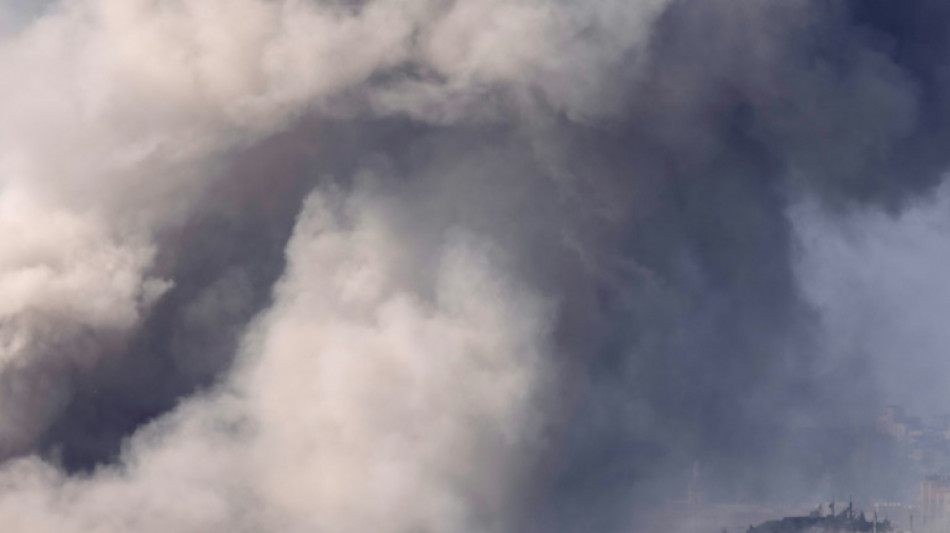
Hamas says 24 die at Gaza hospital as Israel hunts hideouts / Photo: Kenzo TRIBOUILLARD - AFP
The Hamas-controlled health ministry said Friday that 24 patients at a hospital in war-torn Gaza had died within 48 hours due to power outages, as Israeli forces searched the complex for Hamas hideouts.
The announcement came shortly after Israel agreed to a US request to allow two fuel trucks a day into Gaza, following a UN warning that the shortages had halted aid deliveries and put people at risk of starvation.
The situation was dire at the Al-Shifa hospital, the largest in Gaza, which Israel's army said it was searching for a third day for suspected hideouts of fighters from the Islamist movement's armed wing.
Hamas rejects an Israeli charge that it has a command centre at the hospital, where thousands of people, including wounded patients and premature babies, are believed to be inside. The hospital also denies the claim.
Israel has vowed to "crush" Hamas in response to the group's October 7 attack, when it broke through Gaza's militarised border to kill about 1,200 people, most of them civilians, and take about 240 hostage, according to Israeli officials.
The army's air and ground campaign has killed about 11,500 people, including thousands of children, according to Hamas, which has ruled Gaza since 2007.
"Twenty-four patients... have died over the last 48 hours" at Al-Shifa hospital "as vital medical equipment has stopped functioning because of the power outage", Gaza health ministry spokesman Ashraf al-Qudra said.
In response to a US request, Israel's war cabinet unanimously decided to allow "the entry of two diesel fuel tankers per day for the needs of the UN to support water and sewer infrastructure... provided that it does not reach Hamas", Israeli officials said.
The UN agency for Palestinian refugees (UNRWA) earlier said its aid trucks were unable to enter Gaza from Egypt for a second straight day due to the lack of fuel and a near-total communications blackout.
- 'Anxiety and panic' -
UNRWA said it would be unable to "manage or coordinate humanitarian convoys" from Friday because of the telecommunications outage.
"The situation in Al-Shifa is catastrophic" for patients, displaced people and health workers who are crammed inside without electricity, water and food, the hospital's director, Mohammed Abu Salmiya, told AFP on the phone later during a brief restoration of communications.
Israel has defended its Al-Shifa operation, with the military saying it found rifles, ammunition, explosives and the entrance to a tunnel shaft at the hospital complex.
Its prime minister, Benjamin Netanyahu, alleged hostages may even have been held at the medical facility.
"We had strong indications that they were held in the Shifa Hospital, which is one of the reasons we entered the hospital," he told "CBS Evening News".
"If they were, they were taken out," he said.
Israel said its forces were searching Al-Shifa "one building at a time".
The military also said troops had recovered the remains of kidnapped woman soldier Noa Marciano, 19, "from a structure adjacent to Al-Shifa hospital".
It had confirmed her death this week, without giving the cause. Hamas said she had been killed in Israeli bombing.
On Thursday the army said soldiers near Al-Shifa found the body of another hostage. Yehudit Weiss, 65, who had been kidnapped from the kibbutz community of Beeri.
- 'Civilians face starvation' -
Israel has come under increasing pressure to back up its allegations that Hamas is using hospitals as command centres.
More than half of Gaza's hospitals are no longer functional due to combat, damage or shortages, and Israel's raid on Al-Shifa left extensive damage to the radiology, burns and dialysis units, Hamas said.
AFPTV video showed Palestinian children waiting in ambulances at Deir al-Balah for evacuation via the Rafah crossing to the United Arab Emirates.
"In the beginning they told (us) she would be martyred. She has fractures in her skull, pelvis and the thigh," said Adam al-Madhoun, father of four-year-old Kenza who already had her right hand amputated after an attack on the Jabalia refugee camp.
Conditions for Palestinian civilians are rapidly deteriorating, the UN warned.
More than 1.5 million people have been internally displaced, and Israel's blockade of the territory means "civilians are facing the immediate possibility of starvation", World Food Programme head Cindy McCain said.
The UN agency for Palestinian refugees (UNRWA) said 70 percent of people have no access to clean water in south Gaza, where raw sewage had started to flow on the streets.
UNRWA chief Philippe Lazzarini described children sheltering at a UN school "pleading for a sip of water, or for a loaf of bread".
- West Bank violence -
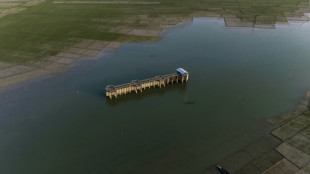
Israel's ground operation has so far focused on north Gaza, where it has announced the seizure of key buildings and a port. It says 51 of its troops have been killed.
Alongside the war in Gaza, there is growing concern about violence in the Israeli-occupied West Bank, where violence by Israeli settlers against Palestinians has surged.
Raids by Israel's military, which says it is responding to "a significant rise in terrorist attacks", have also multiplied and the Palestinian death toll has soared.
The Israeli army said on Friday it had killed at least seven militants in two separate confrontations in the West Bank.
US Secretary of State Antony Blinken has urged Israel to take "urgent" action to "de-escalate tensions in the West Bank, including by confronting rising levels of settler extremist violence," the State Department said.
Elsewhere, Israeli strikes killed two pro-Iranian fighters near Damascus during raids Friday targeting a Hezbollah arms depot and other sites near Syria's capital, a monitor said.
The group of independent global leaders known as The Elders called on Biden to embrace a "historic opportunity" and deliver a peace plan between the Israelis and Palestinians.
"As polarisation increases, the world needs you to set out a vision for peace," they said in an open letter, stressing the plan "must recognise the equal rights of Palestinians and Israelis."
burs-dv/kir
C.Timmermans--LCdB