Israel squeezes Gaza cities ahead of rare UN vote / Photo: JACK GUEZ - AFP
Israeli forces squeezed Gaza's main cities Friday, two months after Hamas's deadly attack sparked a war that has killed thousands, left the Palestinian territory in ruins, and triggered an extraordinary UN bid for a ceasefire.
Weeks of fighting have left 17,177 people dead in Gaza, mostly women and children, according to the latest toll from Hamas which rules the coastal strip.
Vowing to destroy the Islamist movement, Israel has relentlessly bombarded Gaza and sent in tanks and ground troops since the war began on October 7 with unprecedented attacks by Hamas on southern Israel. Hamas militants killed about 1,200 people and took hostages, 138 of whom remain captive, Israel says.
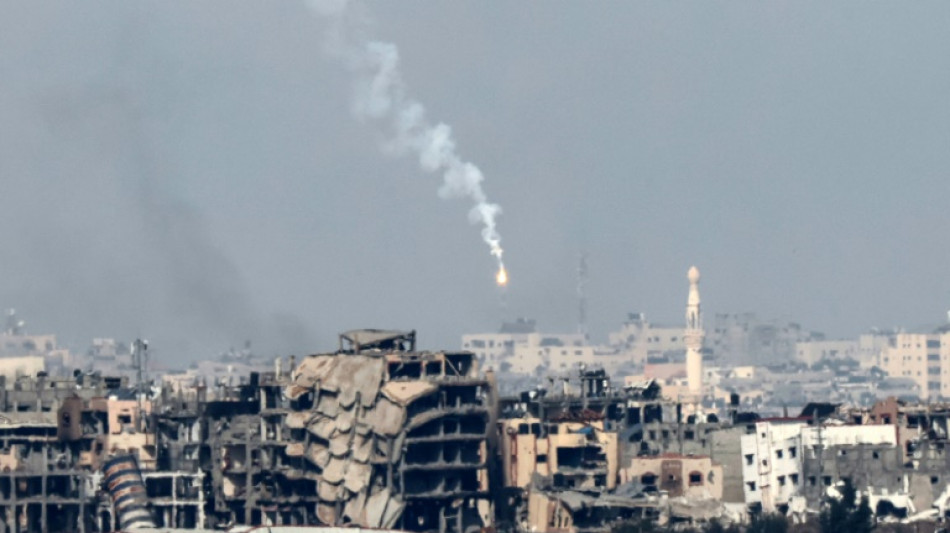
Vast areas of Gaza have been reduced to a wasteland. The UN says about 80 percent of the population has been displaced, facing shortages of food, fuel, water and medicine, along with the threat of disease.
On Friday, the Hamas-run health ministry reported another 40 dead in strikes near Gaza City, and dozens more in Jabalia and Khan Yunis.
AFPTV live footage showed plumes of dark smoke over the territory's north.
The death toll also rose in the Israeli-occupied West Bank, where Israeli forces shot dead six Palestinians on Friday, the territory's health ministry said.
An attack in Baghdad again raised fears of wider conflict. Salvoes of rockets targeted the US embassy in Baghdad's Green Zone before dawn, US officials said.
- Blood stains -
This is the first attack against the US mission in Baghdad since the Israel-Hamas war began. Since mid-October there have been dozens of rocket or drone strikes by pro-Iran groups against American or coalition forces elsewhere in Iraq as well as in Syria.
In Gaza, fighting raged around cities in the centre and south, including Deir al-Balah, where ambulances carried numerous wounded.
"May God punish those who can see our suffering and remain calm," said one Gazan, Rimah Mansi, who told AFP that "all those we love" were gone.
Further south, in Al-Katiba district of Khan Yunis, residents emerged to scenes of desolation after Israeli strikes, an AFP journalist said. On Thursday the wounded arrived at the city's Nasser hospital, where blood stained the walls.
The fighting has pushed Gazans further and further south, turning Rafah near the Egyptian border into a vast camp for many of the 1.9 million displaced.
Israel's military released footage of naval forces firing from the Mediterranean towards what it called Hamas infrastructure on shore. Other military video showed what it described as strikes on targets in Khan Yunis.
In a statement Friday, the military said it had killed "numerous" militants in Khan Yunis, part of "extensive battles" in Gaza, where around 450 targets were struck Thursday.
"The troops continue to operate to locate and destroy underground tunnel shafts, weapons, and additional terror infrastructure," it said.
Hamas has said it is battling Israeli troops "on all axes of the incursion into the Gaza Strip".
- Rare move -
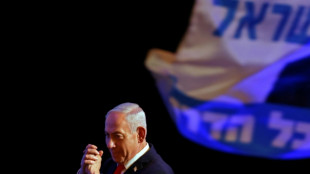
During a phone call Thursday with Israeli Prime Minister Benjamin Netanyahu, United States President Joe Biden -- whose country provides billions of dollars in military aid to Israel -- "emphasised the critical need to protect civilians and to separate the civilian population from Hamas", the White House said.
Biden also called for "corridors that allow people to move safely from defined areas of hostilities".
Izzat al-Rishq, of the Hamas political bureau, accused Israel of "apprehending a group of displaced Palestinian civilians" at a school and stripping them.
On Thursday, 69 trucks carrying humanitarian supplies and 61,000 litres (17,400 gallons) of fuel entered Gaza from Egypt, said the UN humanitarian agency, OCHA.
This is well below the average 500 truckloads, including fuel, which entered Gaza daily before the war, it said.
Later Friday the UN Security Council meets after Secretary-General Antonio Guterres invoked the UN Charter's Article 99, which no one in his post has done for decades.
The article allows the secretary-general to bring to the council's attention "any matter which in his opinion may threaten the maintenance of international peace and security".
Guterres appealed for a "humanitarian ceasefire" to prevent "a catastrophe with potentially irreversible implications for Palestinians" and the entire Middle East.
Israeli Foreign Minister Eli Cohen on Wednesday said Guterres' tenure was "a danger to world peace" after he invoked Article 99.
The Gaza war has killed 91 Israeli soldiers so far. The military reported four more deaths on Thursday, including the son of war cabinet minister Gadi Eisenkot.
- Hanukkah -
Israelis remained deeply traumatised by the horror of the Hamas attack and fearful for the fate of hostages as they mark the Jewish festival of lights, Hanukkah, which began on Thursday evening.
Families and supporters of the hostages still held in Gaza attended a lighting ceremony of a 138-branched menorah, representing each of the captives.
The war has also led to deadly cross-border exchanges on the Lebanese frontier.
An investigation by AFP into an October 13 strike in southern Lebanon that killed a Reuters journalist and injured six others, including two from AFP, found it involved a tank shell only used by the Israeli army in this region.
The nature of the strikes and lack of military activity in the immediate vicinity of the journalists indicate the attack was deliberate and targeted, the investigation found.
Amnesty International and Human Rights Watch said the strike merits a "war crime" investigation.
Israel's army on Friday said the strikes occurred in an "active combat zone" and were under review.
burs-it/dv
I.Mertens--LCdB