Climate negotiators eye compromise on fossil fuel exit / Photo: Karim SAHIB - AFP/File
Negotiators awaited a new draft deal on the fate of fossil fuels as UN climate talks went into overtime in Dubai on Tuesday after nations pushing for a phase-out clashed with Saudi-led oil producers.
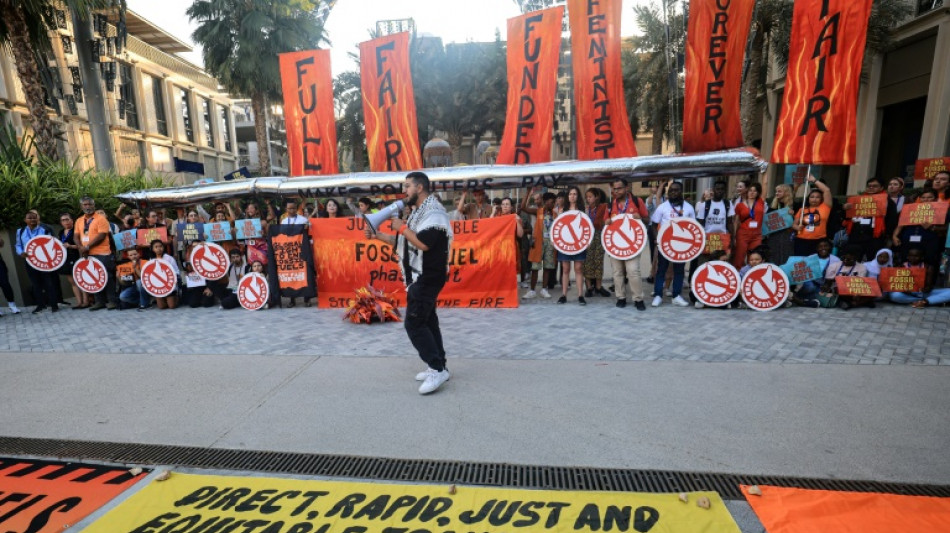
The 13-day UN COP28 conference in the glitzy metropolis built on petrodollars has debated a historic first-ever global exit from fossil fuels, the main culprits in a planetary crisis of warming.
"We are close to a deal," said a source close to the Emirati presidency of COP28 as the talks, which were officially scheduled to end on Tuesday, continued following sleepless nights of negotiations.
A new draft text could be released in the next few hours, followed by a plenary that could be held in the evening or early Wednesday to adopt it, the source said.
Representatives of coalitions of countries headed into the office of COP28 president Sultan Al Jaber, whose previous draft drew outrage for lacking calls for a phase-out and instead suggesting that nations "could" reduce consumption and production of fossil fuels among other options.
The presidency source said the verb "could" would not appear in the next draft. Western negotiators had called for stronger language that would demand action on fossil fuels, not suggest it.
US climate envoy John Kerry said the talks could finish up Tuesday evening or maybe in the "small hours of the morning (Wednesday)".
"But we're making progress," Kerry said as he headed into Jaber's office.
A COP28 spokesperson said "extensive consultations" with a wide range of groups would continue until 3:00 am (2300 GMT on Tuesday).
"This is to ensure everyone is heard, and all views are considered. He is determined to deliver a version of the text that has the support of all parties," the spokesperson said.
- 'Super majority' -
More than 130 countries from Europe, the Pacific, the Caribbean and the Americas, including Brazil and the United States, have now joined forces to call for an exit from oil, gas and coal, according to a European official.
EU climate chief Wopke Hoekstra has said that a "super majority" of the nearly 200 countries in the talks wanted stronger action on fossil fuels.
Jaber's previous draft was rejected by Western powers and low-lying island nations, which said they would not be signing their own "death warrant" as they are most at risk from extreme weather.
Saudi Arabia, Kuwait and Iraq have been the most vocal opponents of a phase-out.
At an energy conference in neighbouring Qatar, Kuwaiti oil minister Saad Hamad Nasser Al Barrak called the phase-out a "racist and colonial" proposal that would wreck economies in the region.
Iraq's oil minister, Hayyan Abdul Ghani Al Sawad, said "fossil fuels will remain the major source of energy in the whole world".
Western negotiators signalled earlier that they were open to compromise language in the next draft.
Denmark's Dan Jorgensen, one of the climate ministers tasked with leading the talks, said the summit needed to be clear that fossil fuels were on their way out.
"I'm personally not married to one word," he said. "But I am insisting that the meaning of this formulation, whichever one we will end up having, has to be extremely ambitious."
French Energy Minister Agnes Pannier-Runacher said: "Obviously we can accept edits that note that we're not all coming from the same place."
- US-China cooperation -
Kerry met ahead of COP28 with his Chinese counterpart and reached an agreement to ramp up renewables, hoping to keep tensions between the two powers -- the world's largest greenhouse gas emitters -- from scuttling global action on climate.
"I wouldn't say China is fighting with us, but we're not fighting China," said one person close to the negotiations who backs phasing out fossil fuels.
Scientists say the planet has already warmed by 1.2 degrees Celsius from pre-industrial times and that 2023 -- marked by lethal disasters including wildfires across the world -- has likely been the warmest in 100,000 years.
Vanessa Nakate, 27, a leading climate activist from Uganda, warned: "If leaders fail to address the root cause of the climate crisis after 28 years of climate conferences, then they aren't only failing us, but they're making us lose trust in the entire COP process."
B.Janssens--LCdB