Israel under pressure from allies as Gaza war rages on / Photo: JACK GUEZ - AFP
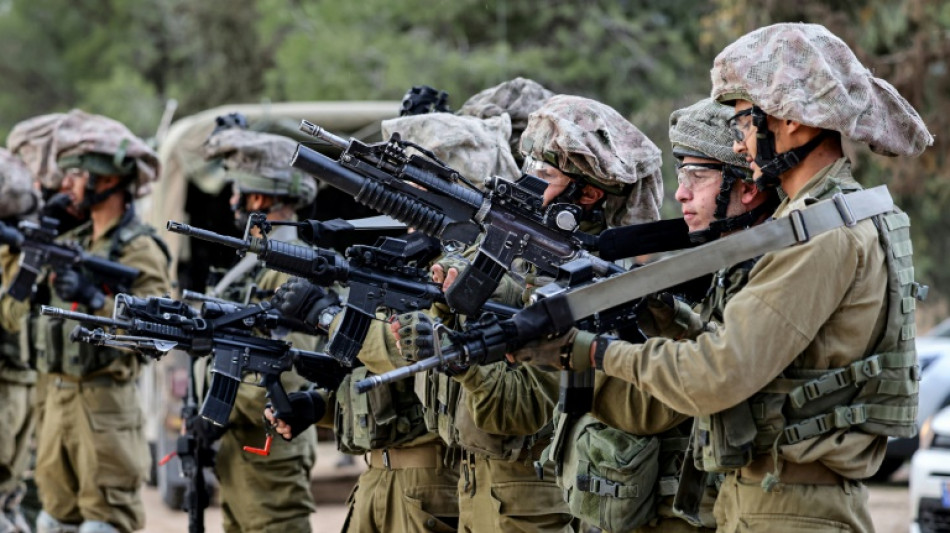
Israeli forces battled Hamas in the Gaza Strip on Wednesday despite growing international concern, even from Israel's allies, over the devastation of the Palestinian territory.
The UN General Assembly on Tuesday overwhelmingly backed a non-binding resolution for a truce, and even Israel's key ally the United States labelled the bombing "indiscriminate".
But more air strikes hit Gaza and gun battles again raged through the night, especially in Gaza City, the biggest urban centre, and Khan Yunis and Rafah in the south, AFP correspondents said.
Cold autumn rains lashed the enclave, where millions have been displaced and many are living in makeshift plastic tents, as vital supplies of food, drinking water, medicines and fuel have run low in more than two months of siege and war.
Air raid sirens wailed in Sderot and other southern Israeli communities near Gaza as militants kept firing rockets, most of which have been intercepted by air defences.
The army said its troops had fired an air strike against a militant cell in Gaza City's Shejaiya district "that was en route to launch rockets toward Israel".
In Khan Yunis, a centre of heavy urban combat in recent days, a family gathered to mourn the death in a strike of Fayez al-Taramsi, a father of seven.
"How are we going to live after him?" one of his daughters said, crying and clutching his bloodied shirt. "He brought us to life."
The bloodiest-ever Gaza war broke out after Hamas gunmen attacked Israel on October 7, killed around 1,200 people, mostly civilians, and took around 240 hostages, according to Israeli authorities.
Israel, determined to destroy Hamas and bring the hostages home, launched a devastating aerial and ground offensive on Gaza.
According to the Hamas-run health ministry on Tuesday, the war has killed more than 18,400 people, mostly women and children.
The ministry reported Wednesday that at least 50 more were killed in the latest wave of air strikes across the territory.
Israel said it had lost 115 soldiers, including 10 in northern Gaza on Tuesday, its deadliest day since launching the ground assault on October 27.
- 'Diminishing safe space' -
While the United States and Israel voted against the resolution, it was supported by US allies Australia, Canada and New Zealand, who, in a rare joint statement, said they were "alarmed at the diminishing safe space for civilians in Gaza".
Biden said at a campaign event that Israel had "most of the world supporting it" immediately after the October 7 attack, but that "they're starting to lose that support by the indiscriminate bombing that takes place".
Toning down his comments at a later news conference, the US president reiterated support for Israel and said only that "the safety of innocent Palestinians is still of great concern".
But Israeli Prime Minister Benjamin Netanyahu said there was "disagreement" with Biden over how a post-conflict Gaza would be governed.
The UN vote came after the head of the UN agency for Palestinian refugees, Philippe Lazzarini, described the situation in Gaza as "hell on earth".
"Back in #Gaza, endless deepening tragedy. People are everywhere, live in the street, need everything. They plead for safety & for an end to this hell on earth," Lazzarini posted on X after a visit to the territory.
- Gaza City hospital raid -
Israel's air and ground campaign has reduced much of Gaza to rubble, and the UN estimates 1.9 million of its 2.4 million people have been displaced.
The UN said its satellite analysis agency UNOSAT had determined, based on a November 26 image, that 18 percent of Gaza's infrastructure has been destroyed.
The World Bank in a new analysis warned that "the loss of life, speed and extent of damages... are unparalleled".
It estimated that, as of mid-November, almost half of all roads and around 60 percent of communication infrastructure, health and education facilities had been damaged or destroyed.
Hamas said Israeli forces raided a hospital in Gaza City on Tuesday. UN humanitarian agency OCHA had earlier reported fighting nearby and said about 3,000 displaced people were trapped inside.
The army did not immediately comment, but Israel has repeatedly accused Hamas of using hospitals, schools, mosques and vast tunnel systems beneath them as military bases -- claims the group has denied.
The UN World Health Organization's chief Tedros Adhanom Ghebreyesus said he was "extremely worried" by reports of the raid, adding that his agency "urgently calls for the protection of all persons inside the hospital".
Fears of a wider conflict continued to grow, with daily exchanges of fire along Israel's border with Lebanon, where Hezbollah is based, and other Iran-backed groups targeting US and allied forces in Iraq and Syria.
Yemen's Iran-backed Huthi rebels have repeatedly launched missiles and drones toward Israel and cargo ships in nearby waters that they suspect are working with Israel.
burs-fz/er
O.Seuren--LCdB