Killed Israeli hostage's brother says army 'murdered' him / Photo: Oren ZIV - AFP
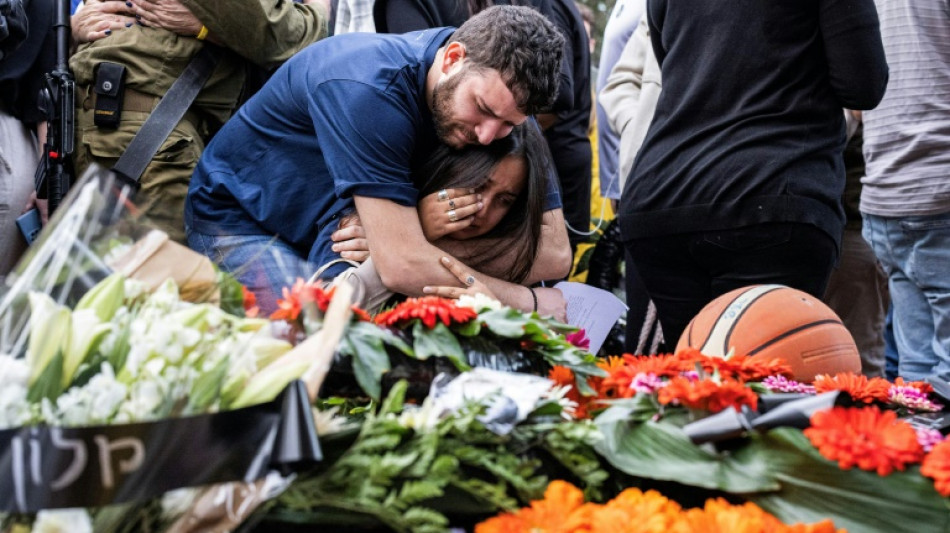
An Israeli hostage mistakenly killed by soldiers in the Gaza Strip was buried on Sunday, with his brother accusing the army of having "abandoned" and "murdered" him.
Alon Shamriz, 26, was one of the three Israeli hostages shot dead Friday by soldiers during combat in the Gaza City district of Shejaiya, even as they carried a white flag and cried for help in Hebrew.
Shamriz, Yotam Haim and Samer El-Talalqa were killed when troops mistook them for a threat and opened fire, the army said.
"Those who abandoned you also murdered you after all that you did right," Ido, Shamriz's brother, said at the funeral attended by dozens of relatives and family members north of Tel Aviv.
"You survived 70 days in hell," Shamriz's mother, Dikla, said in her eulogy. "Another moment and you would have been in my arms."
Israeli media reported that Talalqa was buried on Saturday, while the funeral for Haim was scheduled on Monday.
The deaths of the three men, all in their twenties, have sparked protests in Tel Aviv, where demonstrators demanded that the authorities offer a new plan for bringing home the remaining 129 hostages still held in the Gaza Strip.
On Sunday military spokesman Richard Hecht said the deaths were being investigated and what the soldiers did was "violation of the rules of engagement".
Late on Sunday, in a brief statement, the army said a search at a building adjacent to where the incident happened found signs calling for help.
The signs were made using "leftover food".
Photographs of initial findings from the building released along with the statement showed signs of "SOS" and "Help, three hostages".
Around 250 people were taken captive when Hamas militants attacked southern Israel on October 7, killing 1,139 people, mostly civilians, according to updated Israeli figures.
Vowing to destroy Hamas and bring back the hostages, Israel launched a massive military offensive against the Palestinian Islamist movement which has left much of the Gaza Strip in ruins. The territory's Hamas government says the war has killed at least 18,800 people, mostly women and children.
Q.Ceulemans--LCdB