CMSC
0.0800
The UN Security Council on Friday demanded aid be rushed to Gaza "at scale" as the head of the World Health Organization warned of a looming famine in the besieged Palestinian territory.
As Israeli bombs rained down on targets across Gaza, members of the UN's top peacemaking council demanded "immediate, safe and unhindered" deliveries of life-saving aid.
At Washington's insistence, the UN Security Council avoided calling for a ceasefire that would stop the 11-week-old war, which began with Hamas's bloody raids into Israel on October 7.
After the UN vote, Israel vowed to continue its air and ground assault until the Palestinian militant group is "eliminated" and an estimated 129 hostages still being held in the territory are freed.
"Israel will continue the war in Gaza" said Foreign Minister Eli Cohen, insisting the war was legal and just.
Israel's military said operations continued unabated in Gaza City, where its forces have been locked in street-to-street fighting with Hamas gunmen.
A spokesperson said Israel Defense Forces had destroyed an underground tunnel complex, "struck Hamas headquarters and eliminated terrorists".
Gaza's Hamas-run health ministry claimed more than 410 people had been killed in Israeli bombardments over 48 hours, including 16 in a strike Friday in the Gaza City district of Jabalia.
Four members of one family, including a girl, died in another strike on a civilian vehicle in Rafah in southern Gaza, said the ministry, which puts the death toll from the war at over 20,000.
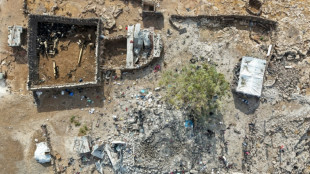
With swathes of Gaza reduced to rubble, many Gazans have been forced into crowded shelters or tents, and are struggling to find food, fuel, water and medical supplies.
WHO boss Tedros Adhanom Ghebreyesus warned that "hunger is present, and famine is looming in Gaza".
He said a majority of displaced people were going "entire days and nights without eating".
The UN estimates that fighting has displaced almost two million Gazans, almost 80 percent of the population.
"This is not a life: no water, no food, nothing," said wheelchair-bound Walaa al-Medini, who is now in the Bureij refugee camp, in central Gaza, after a strike on her home in Gaza City.
"My daughter died in my lap, and I was rescued from under the rubble after three hours," she said. "Our house, along with everything around us, was destroyed."
Time is running out for a Christmas-time truce, despite ongoing talks brokered by Qatar, Egypt and the United States.
A one-week truce that ended on December 1 saw 105 hostages released from Gaza captivity, including 80 Israelis in exchange for 240 Palestinian prisoners.
- 'Massive obstacles' -
Friday's much-delayed UN resolution came after days of diplomatic bickering, and only passed thanks to US and Russian abstentions.
It ratchets pressure on Israel to allow greater humanitarian access and gives the United Nations a bigger role in coordinating the delivery of aid into Gaza.
"The way Israel is conducting this offensive is creating massive obstacles to the distribution of humanitarian aid," said UN chief Antonio Guterres after the vote, pressing the point home.
But it remains to be seen what, if any, impact the vote will have on the ground.
Israel's foreign minister insisted that despite the resolution his country would retain control of what goes into Gaza and "will continue to screen all humanitarian aid to Gaza for security reasons".
Hamas described the resolution as "an insufficient measure that does not respond to the catastrophic situation created by the Zionist (Israeli) war machine".
According to the UN, the number of aid trucks entering Gaza is well below the daily pre-war average.
Last week Israel approved aid delivery via Kerem Shalom crossing, and the army says on average 80 trucks enter Gaza through it daily.
Journalists in a media tour of the facility on Friday, organised by the Israeli military, could see a miles-long queue of aid trucks held up for hours as they awaited inspection by soldiers.
Egyptian driver Said Abdel Hamid seemed unfazed by the wait, saying he was "proud to bring help to my Palestinian brothers" as he removed the tarpaulin sheet covering his flour cargo for examination.
- Conflagration -
Since the conflict began, the West Bank, the Israel-Lebanese border, Iraq, Syria and the sea off Yemen have become flashpoints -- with Iranian-backed groups issuing regular warnings about their ability to take the war far beyond Gaza.
Israel said another of its troops was killed on Friday by rocket fire from Lebanon, where the Iran-backed Hezbollah and other groups have carried out near-daily cross-border assaults in support of Hamas.
Hezbollah said two of its fighters were killed Friday.
Missiles from Iran-backed Yemeni rebels -- claiming to act in solidarity with Gazans -- have disrupted Red Sea shipping.
The United States accused Tehran of being involved in the attacks. "We know that Iran was deeply involved in planning the operations against commercial vessels in the Red Sea," National Security Council spokeswoman Adrienne Watson said.
The war began on October 7 when Hamas gunmen broke through Gaza's militarised border and killed around 1,140 people in Israel, mostly civilians, according to an AFP tally based on Israeli figures.
Vowing to destroy Hamas, Israel launched a relentless bombardment and ground invasion of Gaza, where 20,057 people have been killed, according to the latest Hamas toll.
Most of the dead are women and children, Hamas officials say.
burs-arb/mtp
E.Willems--LCdB