'Exhausted' Gazans desperate for war to end as Israel presses offensive / Photo: - - AFP
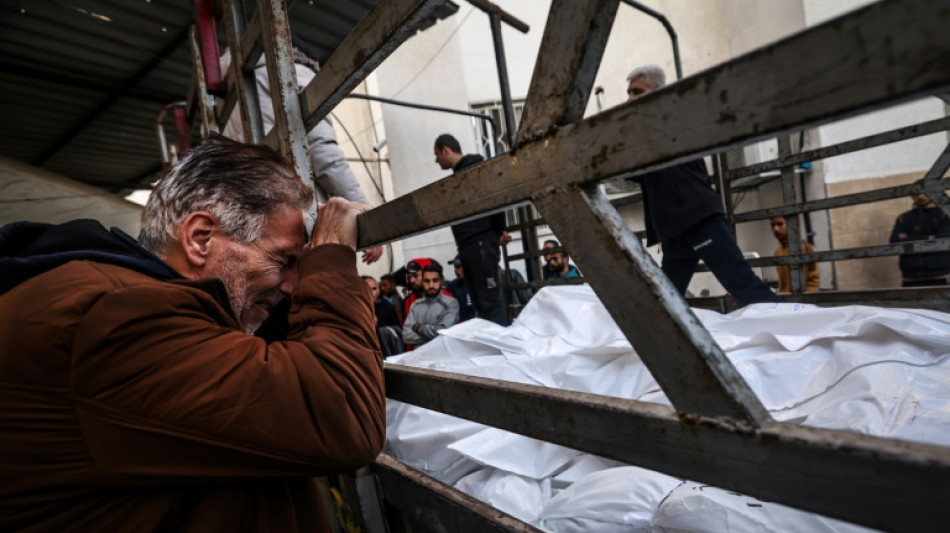
After nearly three months of deadly strikes, incessant displacements and sputtering humanitarian aid, "exhausted" Gazans say they are desperate for an end to the fighting as Israel's war against Hamas looks set to grind on into the new year.
The Israeli army kept up its campaign across the length of the Gaza Strip on Friday in the face of mounting international pushback, with UN chief Antonio Guterres reiterating his call for "an immediate humanitarian ceasefire", and South Africa initiating a case against Israel in international court.
The World Health Organization, meanwhile, warned of the growing threat of infectious diseases as fighting displaces more and more Gazans, forcing them ever further south towards the already-overcrowded city of Rafah.
"Enough with this war! We are totally exhausted. We are constantly displaced from one place to another in cold weather," said 49-year-old Um Louay Abu Khater from a camp in the southern border city.
"The bombs keep falling on us every day and night. We expect missiles (at any moment), while others are preparing for New Year's Eve celebrations."
The UN says more than 85 percent of Gaza's 2.4 million people have fled their homes, with many now going hungry and braving the winter rains in makeshift tents.
An Israeli siege imposed after October 7, following years of crippling blockade, has led to dire shortages of food, safe water, fuel and medicine, with aid convoys offering only sporadic relief.
The UN agency for Palestinian refugees said Friday that one such convoy had come under fire from Israeli forces the day before, without causing any casualties.
Ahmed al-Baz, 33, said the year drawing to a close had been "the worst in my life".
"It was a year of destruction and devastation," he said. "We went through hell and encountered death itself."
"We just want the war to end and start the new year at our homes, with a ceasefire declared," he added.
- Negotiations -
The war in Gaza was triggered by Hamas's bloody October 7 attacks on Israel, which left about 1,140 people dead, mostly civilians, according to an AFP tally based on Israeli figures.
The Palestinian Islamist militants also took about 250 people hostage, more than half of whom remain inside the war zone, some of them believed dead.
Israel's relentless military campaign since then has killed at least 21,507 people, mostly women and children, according to the health ministry in Hamas-ruled Gaza.
Israel's army says 168 soldiers have been killed inside the territory.
A Hamas delegation was in Cairo on Friday to discuss an Egyptian plan proposing renewable ceasefires, a staggered release of hostages for Palestinian prisoners, and ultimately an end to the war, sources close to Hamas say.
Speaking to AFP on condition of anonymity, a Hamas official said the delegation would give "observations" on the proposal and seek "guarantees for a complete Israeli military withdrawal" from Gaza.
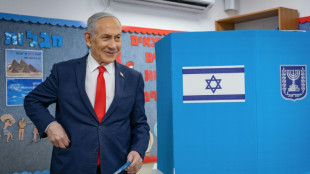
Israel has yet to formally comment on the Cairo plan, but Prime Minister Benjamin Netanyahu told families of hostages on Thursday that "we are in contact" with the Egyptian mediators and promised the captives that "we are working to bring them all back".
The US news outlet Axios and the Israeli outlet Ynet, both citing unnamed Israeli officials, reported that Qatari mediators had told Israel that Hamas was prepared to resume talks on new hostage releases in exchange for a ceasefire.
In Rafah, 27-year-old Youssef Ahras told AFP he hoped the negotiations could "stop the bloodshed... because the price of war is so high".
"I don't know a lot about the political aspects because as locals, we are busy with our essential needs," he said.
- 'Genocide' claim -
South Africa, meanwhile, filed an application on Friday at the International Court of Justice to start proceedings against Israel for what it said were "genocidal acts against the Palestinian people in Gaza".
In its filing, it asked the court to "protect against further, severe and irreparable harm to the rights of the Palestinian people".
Responding on the social media platform X, Israeli foreign ministry spokesman Lior Haiat wrote that "Israel rejects with disgust the blood libel spread by South Africa and its application".
Pretoria has strongly condemned Israel's response to the Hamas attacks and has recalled all its diplomats from the country, with Israel in turn recalling its ambassador in South Africa.
E.Celis--LCdB