Hamas says Israel strike on Beirut kills its deputy chief / Photo: - - AFP
Israel's war against Palestinian militants reached into the Lebanese capital Beirut on Tuesday, where an Israeli strike killed Hamas's deputy leader, the group and security officials in Lebanon said.
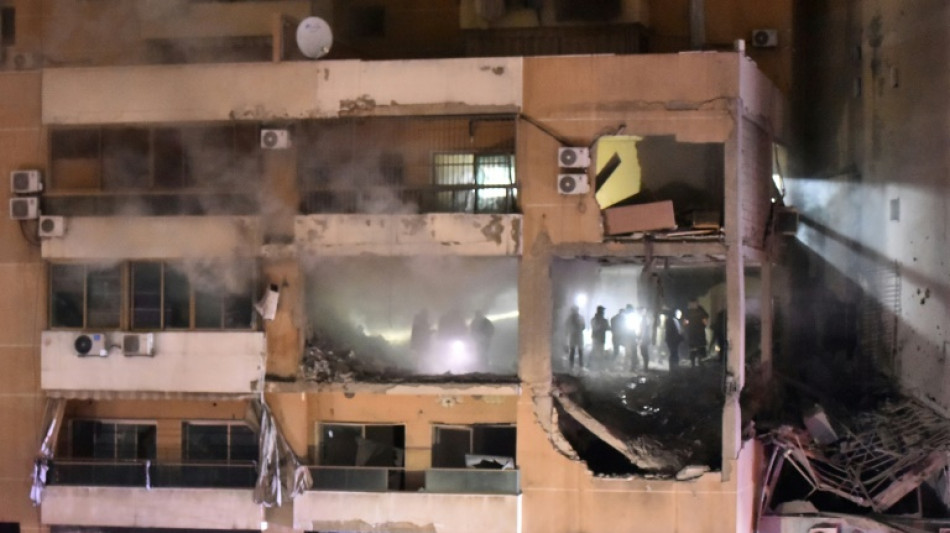
A high-level security official told AFP that Saleh al-Aruri was killed along with his bodyguards in the strike by Israel, which vowed to destroy Hamas after the movement's unprecedented attacks on Israel on October 7.
A second security official confirmed the information, adding two floors of the targeted building and one car were damaged. Lebanese state media reported the strike hit a Hamas office in Beirut's southern suburbs, a stronghold of Lebanon's Iran-backed Hezbollah movement.
Hamas TV also said Israel had killed Aruri in Beirut. And Lebanese media said a total of six people were killed in the strike.
The strike will add to persistent fears that the nearly three-month-old Israeli-Hamas war could become a wider conflagration.
Gunmen from Hamas, which has ruled the Gaza Strip since 2007, killed around 1,140 people, most of them civilians in their October attacks, according to an AFP tally based on official figures.
The Palestinian militants also took around 250 hostages, 129 of whom remain in captivity, according to Israeli figures.
After the worst attack in its history, Israel began a relentless bombardment and ground offensive that has killed at least 22,185 people, mostly women and children, according to Gaza's health ministry.
On Tuesday in Gaza, Israeli forces battled Hamas militants among the ruins of the heavily-bombed Gaza Strip.
The Israeli army said soldiers had killed "dozens of terrorists", including some carrying explosives, raided a weapons storage compound in the southern city of Khan Yunis and discovered long-range rocket launchers and tunnels.
Hamas-run Gaza's health ministry said 70 people were killed and more than 100 wounded in the previous 24 hours during Israeli raids.
In the southern city of Khan Yunis, Israel twice struck the Palestine Red Crescent Society (PRCS) headquarters, PRCS said, resulting in "five casualties and three injuries" among displaced people who had sought refuge there and at a nearby hospital.
The health ministry in Gaza said four people were killed including an infant.
"They told us to go to the south that is safe, but they are liars," shouted Fathi al-Af, pointing to his daughter on a stretcher on the floor of Nasser Hospital after the strike. "The entire Gaza Strip is not safe."
United Nations agencies have voiced alarm over Gaza's spiralling humanitarian crisis that has left 2.4 million people under siege and bombardment, most of them displaced and crowded into shelters and tents.
The World Health Organization has warned of the risk of famine, and disease.
- Accused mastermind -
The Israeli army says 173 of its soldiers have been killed inside Gaza in the battle against Hamas, which is listed as a terrorist organisation by the European Union and the United States.
US news outlet Axios, citing unnamed Israeli sources, said Hamas had presented Israel with a proposal on Sunday for a new hostage exchange deal via Qatari and Egyptian mediators.
The official told Axios the proposal had been deemed unacceptable by the Israeli war cabinet, but suggested progress could be made towards a more amenable plan in future.
Qatar-based Hamas chief Ismail Haniyeh, speaking on Tuesday before Aruri's death, said hostages will only be freed "on terms set by the resistance."
Aruri, in early December, had said: "The price to pay for the release of Zionist prisoners will be the release of all our prisoners -– after a ceasefire."
In October the Israeli army demolished Aruri's home in the occupied West Bank.
In a televised address Tuesday, Haniyeh also said Hamas is "open to the idea of a national government for the West Bank and Gaza."
In November, US President Joe Biden wrote in a newspaper opinion article that Gaza and the West Bank should ultimately be "reunited" under a new Palestinian Authority.
Throughout its bloodiest ever Gaza war, Israel has had the backing of its ally the United States, which has however also urged greater restraint to spare civilian lives.
Prime Minister Benjamin Netanyahu's government, which includes far-right and hardline nationalist groups, has said repeatedly it will keep fighting until Hamas is eliminated.
As 2024 started, a dispute that had split the nation for months prior to the war flared again. Tens of thousands of people repeatedly took to the streets to protest the judicial reforms proposed by the government of Netanyahu, who is being tried on corruption charges he denies.
The Supreme Court overruled a key plank of the judicial overhaul that Netanyahu has defended as rebalancing the powers of politicians and judges, but which protesters -- including military reservists -- labelled a threat to Israel's liberal democracy.
The army said Monday it would soon rotate out some of the more than 300,000 reservists called up after October 7, in part to prepare them for many more months of war ahead.
It said reservists from two brigades, which have about 4,000 troops each, will start returning home this week.
Defence Minister Yoav Gallant also said some residents "will soon be able to return home" to towns and villages near Gaza that were attacked by Hamas and then evacuated.
- Turkey arrests 'Mossad suspects' -
In the West Bank, violence since October 7 has surged to a level unseen in nearly two decades. At least 321 Palestinians have been killed by Israeli troops and settlers since the Gaza war began, according to the Ramallah-based Palestinian health ministry.
In the latest clash Tuesday, Israeli forces killed four Palestinians, the ministry said. The army said it had shot dead four militants in a "counter-terrorism" operation.
The war has also led to almost daily exchanges of fire on the border with Lebanon between the army and Iran-backed groups, particularly Hezbollah.
Yemen's Iran-backed Huthi rebels have also launched attacks at Israel and at cargo ships in the Red Sea, where the US military has assembled a multinational taskforce to protect the vital shipping lane.
Turkey, whose President Recep Tayyip Erdogan has harshly criticised Netanyahu over the war, announced the detention of 34 people suspected of planning abductions and spying on behalf of Israel's Mossad intelligence service.
Erdogan weeks ago warned of "serious consequences" should Israel attempt to target Hamas figures living or working in Turkey.
burs-jd/it/jkb
D.Moerman--LCdB