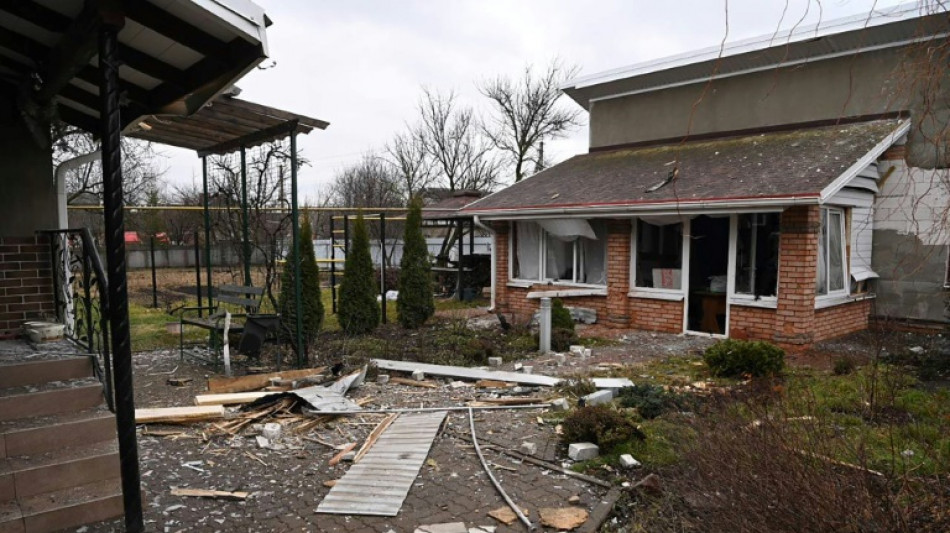
Russia keeps border schools shut as deadly strikes hit Ukraine / Photo: Handout - TELEGRAM / @v_v_demidov/AFP
Russia's Belgorod region bordering Ukraine said Thursday it would keep schools closed beyond the planned end of the winter holidays following unprecedented shelling by Kyiv's forces, as Ukraine reported several killed in strikes across the country.
The Kremlin has tried to maintain a semblance of normalcy on the home front, but recent deadly strikes on Belgorod were a reminder that Russian civilians can also be impacted by the conflict.
Twenty-five people were killed in a Ukrainian strike Saturday on the regional capital, also called Belgorod, Moscow said, the deadliest in Russia since the conflict began in February 2022.
"I report the decisions that have been made: to extend the school holidays from January 9 to 19," governor Vyacheslav Gladkov said, ordering the move in several districts including Belgorod city. Russian schools have been closed this week as the country celebrates Orthodox Christmas on January 7.
"In technical colleges and universities located in these municipalities, it is recommended to hold class remotely," he continued, adding that the holidays may be extended further.
Belgorod city lies about 30 kilometres (19 miles) from the border and has been repeatedly struck by what Moscow says is indiscriminate shelling by Kyiv's forces.
Russian President Vladimir Putin vowed to intensify strikes in response to Saturday's attack, with Moscow's forces targeting areas across Ukraine throughout the week.
- Renewed strikes -
Ukrainian officials reported Thursday that at least four people had been killed across Ukraine, after several days of deadly attacks that claimed dozens of lives.
Kyiv says the latest attacks underline the need for Western allies to speed up delivery of air defence equipment, combat drones and long-range missiles.
A strike in the central Kirovograd region, far from the front, killed one person at an industrial facility and injured eight others on Thursday, regional governor Andriy Raykovych said.
In the southern Kherson region, Russia shelled the town of Stanislav on the shores of the Dnipro River, regional head Oleksandr Prokudin said on Telegram.
"A 61-year-old local resident died. My condolences to the family," Prokudin said.
Shelling killed one person in the village of Katerynivka in Donetsk region, officials said Thursday, after another person in the same region was killed by shelling Wednesday.
Faced with renewed aerial assaults by Moscow, Kyiv's mobile defence commander has said they have enough ammunition to withstand a few more powerful attacks but would soon need more deliveries.
Ukraine said it targeted a Russian command post near the Crimean port city of Sevastopol on Thursday, in an aerial attack that Russia said wounded one person.
Russia said its air defences shot down ten guided missiles over the peninsula, and that it had foiled what it called a "terrorist attack" by Kyiv's forces.
- 'Biggest' swap of war -
The strikes come a day after Ukraine and Russia said Wednesday they had exchanged over 200 captive soldiers each, in what officials described as the biggest prisoner swap of the war so far.
The warring sides have carried out dozens of exchanges since Moscow invaded in February 2022, but the process stalled in the latter half of last year.
In near simultaneous statements, Russia and Ukraine announced they had received over 200 soldiers each following talks mediated by the United Arab Emirates.
"More than 200 of our soldiers and civilians have been returned from Russian captivity," Zelensky said on Telegram, posting a video of uniformed men celebrating.
Neither side had announced an exchange in almost five months, prompting Kyiv to accuse Moscow of deliberately blocking deals for political reasons.
"There was a long pause in the exchanges, but there was no pause in the negotiations," Zelensky said in a later message, hailing the swap as "good news".
M.Lenaerts--LCdB