Thousands rally in Israel for end to hostages' 100-day ordeal / Photo: AHMAD GHARABLI - AFP
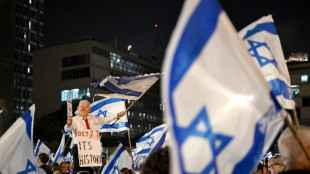
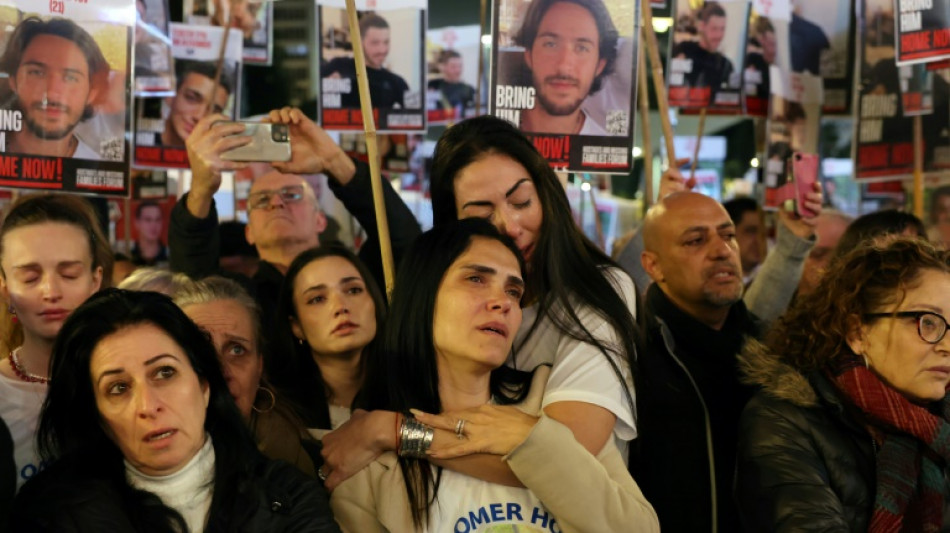
Thousands of Israelis rallied in Tel Aviv late Saturday calling for the release of hostages being held in Gaza by Hamas militants, on the eve of the 100th day of their captivity.
The protests came after families unveiled a replica of the tunnels in the besieged Palestinian territory where their loved ones are believed to have been held since their abduction on October 7.
The crowds carried a massive banner that read: "And the world remains silent," and chanted that the hostages must be released "Now, now, now".
"We will continue to come here week after week until everybody is released," Edan Begerano, 47, told AFP.
"Everywhere I look, I feel impressed by Israeli people who came massively today to support and to be with us."
French President Emmanuel Macron sent a video message to the demonstrators calling for negotiations for hostage releases to resume.
"France does not abandon its children," he said, listing the names of some of the French dual nationals being held.
Around 100 hostages were released during a week-long truce in November, the Israelis among them in exchange for Palestinian prisoners held in Israeli jails.
Separately about 100 people gathered to call for an end to the war, brandishing signs saying: "Revenge is not victory," and: "No to the occupation."
Saturday night protests have become a weekly event in Tel Aviv since the war began, but groups supporting the hostage families were out in greater numbers to mark the 100th day of the war.
Palestinian militants took about 250 captives on October 7, 132 of whom Israel says remain in Gaza, including at least 25 believed to have been killed.
The attack by Hamas also resulted in about 1,140 deaths in Israel, mostly civilians, according to an AFP tally based on official figures.
- 'Horrifying' -
The mock-up of a Hamas tunnel was installed outside Tel Aviv Museum of Art, with a dimly lit passage, dirt on the ground and the sounds of gunfire and shelling playing constantly.
Israeli artist Roni Levavi, who designed the installation, said he wanted to create "the most faithful reconstruction" of the Gaza tunnels and relied on images from the media.
This would "give an idea of what the hostages have been feeling for so many days", Levavi told AFP.
Inbar Goldstein, who had several relatives released during the November truce and several others killed in the initial attack, said: "That's the only tunnel in this story that has a light in the end of it."
After walking through the mock tunnel, Eyal Moar said it was only a small part of the ordeal experienced by his uncle Abraham Munder, 79, and the other hostages.
"We know the conditions are really horrifying -- no fresh air, very little food, no meds, no sun light, they sleep on the floor," Moar told AFP in the central plaza renamed "Hostages Square" by campaigners.
- 'Not enough' -
On Friday, Israeli officials said they had reached a deal to get medicines to the remaining captives -- which some of the families believed was scant progress.
"It's not enough," said Ella Ben Ami, whose father Ohad Ben Ami, 55, is among those still held.
"I want him home, in hospital, in good healthcare, not in Hamas healthcare."
Israel has pounded Gaza since October 7, killing at least 23,843 people, mostly women and children, according to the Hamas-run territory's health ministry.
The Israeli military often speaks of "terror tunnels" they say Hamas fighters use to move hostages around, as well as to store weapons and shelter from the bombing.
The relatives said the experience of being stuck, even in the mocked-up tunnel, was harrowing.
A.Louis--LCdB