Iraq recalls Iran envoy in rebuke to ally over deadly strikes / Photo: - - Kurdistan 24/AFP
Iraq summoned Iran's envoy in Baghdad and recalled its ambassador from Tehran on Tuesday in a sharp rebuke to its ally over deadly missile strikes on its autonomous Kurdish region.
Iraq challenged Iran's claim that the strikes targeted Israel's intelligence services in response to recent Israeli assassinations of Iranian and pro-Iranian commanders.
It said it would lodge a complaint with the UN Security Council over the Iranian "attack on its sovereignty".
Iran's strikes, which also hit alleged Islamic State group targets in Iraq's western neighbour Syria, came with tensions high across the Middle East as Israel battles Iran ally Hamas and also drew condemnation from the United States.
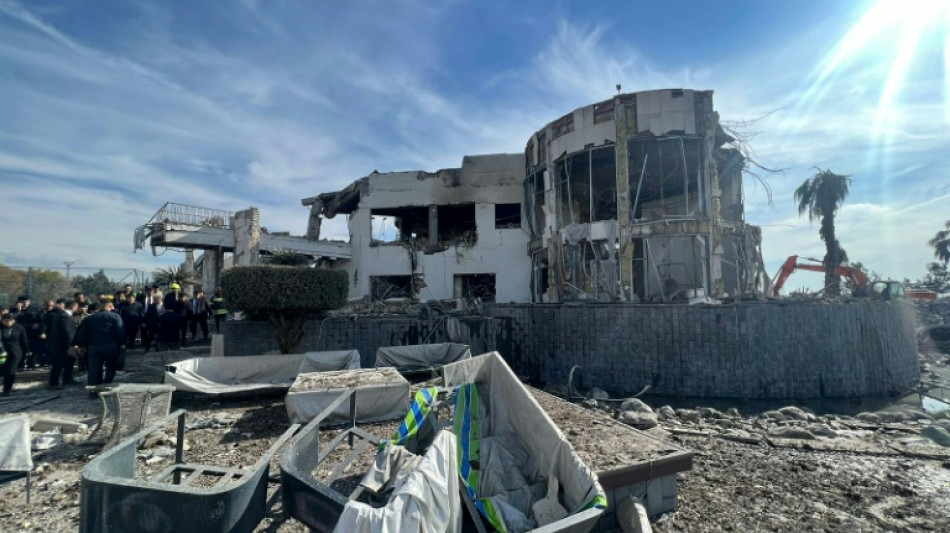
Four people were killed and six wounded in the strikes on Iraqi Kurdistan, the region's security council said.
The casualties included prominent real estate magnate Peshraw Dizayee, his wife and other family members who were hit by a strike on their home, the region's leading party, the Kurdistan Democratic Party, said.
Iran defended its missile strikes in Iraq and Syria, saying they were a "targeted operation" and "just punishment" against those who breach the Islamic republic's security.
"The Islamic republic, with its high intelligence capability, in a precise and targeted operation identified the criminals' headquarters and hit it with precision weapons," foreign ministry spokesman Nasser Kanani said.
- 'Blood of the martyrs' -
Iran's Revolutionary Guards said they had destroyed the "Zionist regime's spy headquarters in the Kurdistan region of Iraq."
The strike came "in response to the recent vicious actions of the Zionist regime which martyred the commanders of the Revolutionary Guards and the resistance front," a Guards statement carried by Iran's official IRNA news agency said.
Senior Guards commander Razi Moussavi was killed in a strike in Syria last month that was widely blamed on Israel. This month, Hamas number two Saleh al-Aruri was killed in a Beirut strike, that Lebanese officials blamed on Israel.
The Guards said their reprisals "will continue until the last drops of blood of the martyrs are avenged."
They said they also struck a "gathering of anti-Iranian terrorist groups" in the Kurdish regional capital Arbil.
The Iraqi foreign ministry said it would publish the findings of the official investigation, promising to prove to "Iraqi and international public opinion the falseness of the allegations made by those responsible for these reprehensible actions."
The autonomous Kurdish region's prime minister Masrour Barzani said he would be in contact with "our partners within the international community to put an end to these brutal attacks".
- 'Reckless' -
The United States condemned the Iranian strikes as "reckless".
"We oppose Iran's reckless missile strikes, which undermine Iraq's stability," US State Department spokesperson Matthew Miller said in a statement.
A White House spokesperson said no US personnel or facilities were hit in the Iranian strikes.
Iraq has seen an surge of unrest since Hamas militants launched an unprecedented attack on southern Israel on October 7, prompting devastating Israeli retaliation carried out with US support.
Iran-backed militant groups in Iraq and Syria have carried out a spate of attacks on military bases in the two countries used by soldiers of a US-led coalition against IS.
Washington has responded with missile strikes targeting the Iran-backed groups that have also drawn condemnation from Baghdad as a a breach of its soverignty.
In November 2022, Iran launched missile strikes against the northern Iraq bases of Iranian-Kurdish rebel groups it accused of fomenting a wave of protests that swept the country after the death in custody of Iranian Kurd Mahsa Amini.
In March 2022, the Guards carried out missile attacks in Arbil that it said targeted a "strategic centre" operated by arch foe Israel.
Contacts with Israel are outlawed in Iraq but some politicians and businessmen in Arbil have in the past been accused of maintaining informal ties. The Iraqi Kurdish authorities deny any contacts.
In Syria, the Guards said they struck gathering places for "commanders and main elements related to recent terrorist operations, particularly the Islamic State group".
"At least four missiles" were fired from the Mediterranean triggering explosions in second city Aleppo and its outskirts, the Syrian Observatory for Human Rights war monitor said.
The Guards said the strike was in response to recent attacks in Iran.
On January 3, IS suicide bombers struck crowds gathered near the tomb of Guards general Qasem Soleimani in Kerman, killing around 90 people.
G.Hendrickx--LCdB