CMSC
0.0800
Authorities in the Hamas-run Gaza Strip said Thursday that Israeli forces had killed 20 people waiting for humanitarian aid to be distributed, as Israel pressed its blistering assault in the territory.
Israel has launched a relentless offensive in Gaza in response to the Palestinian militant group Hamas's unprecedented October 7 attacks.
The Hamas-run health ministry in Gaza said the attack occurred on the outskirts of Gaza City, in the north of the territory, with 150 people also wounded.
Hamas said the incident amounted to a "horrific war crime".
Palestinian militant group Islamic Jihad said they were killed by "artillery shells and missiles", a claim AFP was unable to verify independently.
The Israeli army did not immediately respond to an AFP request for comment.
Witnesses interviewed by AFP said they had been targeted by Israeli forces.
"People were going to get food and flour as they had nothing to eat," Abu Ata Basal, the uncle of one of the injured, told AFP.
"Suddenly, tanks appeared and started firing shells at the people, who were cut into pieces."
"We were heading to get flour, and they shelled us four times, and some people were martyred and injured," said Mohammed al-Rifi, who was injured in his hand and leg.
The casualties were brought to Al-Shifa hospital in Gaza City, where bodies were seen lying on the floor, an AFP journalist said.
- Fierce clashes -
The incident came a day after the United Nations said tank shelling at a UN shelter in the southern city of Khan Yunis, the current focus of Israel's military campaign, killed 12 people.
Khan Yunis -- the hometown of Hamas's Gaza chief Yahya Sinwar, the suspected mastermind of the October 7 attacks -- faced relentless bombardments Thursday, an AFP journalist said.
Hamas, which has ruled Gaza since 2007, reported fierce clashes in the centre and west of the city, where fighting has been inching closer to hospitals sheltering thousands of displaced people.
Its health ministry said at least 50 people were killed in Khan Yunis over the past 24 hours.
Israel's army said several militants were killed in "close-quarters combat" in the city, and that strikes also targeted militants in central and northern Gaza.
Palestinians were fleeing Khan Yunis any way they could, with belongings piled on cars, in donkey-drawn carts, on tractors and on foot.
"I don't know where I'm heading," said Mousa Abu Youssef, explaining he decided to leave the city after tanks opened fire close to him.
"I've taken nothing with me, no blankets, no sheets, no (tent) -- nothing at all."
- UN shelter shelled -
The war erupted when Hamas and other militants from Gaza launched the unprecedented October 7 attacks on Israel which resulted in about 1,140 deaths, mostly civilians, according to an AFP tally of official Israeli figures.
Militants also seized 250 hostages, and Israel says around 132 remain in Gaza. That number includes the bodies of at least 28 dead hostages, according to an AFP tally based on Israeli figures.
Israel in response vowed to crush Hamas and launched a relentless military offensive that the Palestinian territory's health ministry says has killed at least 25,700 people, about 70 percent of them women and children.
Wednesday's deadly attack on a UN shelter saw two tank shells fired at a building sheltering 800 people in Khan Yunis, according to the United Nations.
On Thursday, the UN agency for Palestinian refugees (UNRWA) said the Israeli army had ordered people taking refuge at the site to leave by Friday afternoon.
"No specific evacuation request was communicated to UNRWA or those staying in its (the shelter's) vicinity," Israel's military told AFP.
Thomas White, the Gaza director of UNRWA, denounced "persistent attacks on civilian sites" in Khan Yunis as "utterly unacceptable".
Asked about the shelling, the Israeli army said "a thorough review of the operations of the forces in the vicinity is underway", adding it was examining the possibility that the strike was a "result of Hamas fire".
The Israeli military is the only force known to have tanks operating in the Gaza Strip.
- Fears for world trade -
Egypt and Qatar have acted as mediators in the conflict, including in November, when a brief truce agreement led to the release of 105 hostages.
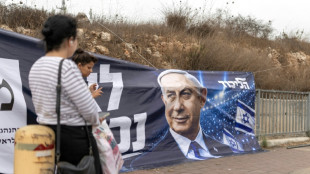
But Netanyahu was allegedly caught on tape telling hostages' families this week that Qatar's mediation was "problematic", blaming it for funding Hamas.
The Gulf state said it was "appalled" at the remarks, which "if validated, are irresponsible and destructive to the efforts to save innocent lives".
The Gaza war has sparked fears of a wider escalation, with a surge in violence involving Iran-aligned Hamas allies across the Middle East.
Yemen's Huthis have been firing missiles at shipping in the Red Sea since mid-November, prompting the United States and Britain to launch air strikes on the Iran-backed rebels.
burs-sr/imm
A.Peeters--LCdB